ISLAMABAD: With a commitment to fully implement the National Tariff Policy (NTP) to bring down the weighted tariff below 6 per cent in the auto sector by 2030, the Ministry of Industries has strongly opposed the IMF’s proposal to impose 18 per cent GST on the sale of Electric Vehicles (EVs). Instead, the government has proposed a 1 per cent General Sales Tax on the sale of Electric Vehicles (EVs).
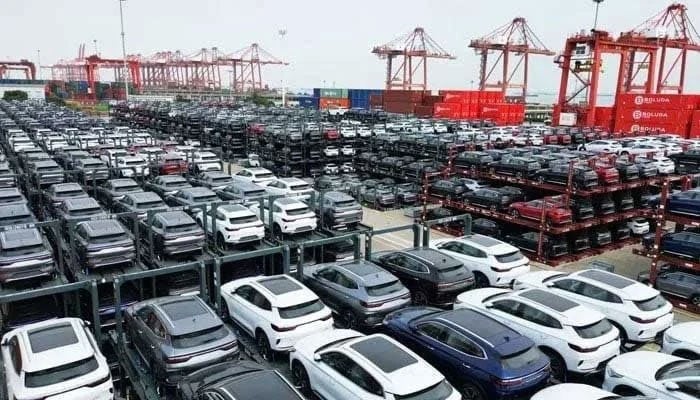
The visiting IMF team and Pakistan’s Ministry of Industries held crucial parleys to unveil the salient features of the upcoming auto policy. The IMF was informed that the government had proposed a 1 per cent GST on the sale of New Energy Vehicles (NEVs), including NEV Prime Movers, NEV Trucks/Dumpers, NEV passenger vehicles for the transportation of 10 or more passengers, NEV 4-Wheelers (including L-7), NEV LCVs (up to 3.5 tonnes GVW), NEV pickups, NEV double cabins, NEV electric 3-wheelers, NEV electric 2-wheelers, and NEV tractors. Officials argued that hybrid vehicles already benefited from a reduced GST rate of 8.5 per cent, questioning why EVs should not also be granted a concessional GST rate of 1 per cent.Ministry officials further argued before the IMF that there was a 1 per cent GST on the import of different parts, whereas there was an 18 per cent GST on locally manufactured parts. In order to avoid the issue of accumulating refunds, it was proposed that a 1 per cent tax should be imposed across the entire EV supply chain. The Ministry also opposed the NTP’s five-year tariff reduction framework, under which Customs Duty would be brought down to minimum levels by 2030. The Ministry of Industries maintained that, in line with regional countries, higher tariffs should be imposed on the import of used and new cars in the range of 70 to 80 per cent, similar to the policies followed by countries such as India and Bangladesh. Pakistan has given a written commitment to the IMF to implement duty reductions under the new NTP to reduce the weighted average applied tariff from 10.6 per cent in FY25 to 7.4 per cent by FY30. The duty reductions for the auto sector, when added to those under the NTP, will bring the weighted average tariff to below 6 per cent by FY30. To be exact, the weighted average tariff for the auto sector will be reduced to 5.99 per cent by 2030. The government assured the visiting IMF team that it would continue implementing measures to reduce the weighted average tariff, consistent with the agreed reductions under the IMF-supported programme. A new auto sector policy is in the advanced stages and will be shared with the IMF ahead of its approval by the Cabinet. Through the progressive elimination of all Additional Customs Duties (ACDs) and Regulatory Duties (RDs), along with substantial reductions in Customs Duty (CD) rates by FY30, the policy will remain consistent with the agreed overall reduction in the weighted average tariff to below 6 per cent over the five-year period ending in 2030.
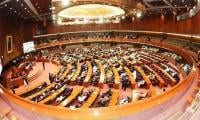
Meanwhile, the Motor Vehicle Development Act, which provides the Engineering Development Board with a statutory basis to enforce the new regime of environmental and safety standards for locally manufactured and imported vehicles, has been submitted to Parliament and is expected to be approved by the National Assembly before the end of June 2026. Political allies of the treasury benches are giving the government a tough time over securing approval for the proposed Motor Vehicle Development legislation.