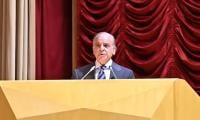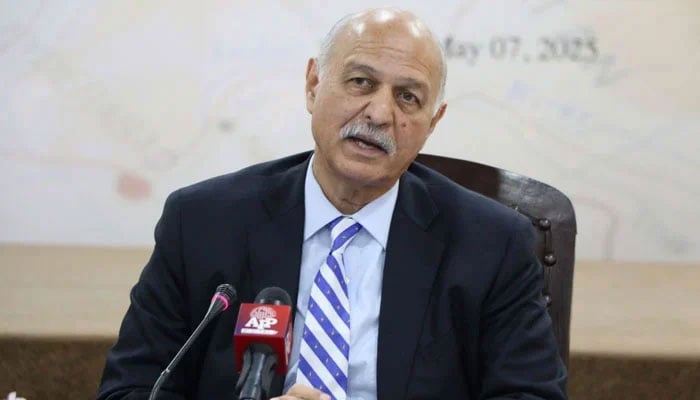
Islamabad : Former Senator Mushahid Hussain Sayed has emphasised that Pakistan should capitalise on the Former Senator Mushahid Hussain Sayed evolving geopolitical environment by focusing on economic recovery, regional connectivity and strategic partnerships, particularly with China.
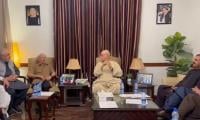
Mushahid was addressing a roundtable on “Dynamics of Iran conflict: implications and choices” organised here by Sustainable Development Policy Institute (SDPI).
Mr Mushahid advocated revival of the Iran-Pakistan gas pipeline project to ensure uninterrupted and affordable energy supplies for Pakistan. He termed the US-Iran conflict the most significant geopolitical development since the 1956 Suez crisis. He said it has fundamentally reshaped global alignments and weakened Western strategic cohesion. The war exposed divisions within NATO, the Gulf Cooperation Council and Western alliances while accelerating the emergence of new middle powers, he said adding that Pakistan’s strategic relevance increased considerably due to its balanced diplomatic engagement with both Iran and the United States.
Dr Abid Qaiyum Suleri, Executive Director, SDPI, said the rapidly evolving Middle East crisis had altered global energy systems, investment flows, air travel patterns and defence dynamics. The world is now attempting to reduce dependency on imported oil, he said, adding that the Gulf’s traditional status as a safe investment destination also come under question.
He, however, warned that the global energy crisis is far from over as inventories were already depleted and further disruptions could trigger another major spike in oil prices. “The only viable long-term solution is transition towards renewable energy,” he remarked.
Dr Sajid Amin Javed, Deputy Executive Director, SDPI, warned that the conflict already evolved from a military confrontation into an energy, food and financial crisis with potentially long-lasting consequences for developing economies. He said Pakistan’s hard-earned macroeconomic stabilisation achieved over the last two years was coming under renewed pressure due to surging inflation, energy uncertainty and external vulnerabilities.