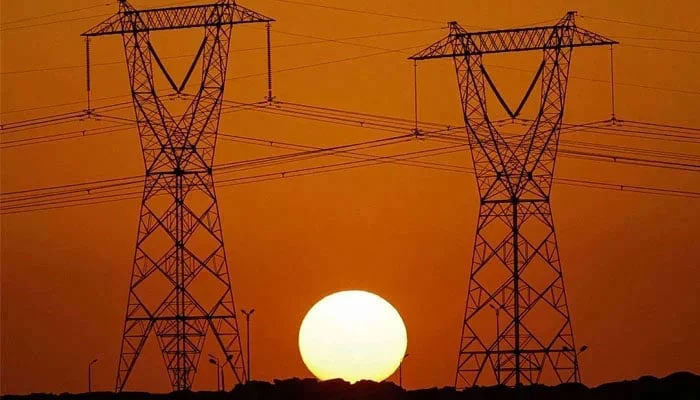
ISLAMABAD: The federal government has blocked an electricity tariff increase of up to Rs6 per unit for June 2026, instead delivering a modest relief of up to 20 paisas per unit to consumers despite soaring global fuel prices driven by the Iran-US war.
The announcement by the Power Division on Monday comes as an acute shortage of liquefied natural gas (LNG), a surge in international oil prices and forced reliance on expensive fuel oil threatened to dramatically inflate household electricity bills.
“Despite severe global and regional headwinds, the government’s interventions have successfully insulated consumers from a massive tariff shock,” spokesperson of the Power Division said.
Of this relief, quarterly tariff adjustment (QTA) could be of Rs1.93 per unit reduction, to be approved for the next three months, worth a combined Rs65 billion in consumer savings. That reduction effectively cancels out an expected monthly fuel price adjustment of Rs1.73 per unit recorded for April 2026, leaving consumers with a slight net gain, he said.
The regional conflict disrupted RLNG supplies, Brent crude prices jumped from a projected $70 per barrel to $120 per barrel in April alone. Under normal circumstances, that spike would have automatically pushed electricity bills up by Rs5 to Rs6 per unit, an additional burden of roughly Rs38 billion on consumers for April alone.
To plug the gap, the government redirected domestic gas supplies, ramped up generation from furnace oil and imported coal-fired plants, and enforced load management across the grid. Reduced transmission and distribution losses provided additional financial headroom.
The National Electric Power Regulatory Authority (Nepra) had originally calculated base tariffs using $70-per-barrel oil, standard demand projections, and a stable generation mix. The Iran-US conflict upended all three assumptions almost overnight. The regulator will hold public hearing to give final rulings.
The official credited policy continuity, administrative oversight and structural reforms for preventing the crisis from reaching consumers’ wallets.