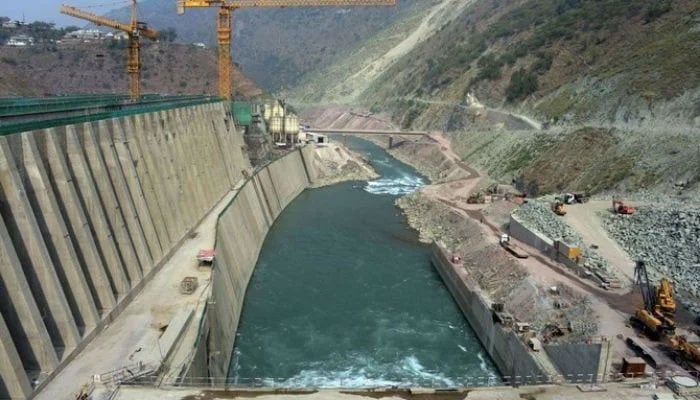
For more than 60 years, the Indus Waters Treaty has been regarded as a rare example of cooperation in a region often defined by rivalry and distrust. It has been praised as a resilient agreement that survived wars, political upheavals and long stretches without diplomatic engagement.
Yet behind this celebrated facade lies a damaging truth that Pakistan has silently accepted: the continuous, unregulated inflow of India’s contaminated wastewater into our lands. Now, as India signals its intention to withdraw from the treaty entirely, Pakistan must finally confront the environmental debt accumulated over 65 years.
The treaty divided rivers but ignored water quality. It allocated the three eastern rivers to India and the three western rivers to Pakistan, but it made no mention of the wastewater that crosses the border through drains such as Hudiara. This omission has allowed India to discharge untreated industrial and municipal waste into Pakistan without consequence.
The Hudiara Drain begins in Batala in Indian Punjab, passes through Amritsar and after travelling 44 kilometres – collecting hazardous industrial effluents and human sewage – enters Pakistan at Lalu/Hudiara village. From there, it flows past Lahore’s expanding housing developments, including Khayaban-e-Amin, Valencia and Bahria Town, before continuing another 54 kilometres and emptying into the dry bed of the River Ravi.
Once inside Pakistan, the drain becomes even more toxic. Waste from another hundred industries, along with sewage from nearby villages and housing societies, is added to it. Until the 1970s, Hudiara was merely a stormwater channel. Today, it is a lifeless river of poison where no aquatic organism can survive. Research shows that its dissolved oxygen, biological oxygen demand and chemical oxygen demand levels far exceed national and international safety standards. For three decades, not a single fish or aquatic species has been able to live in its waters. These pollution levels surpass even the limits set for industrial drains.
The threat is not theoretical. Nearly a hundred industries, mostly textile units, are discharging chemically contaminated water into this toxic flow without treatment. The polluted water seeps underground, contaminating groundwater with arsenic, zinc, lead, Ecoli and other harmful microorganisms. Farmers along the drain use this free water to irrigate their crops, producing vegetables and fodder that ultimately reach Lahore’s markets. The toxins bind with soil, degrade farmland and enter the human body through vegetables, meat, and drinking water. The result is a slow, largely unrecognised public health crisis: reduced nutrition, chronic illnesses and long-term exposure to heavy metals.
Hudiara’s average flow of 180 cusecs means that over the lifespan of the Indus Waters Treaty, nearly 10 billion cubic meters of polluted wastewater have entered Pakistan from this single drain. After causing damage in Lahore, the drain empties into the Ravi, contributing an estimated ten to 15 per cent of the river’s pollution. Communities downstream and the lands irrigated by the Balloki Barrage become the final recipients of this poison, only for the vegetables grown there to return to Lahore’s markets once again.
This is the hidden cost of the Indus Waters Treaty. If India had treated this wastewater before releasing it across the border, the cost – based on conservative global standards – would exceed $20 billion. And that figure covers only basic treatment. It does not include environmental degradation, agricultural losses or public health impacts across the Ravi basin. When these additional damages are accounted for, Pakistan’s rightful compensation claim rises to between $75 billion and $135 billion, consistent with international environmental law and the ‘polluter pays’ principle.
India’s suspension of the treaty changes the landscape. If the treaty is to be renegotiated, or if India insists on abandoning it, Pakistan must place environmental compensation at the centre of the discussion. The issue must be raised under Section 4, Clause 10 of the treaty. At the same time, Pakistan must address its own failures. Industries in Lahore must be compelled to ensure that only treated, heavy-metal-free water enters the drain. The use of this toxic water for growing vegetables and fodder must be banned. Housing societies and urban areas along the drain must treat their sewage before releasing it.
This is not a call for confrontation but for justice, sovereignty and the fundamental right to a clean environment. The Indus basin cannot endure another 65 years of silent pollution. Pakistan must present its case clearly and assertively. The environmental debt is real, and it must be part of any negotiation. The health of our rivers, our people and our future depends on it.
The writer is an expert on climate change and sustainable development and the founder of the Clifton Urban Forest. He tweets/posts @masoodlohar and can be reached at: [email protected]