KARACHI: Pakistan’s electricity mix is undergoing a rapid transformation, with fossil fuel generation losing share while nuclear and decentralised solar capacity expand at an accelerating pace, according to an analysis published on X by independent analyst Chris Meder on Tuesday.
The share of fossil fuels in Pakistan’s power generation mix has declined to about 44 per cent from roughly 66 per cent over the past two decades, while nuclear power has risen to around 17 per cent from about 2.0 per cent in 2000, the analyst said.
Hydropower has continued to play a stabilising role in the system, accounting for about 30 per cent of generation over the years, while wind and solar power have gradually increased their contribution.
The most significant disruption, however, has come from solar energy, particularly decentralised rooftop installations that remain largely outside official generation statistics, according to the analysis.
Pakistan’s rapid solar expansion has been driven more by economics than policy, Meder said, citing rising electricity tariffs, unreliable grid supply and declining prices for imported solar panels as the main catalysts behind the surge in installations.
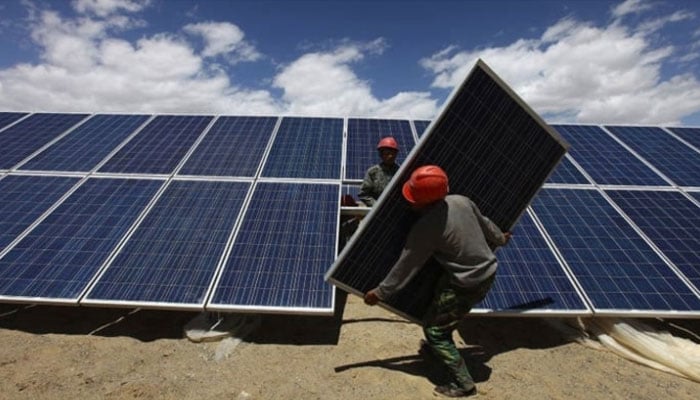
In his separate post, the analyst said Pakistan had imported an estimated 51.5 gigawatts (GW) of solar panels by late 2025 — close to the country’s entire installed grid capacity — while officially registered net-metered rooftop solar capacity stood at only around 5.3 GW to 6.8 GW.
The disparity suggests that a substantial volume of solar generation is operating “behind the meter”, including systems installed at homes, farms, factories and commercial sites that are not fully captured in official statistics, Meder said.
Pakistan imported an estimated 16.6 GW to 17 GW of solar equipment in 2024 and a further 18 GW in 2025, according to the post. Rooftop solar installations were estimated to have risen from about 1.3 GW to 4.1 GW during 2024, while unregistered or off-grid solar capacity may now exceed 24 GW, the analyst said.
Including distributed and off-grid generation, solar power could now account for roughly a quarter of Pakistan’s actual electricity consumption, according to the analysis.The rapid expansion has been driven largely by economics rather than government policy, the analyst said, citing rising electricity tariffs, higher diesel prices and persistent power outages as key factors pushing consumers towards self-generation.
At the same time, falling prices for Chinese solar panels and battery storage systems have made small-scale solar increasingly affordable for households and businesses.The analysis said Pakistan’s transition differs from conventional energy pathways seen elsewhere, with two parallel trends reshaping the system simultaneously.Nuclear generation is expanding through large-scale, centrally planned projects, while rooftop solar adoption is spreading rapidly through consumer-led investment decisions.
“They’re not competing. They’re stacking,” Meder wrote in the post.Hydropower continues to act as a balancing source for the grid, while fossil fuels remain a major component of the system despite their declining share.
The changes have largely been driven by financial pressures and supply constraints rather than coordinated transition planning, according to the analysis.The power sector has faced mounting challenges in recent years, including high generation costs, transmission bottlenecks and falling grid consumption as industrial and residential consumers increasingly shift towards captive and renewable energy sources.
Meder said rooftop solar may ultimately emerge as the dominant force reshaping Pakistan’s electricity market because of the speed and scale of decentralised adoption, which is becoming increasingly difficult to track through conventional datasets.