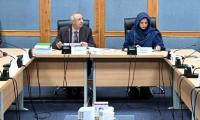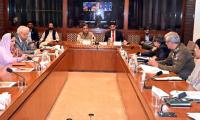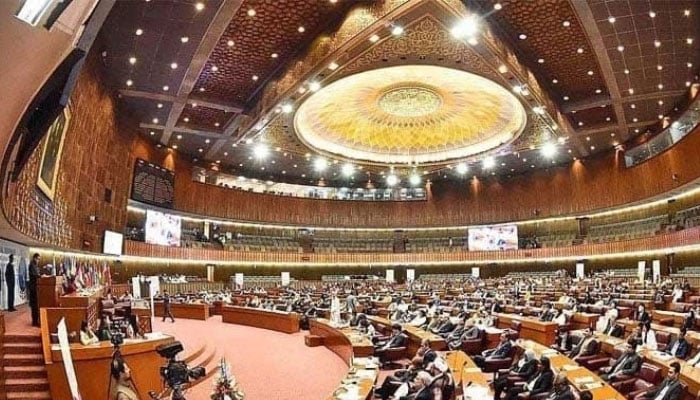
ISLAMABAD: The National Assembly was on Monday informed that Pakistan has raised India’s “water aggression” at all international forums and that the international community supports Pakistan’s stance on the issue.
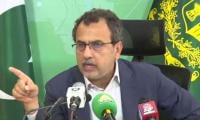
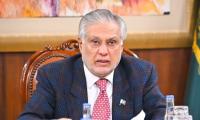
Responding to questions during the Question Hour, Minister of State for Law and Justice Barrister Aqeel Malik said Pakistan and India had signed 13 agreements, but India was failing to fulfil its obligations under the Indus Waters Treaty. He said that following the Pahalgam “false flag operation”, India had announced the suspension of the treaty, prompting Pakistan to raise the matter at every available international forum. The minister said India was using water as a “weapon of war”, adding that international judicial forums had maintained that treaties must be implemented.
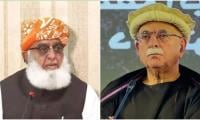
Responding to a supplementary question by Shehryar Afridi, Aqeel said Pakistan’s permanent representative to the United Nations had highlighted India’s “water aggression” during various UN sessions. He said the international community stood with Pakistan on the issue and described India’s actions as a clear violation of international law. He added that the matter could not be taken to the International Court of Justice because it related to a bilateral treaty and instead fell under the jurisdiction of a court of arbitration.
Replying to another supplementary question by Iqbal Afridi, the minister said India was stopping water flow in the Chenab River and at times releasing water without prior notice. He said India was currently not sharing information with Pakistan regarding water flows, which was why Pakistan was terming the situation “water aggression,” adding that Pakistan’s position on water-related issues could not be ignored.
Responding to a question by Shehla Kamran, Federal Minister for Petroleum Ali Pervaiz Malik said the federal and Balochistan governments were fully committed to taking the Reko Diq project to its logical conclusion. The minister described Reko Diq as a project of national importance and said minor issues were common in multibillion-dollar ventures. He informed the House that the head of Barrick Gold had personally visited Pakistan and taken notice of issues facing the project. He said both the federal government and the government of Balochistan remained determined to ensure its successful completion. All requisite approvals for Reko Diq project financing had been secured from lenders and sponsors, while Barrick had reaffirmed its commitment to the project at various forums. Regular engagement between the respective teams continues, and work streams under the development plan are progressing. He told the Assembly that under the Reko Diq Joint Venture Agreement, a comprehensive governance and oversight framework is in place to safeguard the interests of state-owned enterprises and the government of Balochistan. This includes structured engagement with the operator through designated committees and board-level interactions, with all agreed procedures and governance protocols being followed.
In reply to a question on the collection of the Climate Support Levy (formerly Carbon Levy), the minister said revenue collected from July to January 2026 amounted to Rs29.161 billion. During the current financial year, around Rs51 billion are expected to be collected, subject to maintaining current rates and projected petroleum product sales. Utilisation of these funds does not fall under the domain of the Petroleum Division.
In a written reply to a question by Samina Khalid Ghurki, the minister said expensive RLNG is diverted to the domestic sector at notified indigenous gas tariffs, resulting in a tariff differential or diversion cost. This cost is recovered from other gas consumers through a cross-subsidy mechanism. He said the domestic sector is divided into protected and non-protected categories based on minimum consumption thresholds. About 67% of domestic consumers fall into the protected category and are charged Rs200 to Rs350 per MMBTU, compared with an average purchase price of Rs1,800 per MMBTU. Other consumers are unable to bear the burden of cross-subsidies as these are not budgeted like tariff differential subsidies in the power sector.
Under the reform agenda, the government plans to replace the cross-subsidy with direct financial support for low-income households through a social protection programme such as the Benazir Income Support Programme. Previously, he said, domestic consumers were provided with gas at subsidised rates regardless of income, with the subsidy financed through higher tariffs for industrial and commercial consumers. The new approach aims to link subsidies with income levels using existing social protection mechanisms so that only eligible low-income households receive gas subsidies, while full cost recovery helps prevent circular debt in the gas sector.