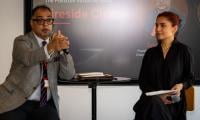
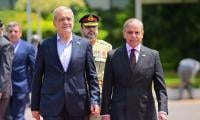
LAHORE: President of the Lahore Chamber of Commerce and Industry (LCCI) Faheemur Rehman Saigol presented the chamber’s budget proposals for the upcoming fiscal year to Finance Minister Muhammad Aurangzeb, focusing on industrial revival, export growth, tax reforms and reducing the cost of doing business.
During the meeting, the finance minister directed Director General of the Tax Policy Office Dr Najeeb Ahmed Memon to review the proposals submitted by the LCCI.Muhammad Aurangzeb said the government’s reforms were aimed at minimising human interaction, facilitating taxpayers and improving the overall business environment in the country.
The LCCI president said consistent engagement between the government and the private sector was essential for restoring business confidence, promoting industrial growth and achieving sustainable economic stability.
The chamber called for an end to policy uncertainty caused by frequent Statutory Regulatory Orders (SROs) and changing tax interpretations, describing unpredictability as one of the major factors contributing to de-industrialisation.
The LCCI also urged the government to reduce the cost of doing business, which it said was currently 22-30 per cent higher than in competing regional economies.The chamber proposed the introduction of a sector-wise tariff structure to protect domestic industries operating under significantly higher costs than regional competitors.
It also stressed the need for timely payment of tax refunds with compensation for delays, reduction in the withholding tax disparity between manufacturers and commercial importers, revision of Section 113 for low-margin sectors and a review of Section 7E to encourage documented investment.
The chamber further proposed uniform tariff and tax treatment across all regions, including Fata and Pata, along with stronger monitoring of the Export Facilitation Scheme (EFS) through real-time data sharing and post-clearance audits.