PESHAWAR: Chief Minister Muhammad Sohail Afridi on Tuesday reaffirmed the provincial government’s commitment to strengthening the Education Testing and Evaluation Agency (ETEA) as a credible and autonomous institution.
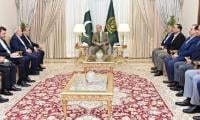
He stated this while chairing the 35th meeting of the ETEA Board of Governors at the Chief Minister’s House in Peshawar.
An official handout said the meeting was attended by board members and senior officials, and included a comprehensive briefing on the agency’s overall performance and ongoing reforms in its testing system.
Expressing satisfaction with the progress achieved by ETEA, he emphasized that the government is undertaking measures to institutionalize merit and transparency across public sector recruitment and assessment processes.
The board was informed that ETEA has successfully transitioned from a paper-based examination system to a computer-based testing (CBT) model.
It added that this shift has significantly enhanced operational efficiency, minimized the risk of malpractice, and effectively eliminated instances of paper leakage.
Additional measures, such as live streaming of examinations and real-time result processing, have further strengthened transparency and public trust.
The briefing highlighted that the adoption of digital testing has eliminated paper usage entirely, contributing to environmental sustainability.
ETEA completed 37 projects in the previous year, while the number of projects in the current year has increased substantially to 166, reflecting a sharp rise in institutional capacity and demand for services.
To further safeguard the integrity of examinations, ETEA has implemented advanced anti-cheating mechanisms, including facial recognition technology, rigorous quality assurance protocols, source-based countermeasures, and strict enforcement against violations.
The board was informed that work is underway to replace the traditional roll number system with a facial login mechanism for candidates, aimed at further enhancing system security and authenticity.
In addition, a comprehensive financial and administrative manual has been developed to strengthen governance, standardize procedures, and ensure institutional resilience.
Gender inclusion was also highlighted as a key reform area, with 50 percent female representation ensured among invigilation staff during examinations.
On the legal front, it was stated that out of 90 cases filed against ETEA in the Peshawar High Court, 86 have been decided in favour of the agency, while the remaining four cases are currently sub judice.
The meeting was informed that the new ETEA Act has been approved by the provincial cabinet, and the agency has also been awarded ISO 9000 certification, underscoring its compliance with international quality management standards.
It was stated that, given its improved performance and credibility, ETEA’s services are now being utilized by various federal government entities as well as the Government of Gilgit-Baltistan, reflecting growing confidence in the agency’s institutional capacity and integrity.