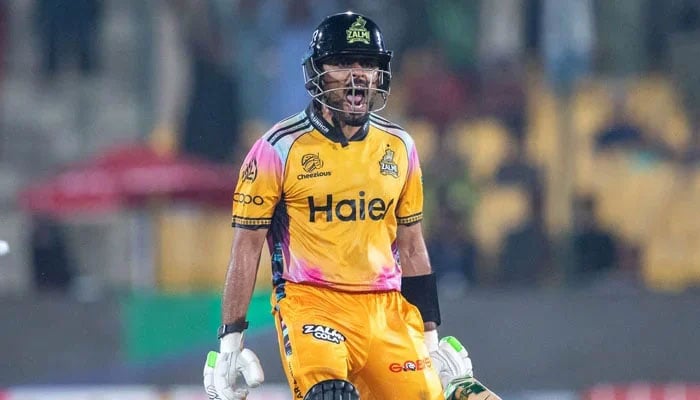
LAHORE: Peshawar Zalmi Captain Babar Azam declared the PSL win and the personal on the achievement with humility and faith.
“First of all, thanks to Allah that we achieved this trophy; we had been waiting for a long time,” he said. “I believe that what Allah has written for you, you will receive. Whether it comes late or early, one should always be satisfied and thankful.”
The words capture the spirit of Zalmi’s journey—patience, perseverance, and belief—qualities that carried them through the tournament to reclaim glory after years of waiting. For the players, management, and fans alike, the victory was not just about cricketing success but also about resilience and gratitude in the face of challenges.
For years, the question haunted Babar Azam like a shadow: brilliant batsman, but could he win a trophy as captain? On a balmy Friday evening at the Gaddafi Stadium, that shadow was finally banished. Peshawar Zalmi’s captain led his team to a historic PSL 11 title, and in an emotionally charged post-match press conference, Babar opened up about the journey—the doubts, the support, the setbacks, and the ultimate redemption.
Speaking to a packed media contingent after Zalmi’s triumph, Babar began with gratitude that transcended cricket. His words carried the weight of a man who had endured criticism from all quarters. The narrative that Babar could not win a final as captain had followed him from the national team to domestic cricket. On this night, he offered no defiance—only quiet conviction. “Today, AlhamduLillah, we won as a team,” he said, deliberately deflecting individual credit.
Perhaps the most revealing moment came when Babar addressed his personal form. The PSL 11 final was not a showcase of his batting brilliance—he did not deliver the runs he expected of himself. But his honesty about that failure spoke volumes about the character of the man.
“I couldn’t deliver exactly what I expected from myself today, but these things happen,” he admitted. “Sometimes your plans don’t execute perfectly inside the ground. When that happens, you have to take two steps back and analyze your mistakes to fix them.”
He spoke of the days after the World Cup, when he returned home feeling “down” because he had not performed to his own standards. In the ten days before the PSL, he sat alone, examined his mistakes, and worked on his technique and mindset. The result was a tournament that reaffirmed his status as Pakistan’s premier batsman, even if the final did not showcase his best.
“My family and close friends provided immense support and motivation,” Babar said. “I spoke with my coaches, worked on my technique, and focused on repeating my best habits. Life is like a roller coaster; you learn, you perform well, and sometimes you perform poorly. It’s part of the game.”
When asked about a specific person who motivated him during this journey, Babar named Zaheer Bhai—a figure he credited with keeping him grounded during turbulent times. “Whenever we met, he told me: ‘You have done this before. These tough times came to us and they will come to you, too. Don’t be afraid. Just keep yourself motivated and put more time into your training and practice.’”
It was advice Babar took to heart. The result was a PSL campaign where he rediscovered his rhythm, scoring consistently and leading from the front. “In this PSL, I decided to play my natural cricketing shots based on what the pitch and the team required,” he explained.
On the question of captaincy—the very issue that had become a stick to beat him with—Babar was refreshingly matter-of-fact. “Regarding captaincy, it’s the same process; it’s just that the execution and planning were better today,” he said. “As a captain, you try to assess the opponent and the conditions—planning which bowler to use against which batsman. You can provide confidence from the outside, but on the day, it depends on how the player responds.”
He credited the coaching staff, particularly Otis Gibson and Misbah-ul-Haq, for giving him a “free hand.” But he clarified that he had always enjoyed such freedom. “Otis and all the coaches told me: ‘Go and enjoy your game. Focus on your batting. You know how to score runs; we don’t need to tell you how to play. You know how to build an innings according to the conditions.’ I executed that, and Allah gave me the performance.”
Babar reserved special praise for the partnership between Hadi and Abdul Samad that rescued Zalmi after they lost four early wickets in the final.
“Losing four wickets early created some pressure in the dugout,” he recalled. “However, the way Hadi and Samad batted was very important. They played sensibly, didn’t take unnecessary chances, and built the partnership we needed before playing their natural game.”
It was a partnership that embodied Babar’s captaincy philosophy: trust your players, give them freedom, but insist on sensible cricket under pressure. When asked whose prayers were behind the victory—his father’s or his mother’s—Babar’s answer was inclusive.
“Beyond my family, I think it was the prayers of all the fans,” he said. “My parents’ prayers are always with me; I am sitting here today and have received this respect because of them. I also thank the fans for supporting me through good and bad times.”