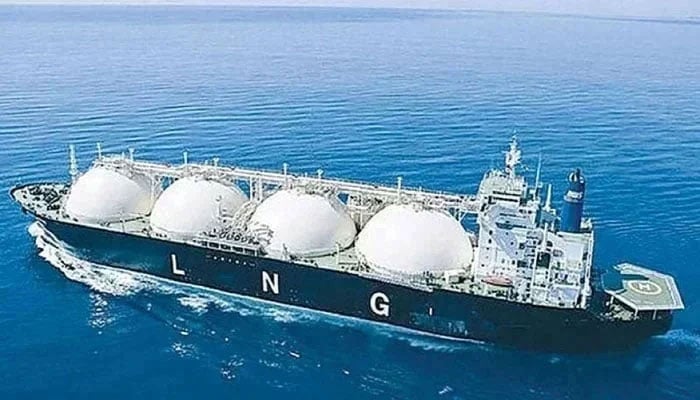
Liquefied Natural Gas (LNG) has evolved into a cornerstone of Pakistan’s energy infrastructure, critical to both the power grid and the national budget. The annual import costs for LNG, fluctuating between $3.5 billion and $5 billion, represent one of the country’s most significant and volatile external financial obligations.
In volume terms, LNG accounts for around one-third of total natural gas consumption, offsetting declining domestic production. Its use is highly concentrated: the power sector is the main consumer, typically absorbing about half or more of LNG supplies at peak, while the fertiliser sector is the second key user, relying on LNG-linked gas as feedstock for urea when domestic gas is diverted. Around 99 per cent of imports are sourced from Qatar, exposing the system to a single supplier and a single transit route through the Strait of Hormuz.
That vulnerability became acute in 2026 when regional disruptions and constraints at Qatar’s Ras Laffan facilities interrupted supplies, forcing a rapid shift from surplus management to emergency procurement. Recent disruptions in LNG supplies from Qatar led to several hours of loadshedding across Pakistan.
Pakistan’s return to the LNG spot market in April 2026, after more than two years of relative stability, captures in a single transaction the cost of its long-term energy architecture. The country purchased a cargo from TotalEnergies at $18.4/mmBtu, implying a total cash outflow of around $65 million, compared with an estimated $35–40 million under pre-crisis long-term Brent-linked contracts prevailing before disruptions in the Strait of Hormuz and constraints at Qatar’s Ras Laffan facilities. The cargo, about 140,000 cubic metres of LNG, delivered roughly 3.3–3.5 million MMBtu and provided around 100 mmcfd of gas – enough to stabilise part of the system and cover critical power-sector fuel needs for about a month, but still only a fraction of demand.
The urgency of that spot purchase reflected a sudden reversal in Pakistan’s gas balance. Just months earlier, the country had been managing LNG surpluses and diverting cargoes under long-term contracts. Now it was forced back into emergency procurement while still carrying fixed dollar-denominated obligations on idle infrastructure and contracted supply.
That shift was not accidental. It was the outcome of a system built over the past decade: a rigid LNG import architecture combining long-term take-or-pay contracts, fixed-capacity payments for terminal infrastructure and a heavy reliance on a single supplier and transit route.
Pakistan’s LNG crisis is not a story of bad luck or a sudden geopolitical rupture. It is the cumulative outcome of policy choices made between 2015 and 2021 and then left largely uncorrected as structural misalignment accumulated. What Pakistan built was a fiscally rigid, dollar-denominated energy architecture that locked the state into long-term obligations across both supply and infrastructure, while underestimating demand risk and overexposing itself to a single supplier.
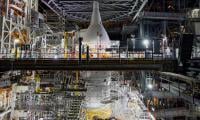
The architecture began with infrastructure. In 2015, Pakistan fast-tracked LNG imports through a floating terminal at Port Qasim, using a Floating Storage and Regasification Unit (FSRU) leased from Excelerate Energy. The urgency – chronic loadshedding – was real. But the financing model embedded structural rigidity. Through Sui Southern Gas Company (SSGC), the state committed to dollar-indexed regasification tariffs based on capacity-linked charges, payable regardless of market utilisation dynamics.
Taken together, Pakistan’s LNG terminals impose combined capacity payments of roughly $15 million per month (around $180 million per year) across the system, creating a dollar-denominated obligation independent of LNG consumption. These commitments are embedded within long-term terminal capacity arrangements, effectively locking in fixed payments over the economic life of the infrastructure.
This was not inevitable. Alternative structures – shorter contract tenors, utilisation-linked capacity pricing or phased expansion – were available. Instead, Pakistan front-loaded fixed commitments into a system that assumed uninterrupted demand growth. The second terminal in 2017 replicated the same design logic, despite emerging operational signals of utilisation volatility.
The supply side reinforced the same rigidity. The February 2016 Qatar contract committed 3.75 million tonnes per annum (mtpa) for 15 years at 13.37 per cent of Brent. In May 2017, Pakistan LNG Limited (PLL) signed a contract with Eni of roughly 0.7–0.75 mtpa at 12.14 per cent of Brent. In February 2021, PSO signed a second Qatar contract for 3 mtpa at 10.2 per cent of Brent, with deliveries beginning in 2022.
The 2021 decision is the critical pivot point. By then, Pakistan had already experienced demand volatility driven by circular debt, dispatch inefficiencies and seasonal swings. Yet policymakers deepened exposure to the same supplier under the same contractual logic.
All three contracts were take-or-pay. At scale, they locked Pakistan into roughly 120 LNG cargoes annually and into multi-billion-dollar foreign-exchange obligations. The Qatar contracts also embedded Net Proceeds Differential (NPD) clauses, under which Pakistan bore downside risk on diverted cargoes without participating in upside gains. The Eni contract, by contrast, included profit-and-loss sharing on diversions, demonstrating that alternative structures existed.
By 2021, Pakistan had constructed a system defined by three rigidities: take-or-pay LNG imports, fixed dollar-denominated terminal capacity obligations, and deep indexation to Brent-linked pricing. Demand assumptions were not stress-tested against structural change.
From 2022 onward, the system began to diverge from reality. Power demand became increasingly volatile, circular debt distorted dispatch decisions, and distributed solar expanded rapidly. By 2024, installed solar capacity had reached an estimated 30–34 gigawatts, much of it behind-the-meter and outside formal planning frameworks. This was a structural shift in energy consumption patterns.
Policy response lagged. Distributed generation was not meaningfully integrated into demand forecasting, LNG procurement remained unchanged and contractual exposure was not recalibrated.
By late 2024, LNG imports exceeded system demand. Gas accumulated in pipelines, and Sui Northern Gas Pipelines Limited (SNGPL) faced line-pack pressure constraints. Pakistan was paying for LNG it could not consume and for terminal capacity it could not utilise.
The 2025 response – 45 cargoes across 2026–27 and saving roughly $1.05 billion – was reactive stabilisation rather than structural reform. The Eni contract generated limited flexibility benefits, including roughly $45 million in shared gains and around $300 million in avoided costs. The Qatar contracts, constrained by NPD clauses, imposed losses without offsetting upside. Structural rigidity remained intact.
Then the system flipped.
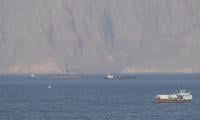
In early 2026, disruptions in the Strait of Hormuz and constraints at Qatar’s Ras Laffan facilities triggered force majeure, halting LNG supply after February 28. Pakistan moved from surplus to shortage within weeks. Power deficits exceeded 4,500MW, and load shedding returned at scale.
This was an external shock, but its impact was magnified by prior policy concentration: approximately 99 per cent of LNG imports were sourced from Qatar, with heavy reliance on a single maritime corridor. Supply diversification had been structurally neglected.
The rigidity now worked in reverse. Terminal capacity payments continued in dollars despite zero throughput. LNG supply contracts were suspended, but infrastructure obligations persisted. Pakistan was paying for idle capacity while simultaneously facing acute fuel shortages.
The core failure is not LNG as an energy instrument. Many countries rely on it successfully. The failure is Pakistan’s inability to design flexibility into a system built on rigid, dollar-denominated commitments.
Three structural problems stand out. First, Pakistan relied too heavily on a single supplier, creating a dangerous concentration risk. Second, the contracts were uneven: they protected the seller more than Pakistan, especially through the Net Proceeds Differential (NPD) clauses that limited Pakistan’s upside while exposing it to downside losses. Third, planning failed to keep up with reality. Demand forecasts did not adjust to clear and growing changes in the energy system, especially the rapid rise of distributed solar power.
The result is a system that imposes costs in both directions. In surplus conditions, Pakistan pays for unused LNG and idle infrastructure capacity. In shortage conditions, it pays premium spot prices while still servicing fixed obligations. This is structural misalignment.
Operational agencies have functioned within constraints, but those constraints are themselves the product of earlier policy decisions that were never revisited.
Pakistan’s LNG system solved one problem: acute shortage. It created another: structural rigidity. The failure was not LNG adoption. It was locking the country into a model that assumed stability in an energy system that was fundamentally changing.
The writer is former head of Citigroup’s emerging markets investments and author of ‘The Gathering Storm’.