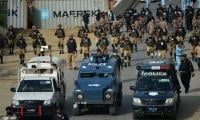
On May 6, 2018, in the heart of Narowal, a young man raised a weapon and fired at me.
For many years, I had spoken about extremism as a national challenge, a poison that enters minds before it damages societies. But in that one shattering moment, extremism was no longer an abstract idea. It was a bullet. It was pain. It was blood. It was a life interrupted.
By the infinite mercy of Allah Almighty, I survived. But survival carries its own responsibility. I came out of that incident with a clarity that has never left me: if hatred had tried to silence a voice, then that voice must speak louder for peace. That is how the Narowal Peace Dialogue was born. Every year since that attack, I have tried to turn a personal wound into a public mission by convening conferences in Narowal dedicated to peace, tolerance, interfaith harmony and countering extremism. What began as an act of defiance against violence has gradually grown into a wider platform of dialogue, learning and solidarity.
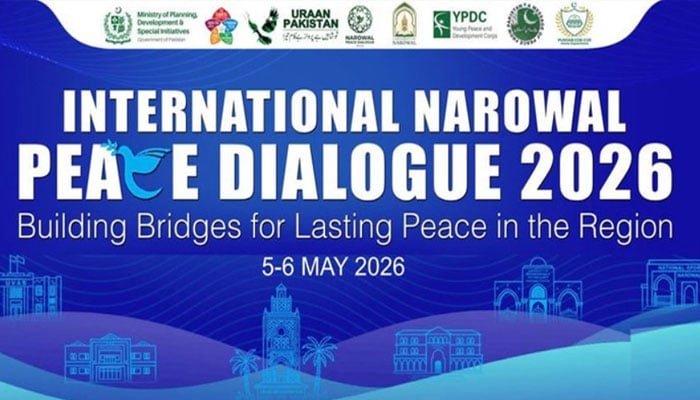
This week, on May 5 and 6, Narowal hosts the Second International Narowal Peace Dialogue under the theme ‘Building Lasting Bridges for Regional Peace’. The dialogue brings together twenty international delegates, including the former prime minister of Morocco, more than 4,000 students and over 200 delegations from across Pakistan.
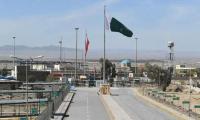
Narowal, a border city has become a bridge. A bullet meant to silence a message has helped turn that message into a movement. This transformation is a deliberate response to one of the most serious challenges of our age: the retreat of peace and the rise of hatred.
Today, narrative-building itself has been weaponised. A lie can be designed, packaged, amplified,and targeted before facts have even had a chance to breathe. Societies are being pushed into polarisation. Communities are being divided by manufactured grievances. Ethnic, sectarian, religious, political and sub-national identities are being exploited to create anger, suspicion and chaos.
Social media has opened extraordinary possibilities for knowledge, participation and connection. But it has also given extremism new tools. Algorithms often reward outrage over understanding. Fake news is used not simply to misinform, but to inflame. It can turn neighbour against neighbour, citizen against state, community against community and nation against nation. That is why the struggle for peace today is also a struggle for truth. Countering violent extremism is no longer only about security operations. It is about countering hate voices, rebuilding trust, teaching critical thinking, protecting young minds and creating spaces where dialogue can defeat division.
The Narowal Peace Dialogue matters because it is not merely a ceremonial event. It is a moral and intellectual response to the climate of anger around us. We are determined to make Narowal known for dialogue, not division. This city has seen hardship, neglect and the pressures that come with living near a frontier. But it has also shown what vision can do. Through universities, schools, sports facilities, cultural platforms and youth engagement, Narowal is emerging as a city of knowledge, opportunity, and harmony.
For me, this has always been the larger purpose of development. Roads, campuses, hospitals, sports grounds and public institutions are not merely physical infrastructure. They are instruments of nation-building. They prove that a small city can carry a big message.
The central message of the Narowal Peace Dialogue is simple but powerful: we may have differences, but we must never allow our differences to become hatred. Let us compete, but in knowledge, service, innovation and character. Let us debate, but with dignity. Let us disagree, but without dehumanising one another.
The Holy Quran reminds us: “O mankind, indeed We created you from male and female and made you peoples and tribes so that you may know one another.” (Surah Al-Hujurat, 49:13)
Dialogue is a moral, and civilisational duty. The Holy Prophet Muhammad (pbuh) gave this duty extraordinary importance. In a well-known Hadith, he asked his companions whether he should inform them of something better in rank than prayer, fasting and charity. He then said: reconciling relations between people. Because when relations are corrupted, societies are destroyed. This Prophetic wisdom speaks directly to our time. A society cannot survive on rituals alone if hearts are filled with hatred.
Pakistan’s commitment to peace is not a slogan. It is part of our national experience. Since Independence, Pakistan has been among the world’s leading contributors to UN peacekeeping missions. Our diplomacy has repeatedly supported dialogue, restraint and negotiated settlement in volatile regions.
Pakistan understands the cost of conflict because we have paid it ourselves. We understand the price of extremism because our people, our soldiers, our schools, our mosques, our shrines, our markets, and our leaders have been targeted by terrorism and hate. But we also understand the power of resilience. We know that societies are not defeated by violence unless they surrender their moral purpose.
The Pakistan the world must see is not a country defined by its challenges, but a nation determined to overcome them. This is also the spirit of Uraan Pakistan, a national vision of economic revival, human development and collective confidence. A peaceful Pakistan is essential for a prosperous Pakistan. And a prosperous Pakistan can become a stronger force for regional peace.
Peace and development are inseparable. No nation can build classrooms, industries, laboratories, exports and jobs on the foundations of fear. No region can prosper when suspicion replaces cooperation. The choice before South Asia, the Muslim world and the wider international community is clear: we can continue to spend our energies managing conflict, or we can invest them in building shared futures.
The most important feature of the Narowal Peace Dialogue is its focus on the youth. More than 4,000 students are participating in this conference. This is not just attendance. It is investment. Young people today live in a world of information overload. Their minds are the main battleground of the 21st century. Extremists understand this. Hate networks understand this. Those who wish to divide societies understand this.
Therefore, peacebuilders must understand it too. The answer is not to isolate young people from the world but to equip them for it. We must give them critical thinking, moral courage, historical understanding, digital literacy and the confidence to ask questions. We must teach them how to recognise fake news, how to resist manipulation, how to reject hate, and how to choose dialogue over destruction.
Through this Dialogue, we are nurturing peace ambassadors. We want young Pakistanis to return to their campuses, towns, villages and communities with a message: patriotism is not hatred of others; faith is not intolerance; strength is not aggression; and disagreement is not enmity.
A peaceful society is not built by governments alone. It is built by teachers, parents, scholars, media professionals, religious leaders, artists, students and citizens. Every classroom can become a space for peace. Every mosque, church, temple, gurdwara, university, newsroom and digital platform can become a bridge or a battlefield.
The choice is ours. This is why peace education must become part of our national conversation. We need young people who are confident in their identity but respectful of others; proud of their faith but not hostile to difference; patriotic but not intolerant; connected to the world but rooted in values. Let us say this clearly: peace is not weakness; dialogue is not surrender; reconciliation is not cowardice.
Quaid-e-Azam Muhammad Ali Jinnah envisioned Pakistan as a state rooted in justice, tolerance, constitutionalism and goodwill towards all. That vision remains our compass. Pakistan must be strong in defence, strong in economy, strong in institutions and strong in social cohesion. But above all, it must be strong in moral purpose.
The future will not belong to nations that educate their youth, protect their social fabric, build resilient institutions, create opportunity and choose cooperation over confrontation. Hatred may create noise, but peace creates civilisation.
On May 6, 2018, a bullet tried to silence a message. Eight years later, that message echoes in Narowal through international delegates, national representatives, thousands of students and countless young hearts.
Narowal did not surrender to violence. Pakistan must never surrender to despair. And in a world being pulled towards division, our answer must remain clear: Our side is peace. Our weapon is dialogue. Our mission is to build bridges that hatred cannot destroy.
The writer is the federal minister for planning, development, and special initiatives. He tweets/posts @betterpakistan and can be reached at: [email protected]