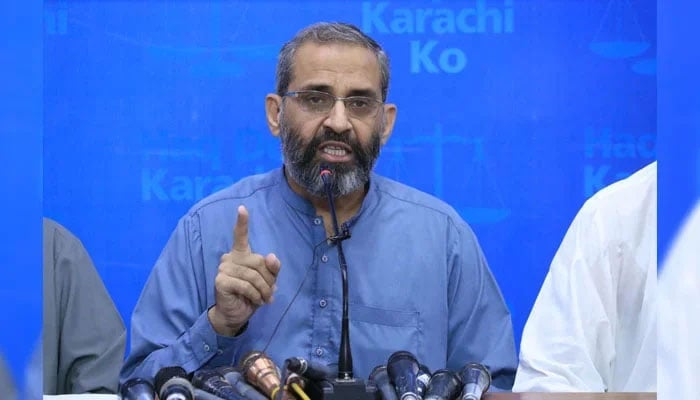
Karachi Jamaat-e-Islami (JI) Emir Monem Zafar Khan on Saturday accused the Sindh government of misappropriating Rs3,360 billion allocated for development, infrastructure rehabilitation and water projects during its one-and-a-half decades rule in Karachi.
Speaking to the media during a visit to a protest camp at Dawood Chowrangi in Landhi alongside Malir JI chief Syed Makhfar Ali, Zafar announced the launch of the ;Haq Do Malir Ko; movement,
He criticised the Pakistan Peoples Party (PPP) for what he described as the continued deterioration of Karachi’s infrastructure and civic services and said it seemed that in Karachi destruction and the PPP rule went hand in hand.
He said that despite Karachi contributing 54 per cent of the country’s exports and 67 per cent of its revenue, the city was being systematically neglected by those in power.
Criticising the city administration, he pointed out that Mayor Murtaza Wahab and his deputy, who hailed from Malir, had failed to address worsening conditions across the district and the wider city.
He warned that if the authorities did not resolve the pressing civic issues, the JI could escalate its protest movement by laying siege to the deputy commissioners’ offices and police stations.
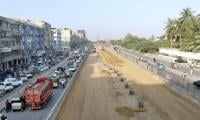
He highlighted the poor state of roads from Dawood Chowrangi to Landhi, calling it reflective of broader neglect in industrial zones. He also criticised delays in major projects, including the long-pending K-IV water scheme, which, he said, had been pushed back from its original completion timeline to June 2027.
The JI leader alleged widespread corruption in water distribution, saying that tanker mafias were thriving while residents struggled for basic supply. He also raised concerns over prolonged electricity outages, ineffective waste management and rising crime, stating that drug dens allegedly operated with police patronage.
He called on the residents of Malir, particularly the youth and women, to join the JI’s movement saying that the party’s struggle aimed to restore Karachi’s ‘lost status’ and secure basic rights for its citizens.