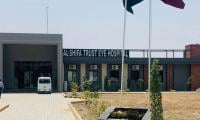
— how unsafe injection practices remain the primary cause of transmission of infectious diseases - nurses injecting patients through their clothes, the reuse of dirty syringes and unqualified persons injecting patients from a single contaminated vial. People say we must enforce the National Action Plan for Injection Safety and mandate the use of auto disable syringes in all healthcare settings. It is time to stop looking for excuses and start demanding accountability and transparency in our healthcare delivery system.
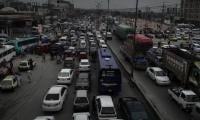
- the widespread use of smuggled vehicles in Pakistan, which is not only an economic issue, it causes security problems as they are brought using the land route from a handful of countries without documentation or legal processing, including the payment of customs duty. People say these vehicles are later registered using illegal means, so authorities and other law enforcement agencies should take strict action against this practice with proper monitoring, strict border control and fully transparent vehicle registration systems
- the fact that social justice remains a pressing concern in modern societies where economic disparity, unequal access to education and systemic discrimination continue to hinder progress and marginalised communities still face significant barriers in achieving equal opportunities. People say civil society and private sectors play a crucial role in promoting fairness by adopting inclusive practices and supporting community initiatives. Addressing these inequalities requires collective responsibility, long term commitment and a willingness to challenge entrenched systems that perpetuate injustice.
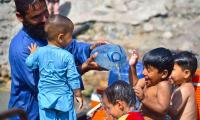
- how, through wars, epidemics and natural disasters, ordinary Pakistani’s have carried on with life and though they are still managing to adapt, there is now exhaustion behind this resilience. Within the strength that has defined the country’s people, a new voice is beginning to emerge among the younger generation which has different expectations - a future where survival is not the only measure of success, so it is time for leaders to lead and for institutions to deliver.
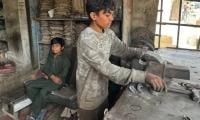
- the fact that in Pakistan, Labour Day has largely been reduced to a symbolic public holiday as those who are least connected with manual labour benefit the most from this holiday and well-paid officials enjoy a day of rest in comfortable surroundings. People say the real workforce of the country - daily wage earners; kiln labourers; hotel staff; loaders and street vendors continue their routine work without a pause because for them, a day without work means a day without income.
- the expansion in the schooling system and though enrolment numbers have improved over the years, a quieter reality persists inside classrooms: many children are present but not truly learning. People say according to the Pakistan Institute of Education Report 2026, around 77% of ten-year olds in Pakistan cannot read and understand a simple, age appropriate text and many students in grade five can recite an entire passage from memory, yet when asked to read an unfamiliar sentence they are lost.
- the fact that despite advances in productivity and education, millions of workers continue to earn wages that fail to meet basic living standards, the significant driver of wage inequality being the gap between high skilled and low skilled labour, widened by technological change and globalisation. People say gender and socioeconomic disparities persist, with women and marginalised communities frequently earning less for the same work and informal employment in developing economies limit access to benefits and legal protection. — I.H.