ISLAMABAD: Pakistan’s inflation surged to a 20-month high in April, hitting 10.9 percent against only 0.28 percent recorded a year earlier, as supply disruptions linked to Strait of Hormuz tensions sent fuel, transport and energy costs sharply higher, government data showed Friday.
The consumer price index (CPI) rose to 10.9 percent year-on-year in April from 7.3 percent in March, the steepest reading since July 2024, according to the Pakistan Bureau of Statistics. The figure broke through the State Bank of Pakistan’s 5–7 percent target ceiling and came just four days after the central bank raised its benchmark policy rate by 100 basis points to 11.5 percent.
Transport costs led the broad-based rise, accelerating to 29.9 percent year-on-year from 12.5 percent the prior month. Housing and utilities climbed to 16.8 percent from 11.5 percent, while food and non-alcoholic beverages rose to 7.6 percent from 3.6 percent. On a monthly basis, consumer prices increased 2.5 percent in April, the fastest pace in nine months, compared with 1.2 percent in March.
The April spike highlights lingering risks from domestic energy costs, now amplified by Middle East tensions,” analysts said, warning that a rising oil import bill could weaken the rupee and drive inflation higher in coming months.
Further price pressure may be in the pipeline. The Wholesale Price Index, which typically feeds into retail inflation with a lag, nearly doubled to 13.6 percent from 6.7 percent the prior month, suggesting producers’ cost burdens have yet to fully reach consumers.
Core inflation, which strips out volatile food and energy prices, also edged up. Urban core rose to 8.0 percent from 7.4 percent, while rural core ticked higher to 8.5 percent from 8.4 percent, a sign that price pressures are broadening beyond the energy shock.
Among food staples, tomatoes surged 75.4 percent year-on-year, onions 41.7 percent, wheat 39.4 percent, wheat flour 30.6 percent and fresh vegetables 25.7 percent. Meat rose 12.5 percent. Some relief came from potatoes, down 37.5 percent, while sugar fell 11 percent, chicken 12.8 percent and several pulses declined between 11 and 17 percent.
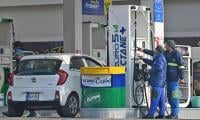
In the non-food segment, liquefied hydrocarbons jumped 63.4 percent, motor fuel 40.2 percent, electricity charges 33.7 percent and gas charges 22.9 percent.
Despite the April spike, the 10-month average inflation for the current fiscal year stands at 6.19 percent, against 5.67 percent for the same period a year earlier. That gap is widely expected to widen if Middle East supply disruptions persist.
The State Bank of Pakistan raised its policy rate at its Monetary Policy Committee meeting on April 27, reversing an easing cycle as authorities moved to contain precisely the kind of inflationary pressure data confirmed.
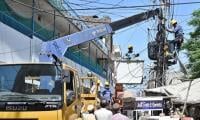
Meanwhile, Pakistan has ended electricity load management after fresh liquefied natural gas (LNG) shipments restored fuel supply to power plants, Federal Minister for Power Division Awais Ahmed Khan Leghari said, signaling a return to normal electricity provision after weeks of intermittent outages driven by gas shortages.
Addressing a press briefing, the minister said the country had received LNG shipments a day earlier, enabling authorities to restore normal electricity supply. He noted that intermittent load shedding experienced in recent weeks was primarily due to a shortage of gas, not because of any system failure or lack of generation capacity.
Leghari recalled that consumers faced up to five hours of load shedding on April 13 and 14. However, he said there was no load management between April 17 and 19, while from April 19 to 29, outages were reduced to between two and two-and-a-half hours.
According to the minister, disruptions in gas supply, partly due to international factors, including tensions linked to the Iran–U.S. situation, had affected electricity generation.
The minister said that generating electricity through diesel or furnace oil to completely eliminate load shedding would have significantly increased costs, placing an additional burden on consumers. “We had to strike a balance between supply and affordability,” he added.
He highlighted improvements in hydropower generation, stating that output had risen to around 6,000 megawatts, compared to nearly 1,000 megawatts earlier. He added that water releases from dams are managed by the Indus River System Authority based on provincial requirements.
He refused the claims that Pakistan’s electricity generation capacity stands at 46,000 megawatts, clarifying that actual available capacity is around 32,000 megawatts and varies throughout the year.
The minister credited the government’s timely measures for stabilizing the situation and expressed hope that load shedding would not return. “We had to temporarily run furnace oil-based plants and procure expensive gas, as LNG from Qatar was not available,” he said. Leghari said he is confident that people will not face more power outages unless unexpected technical problems occur in the transmission lines. He also reaffirmed the government’s commitment to protecting users from high electricity costs while ensuring uninterrupted supply.