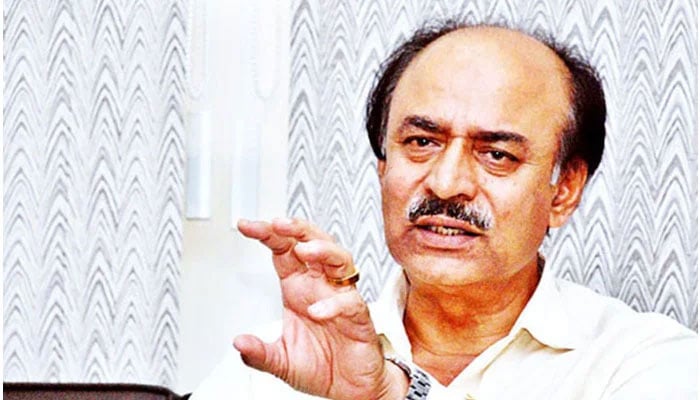
Sindh Pakistan Peoples Party (PPP) President Nisar Ahmed Khuhro has urged the government to fulfil its responsibility of registering all the workers across institutions and ensuring the protection of their rights, warning that millions remain unrecognised and vulnerable.
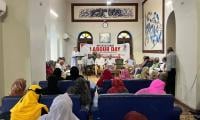
Addressing a May Day gathering organised by the Peoples Labour Bureau Karachi at the Arts Council of Pakistan on Friday, Khuhro said that nearly 96 per cent of Sindh’s workforce—including a significant number of women — remained outside formal registration. He emphasised that securing rights for the marginalised communities had long been a defining principle of the PPP.
The event was also addressed by senior PPP leader and former Senate chairman Raza Rabbani, Sindh Labour Minister Saeed Ghani, Sindh Peoples Labour Bureau President Habibuddin Junaidi, Aslam Samoon, Hussain Badshah and others.
Khuhro criticised the ineffective functioning of labour unions, noting that while unions existed in various institutions, they were often prevented from operating freely. He highlighted rising unemployment in the province, adding that even those currently employed were being denied their basic rights.
He further lamented that around 5,000 industrial units in Sindh had shut down and called for urgent measures to revive them. Underscoring the PPP’s focus on women workers, the Sindh PPP president stated that the ownership of 2.1 million houses constructed in Sindh had been granted to women, reflecting the party’s commitment to gender inclusion.
Speaking on the occasion, Rabbani presented a 13-point charter for the workers’ rights, criticising privatisation policies allegedly pursued under pressure from international financial institutions, including the International Monetary Fund. He argued that such measures aimed at causing mass unemployment and called for immediate repeal of laws like the Essential Services Act, which he described as restrictive, along with the lifting of bans on trade unions and student organisations.
Rabbani reiterated that the PPP was founded to safeguard the rights of workers, farmers and traders and pledged continued efforts to protect them. He also called for the introduction of a workers’ charter and the formation of a dedicated committee to ensure the effective enforcement of labour rights.
Ghani said the PPP had sought to introduce constitutional amendments to guarantee labour representation in the Senate, National Assembly and provincial assemblies. However, he lamented that these proposals were strongly opposed by parties claiming to champion democracy.
He urged the citizens to support genuinely democratic forces to secure their rights, adding that conditions for workers today were even worse than those witnessed 140 years ago during the labour struggle in Chicago. He maintained that whenever the PPP was in power, it advanced the cause of workers, but progress reversed during its absence from the government.