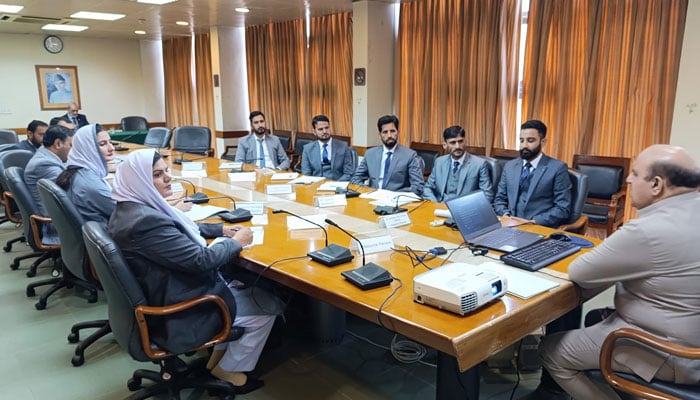
ISLAMABAD: The Pakistan Anti-Corruption Academy (PACA) successfully concluded a specialised two-day capacity-building course titled “Utilisation of Open-Source Intelligence (OSINT) in Money Laundering / NAO Cases,” held on April 28–29.
This initiative was designed to modernise investigative techniques across various law enforcement agencies by introducing officers to the effective use of publicly available data in addressing the increasingly sophisticated nature of modern financial crimes. The course was attended by NAB officers, prosecutors, and officers from other LEAs.
Presiding over the opening session, Syed Ghulam Safdar Shah, Director General of PACA, highlighted that the training aligns with the vision of the Chairman NAB to evolve investigative practices. He noted that as money laundering and corruption cases become more complex, involving digital platforms and cross-border networks, traditional methods must be supplemented with data-driven intelligence. He emphasised that the training focused on equipping participants with practical skills to trace financial transactions and identify hidden linkages, thereby contributing to improved transparency, accountability, and efficiency in anti-corruption efforts. The training adopted a structured and interactive methodology featuring expert lectures and analytical discussions led by experienced professionals.
Muhammad Aqib, a Certified OSINT Master Trainer, demonstrated tools for daily investigations while ensuring adherence to the legal and evidentiary framework of the National Accountability Ordinance (NAO). Umair Nazar, Programme Officer at the UNODC Counter Terrorism Unit, conducted a session on crime analytics, highlighting the critical shift towards proactive, intelligence-led law enforcement. Additionally, Farhan Nawazish, Programme Officer at UNODC, addressed the misuse of digital currencies and blockchain platforms, providing participants with methods to monitor and trace virtual transactions associated with terrorism financing and illicit financial flows.
The session concluded with the distribution of certificates to the participants, marking a significant step forward in strengthening the overall quality and timely disposal of anti-corruption investigations in Pakistan.