PESHAWAR: Speakers at a conference here on Monday stressed the need for strengthening institutional stability, improving research output and ensuring sustainable development.
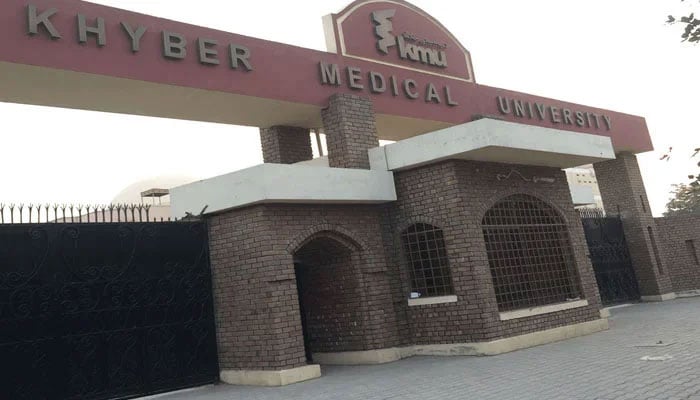
The Khyber Medical University (KMU) hosted a joint conference of vice chancellors and rectors from public and private sector universities across Khyber Pakhtunkhwa, alongside a Research Excellence Awards ceremony.
The events gathered academic leadership, policymakers, and key stakeholders on a unified platform to develop a coordinated strategy for advancing higher education, research, and institutional development in the province.
Provincial Minister for Higher Education, Meena Khan Afridi, was the chief guest, while the Chairman of the Higher Education Commission (HEC), Prof. Dr. Niaz Ahmad Akhtar, attended as the guest of honour.
Secretary Higher Education Department Khyber Pakhtunkhwa, Dr. Muhammad Israr Khan, Executive Director of HEC, Prof. Dr. Zia Ul Haq, and former Executive Director and Member HEC, Prof. Dr. Sohail H. Naqvi, were present, among others.
A highlight of the conference was the participation of heads of all divisions of the Higher Education Commission. They delivered briefings on academic development, research initiatives, scholarships, quality assurance, innovation, information technology, and commercialization efforts underway in the province.
In his welcome remarks, Prof. Dr. Zia Ul Haq emphasized the importance of institutional synergy, modern policymaking, and effective leadership to elevate universities in the province to international standards.
He noted that the gathering of vice chancellors under one roof provided an opportunity to identify practical solutions to the challenges faced by the higher education sector.Dr. Muhammad Israr Khan presented an overview of ongoing reforms, governance models, and future priorities aimed at enhancing transparency and efficiency in the higher education system.
This was followed by presentations from various HEC departments covering finance, planning and development, research and innovation, scholarships, quality assurance, monitoring and evaluation, and information technology.
Prof. Dr. Sohail H. Naqvi, in his keynote presentation, stressed the need for improving research output, strengthening institutional stability, and ensuring sustainable development.He underscored the importance of granting greater autonomy to universities, improving governance, and integrating artificial intelligence into research evaluation processes.
Prof. Dr. Sadiq Khattak, Vice Chancellor of UET Peshawar and Chairman KP Vice Chancellors Forum, highlighted the significance of collaboration, accountability, and innovation.In his address, Prof. Dr. Niaz Ahmad Akhtar pointed out that the HEC budget has effectively remained stagnant at Rs. 65 billion over the past decade, despite nominal increases.
He noted that student enrollment in Pakistan’s higher education sector has grown from 1.4 million in 2015 to 3.5 million currently, reflecting significant expansion. However, he expressed concern over declining academic competitiveness, noting that representation from Khyber Pakhtunkhwa in international rankings remains limited.
He added that despite financial and administrative challenges, universities in the province have a commendable 53 per cent PhD faculty ratio, higher than the national average and an encouraging increase in student enrollment.
Provincial Minister Meena Khan Afridi reaffirmed the government’s commitment to improving governance and quality in universities.He announced that funding would be linked to performance indicators, and vice chancellors’ performance would be formally evaluated every two years.
Extensions in tenure would be granted based on predefined criteria, while underperforming leadership would be replaced through a transparent accountability mechanism. Necessary legislation is being initiated at the departmental level to support these reforms.
He revealed that a provincial higher education task force, formed under the leadership of Prof. Dr. Zia Ul Haq, is expected to receive cabinet approval soon.
The task force proposes linking 12 key performance indicators to performance grants and enhancing governance structures, including improved criteria for the appointment of Deans.
Highlighting student support initiatives, the minister stated that the provincial government has increased the endowment fund from Rs. 2.1 billion to Rs. 5.2 billion.
Additionally, free education will be provided to first- and second-year female students and orphaned children, while paid internships for all graduates will be introduced from next year to enhance employability and equal opportunities for youth.
He emphasized aligning research with societal needs and reiterated the government’s resolve to establish a modern, competitive, and research-driven higher education system in the province.
At the Research Excellence Awards ceremony, 116 researchers and scientists from Khyber Pakhtunkhwa were honoured for being ranked among the world’s top 2 percent scientists, an achievement that reflects Pakistan’s growing research potential.
The minister and the HEC chairman jointly inaugurated an Endoscopy Suite at KMU Hospital, along with the KMU Islamic Centre and Mosque.