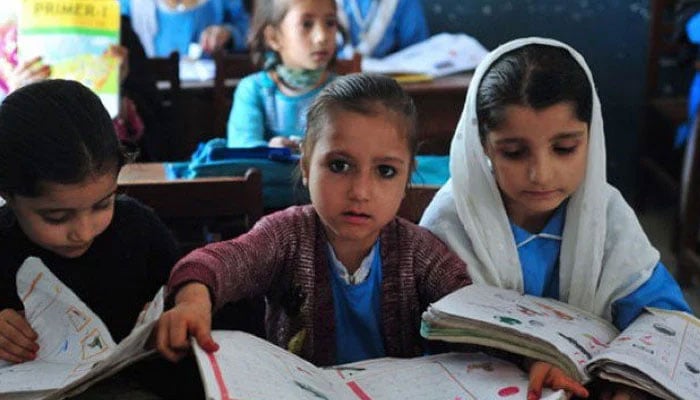
In Pakistan’s second-largest province, education has always been complicated. Sindh deals with long-standing issues and a pressing need for change. For years, many children have been out of school. Classrooms often struggle with inconsistent teaching quality, and in some areas, basic facilities fail to meet the demand.
These problems aren’t new, but the way to solve them is changing. The Sindh Education Department appears to be moving from quick fixes to a more coordinated strategy. This new approach aims to improve both access and quality at the same time. The goal is not just to get children into schools, but also to ensure that they learn effectively once they are there.
Political leadership has played a role in this effort. Bilawal Bhutto Zardari has emphasized that education is vital for social and economic development. At the provincial level, administrative leadership and policy execution have driven the changes.
The slogan “Parhay Ga Sindh Tou Barhay Ga Sindh” is now closely linked to the province’s education efforts. Instead of viewing schooling as a distant government agenda, the campaign seeks to involve parents, communities, and local stakeholders. Rallies, enrollment drives, and awareness programs aim to encourage families to enroll their children in school and help them stay there.
This outreach is crucial, especially in areas where economic pressures or social norms often keep children—especially girls—out of classrooms. By connecting education with everyday concerns like income and stability, the campaign hopes to make schooling feel relevant rather than optional.
However, raising awareness alone won’t solve structural issues. It can only create conditions that help policies work better.
A major shift: Introducing mandatory teaching licences
One of the biggest policy changes in Sindh’s education system is the introduction of mandatory teaching licenses. This is the first time such a system has been introduced at this scale in Pakistan, and Sindh is the first and only province in the country to implement a policy of this kind.
The concept is straightforward: teaching should have clear professional standards. Through the Sindh Teachers Education Development Authority (STEDA), candidates—especially those with B.Ed. degrees—must now pass a licensing exam before they can be hired.
The test checks both subject knowledge and teaching skills. Candidates must reach a minimum passing score to qualify for teaching positions in government schools. More importantly, the policy clearly states that no candidate can be recruited as a teacher in Sindh without passing the licensing test.
This reform is connected to Syed Sardar Ali Shah, who has supervised key decisions related to the policy. Licensed teachers will have advantages in hiring and career advancement, creating clearer incentives.
This change also addresses long-standing concerns about uneven teacher quality. Previous recruitment processes faced criticism for their inconsistencies. By introducing a standardized test, the government aims to set at least a minimum standard.
Additionally, teacher training institutions are now receiving more oversight. The goal is to ensure that what teachers learn during training matches classroom expectations. Early childhood education is now part of training programs, highlighting its importance.
The first batch of teaching licenses has already been issued, marking the start of what the government hopes will be a more structured and accountable teaching workforce.
While improving teacher quality is vital, access to education is equally important. Sindh aims to cut the number of out-of-school children by 50% by 2030.
This is a significant challenge. Millions of children are currently outside the formal education system, and the reasons are complex. Poverty, child labour, distance from schools, and social barriers all play a role. These factors are deeply interconnected, often reinforcing cycles of disadvantage that pass from one generation to the next.
To tackle this, the government is following a multi-sectoral roadmap. Rather than viewing education in isolation, various departments—including health, planning, social protection, and local government—are part of the process.
A centralized monitoring system, supported by real-time data dashboards, is also being developed. These dashboards are not just for tracking numbers—they are meant to be accountability tools that help policymakers identify gaps, measure progress, and make timely adjustments based on actual data instead of assumptions.
The roadmap includes several interventions focused on specific barriers to education.
For many families, especially in rural areas, distance and safety are significant concerns. Plans for safer transport and improved school facilities—especially for girls—are part of the strategy.
For children who have missed years of schooling, non-formal education and second-chance programs are being created. These programs allow students to rejoin the system without starting over.
Vocational training is included, particularly for older children who need practical skills for work. Financial help like scholarships and attendance-linked cash transfers are also being considered to ease the financial burden on low-income families.
Special attention is given to regions affected by floods and other disruptions, where schooling has been interrupted for long periods. Partnerships with organizations like UNICEF are helping provide resources and support in these areas.
All of these actions reflect a shift towards tackling the reasons why children stay out of school, rather than just pushing for enrollment.
Policy direction and on-the-ground execution often move at different speeds, but in Sindh, efforts have been made to keep them aligned. Bilawal Bhutto Zardari has positioned education as a long-term investment in reducing inequality and promoting social stability. At the provincial level, under the mentorship of CM Sindh Syed Murad Ali Shah, the education minister Syed Sardar Ali Shah has taken a more hands-on approach—overseeing teacher licensing, coordinating across departments, and engaging the public in reforms.
Supporting measures:
Apart from major reforms, several support initiatives are underway. Funds are being allocated to build new schools, repair existing ones, and introduce basic digital learning tools when possible. Public-private partnerships, including the expansion of the Adopt-a-School program, are bringing in extra funding and management support.
Environmental awareness efforts, such as tree planting in schools, are part of a broader educational experience. Meanwhile, back-to-school campaigns for upcoming academic sessions aim to boost enrollment and reduce dropout rates. These initiatives may not receive much attention individually, but together they strengthen the overall education system.
Despite the scale of these efforts, significant challenges remain. Enrollment is only the first step. Retaining children in school—especially in rural areas—remains tough. Teacher shortages, lack of resources, and differences in implementation can hold back progress.
There is also the issue of learning outcomes. Simply increasing student numbers in classrooms does not automatically lead to better education. Assessing what students learn and working to improve those outcomes will require ongoing effort.
Administrative capacity is another factor. Well-designed policies can succeed only if they are effectively implemented across districts and schools.
If these reforms are consistently executed, the long-term effects could be profound. A more professional teaching workforce has the potential to improve classroom learning. At the same time, enrolling more children in the education system can create opportunities across generations.
For girls, especially, access to education usually leads to better health, economic participation, and family outcomes. Over time, this can help promote broader social stability.
Economically, a better-educated population supports growth in various sectors, from agriculture to services. Socially, it can help reduce inequalities that have persisted for decades.
Sindh’s education reforms are still developing. The policies are in place, targets have been set, and systems are being built. Currently, there is a noticeable shift in approach, moving from isolated initiatives to a more connected strategy that aims to improve both quality and access simultaneously.
For children across Sindh—whether in Karachi or in remote districts—the change may appear slow. But if it continues, it could transform education in the province.
The direction is clear. The outcome will depend on persistence, execution, and the combined progress of policy and public engagement.