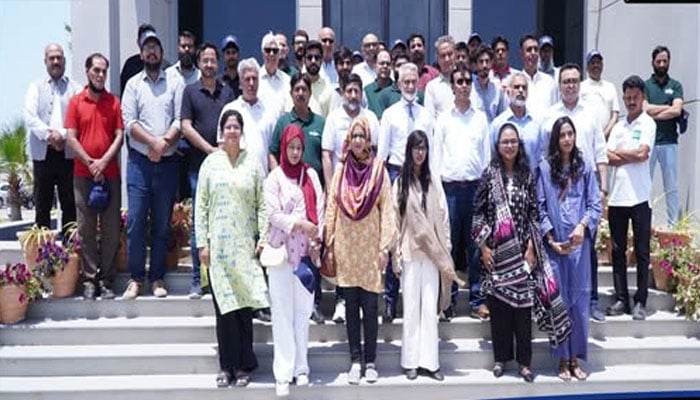
The Sustainable Development Policy Institute (SDPI) and Cargill, in partnership with the Mangrove Biodiversity Park, Karachi, held a mangrove plantation event on Wednesday at the Mangrove Biodiversity Park, Korangi Creek.
The event included the planting of 5,000 mangrove saplings, including three native species selected for their resilience: Avicennia marina (Grey Mangrove), Rhizophora mucronata (Red Mangrove), and Ceriops tagal (Spurred Mangrove).
Over time, mangroves can store carbon and support coastal protection. Their dense root systems help stabilize shorelines, reduce erosion, and slow water flow, which can reduce the impact of storm surges and coastal flooding
Dr Abid Qaiyum Suleri, executive director, SDPI, emphasized the importance of mangroves as one of the most cost-effective solutions available to combat climate change while generating sustainable income for coastal communities. This initiative demonstrates how strategic public-private-civil society partnerships can support environmental protection, economic opportunity, and carbon finance, contributing to resilient coastal community development. Moreover, he stated that mangrove forests are Pakistan’s first line of defence against climate change and sea level rise.
Today’s plantation is not just about planting trees; it is about securing livelihoods, restoring biodiversity, and supporting the role of coastal ecosystems in storing carbon and strengthening resilience.
Shah Murad Aliani, chairman of Advisory Board, Mangrove Biodiversity Park, welcomed the initiative. This park is now becoming a living laboratory for mangrove restoration. Mangroves are a foundation of Pakistan’s coastal health, acting as a buffer against erosion, serving as nurseries for marine life, and sequestering carbon at relatively high rates compared to many terrestrial ecosystems. The 5,000 saplings planted today will grow into a maturing ecosystem that helps protect our coast and provide habitat for marine life and migratory birds.
Mehran Ali Shah, chairman of the Pakistan Fisher Folk Forum, emphasized the ecological urgency and noted that Pakistan has seen significant mangrove growth over the past three decades, but degradation still persists. Targeted, community-led restoration supported by research and community backing is exactly what we need to preserve the remaining healthy forests and recover what has been lost.
Muhammad Salman, director and general manager of Cargill Pakistan, highlighted Cargill’s work to support biodiversity and address climate change through partnerships. He noted that mangroves play an important role in supporting coastal ecosystems, including biodiversity, shoreline stability, and local livelihoods. We are pleased to partner with SDPI and the Government of Pakistan to support these restoration efforts in the Indus Delta, he said.
The partners called on national and international stakeholders to scale up investment in mangrove restoration, describing it as an important nature-based approach for Pakistan to meet its climate commitments while protecting its coastal communities.