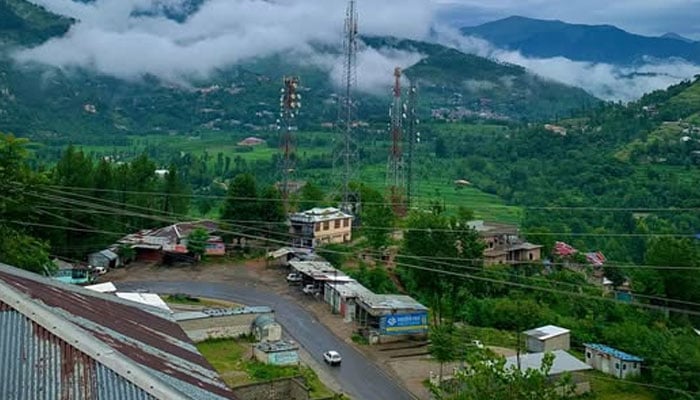
BATTAGRAM: A deepening environmental crisis is unfolding in the mountainous district of Battagram, where climate change and a severely disrupted rain system have begun to dismantle the foundations of daily life.
What was once a region sustained by predictable seasonal rainfall and flowing water sources is now grappling with drought-like conditions, leaving thousands of residents facing uncertainty about food, water, and survival.
For generations, agriculture has been the backbone of Battagram’s rural economy. Farmers have long relied on natural rainfall and river systems, particularly the Nandhyar River, to irrigate their lands and sustain crops such as wheat, maize, and vegetables. However, this year has brought an alarming shift.
Rainfall patterns have become irregular and insufficient, arriving either too late or not at all. As a result, the Nandhyar River once a lifeline for surrounding communities is now flowing at critically low levels. In some areas, locals report that the river has reduced to a trickle, unable to meet even basic agricultural and domestic needs.
The consequences of this environmental disruption are being felt across every sector of life.Jamal Khan, a farmer from Kozabanda, stood on his dry fields, describing the despair that has gripped his community. “We prepare our land every year with hope, trusting that the rains will come as they always have. But now, the seasons have changed. There is no water, and without water, our crops cannot grow. We are watching our livelihoods disappear before our eyes,” he added.
In Ajmera, Sattar Khan painted an equally grim picture. “The harvesting season is near, but our fields are barren. We have invested time, labor, and whatever little money we had, but there will be no return. This is not just a bad year it feels like the beginning of something much worse.”
The crisis is not limited to crops. Livestock, which form a critical part of household income and food security, are also suffering due to water shortages.
Shoaib Ahmed from Shingli Payen explained the growing concern. “Our animals are weak because there is not enough water or fodder. When crops fail, we also lose feed for our livestock. It becomes a chain reaction, everything is connected, and everything is collapsing together.”
In Hotel Dishan, Imdad Dishani recalled how the Nandhyar River once sustained entire communities. “This river was our lifeline. It provided water for drinking, farming, and animals. But now, it is barely flowing. We have never witnessed such a drastic change. It feels like the river is dying.”
Farhad Sherazi from Oughuz Banda emphasised that the current situation is unprecedented. “Our elders tell us that even in difficult years, the rain would eventually come. But now, everything is unpredictable. The weather has changed completely. We cannot rely on old patterns anymore.”
Experts suggest that these changes are consistent with broader climate change trends, where shifting weather systems disrupt traditional rainfall cycles, especially in vulnerable mountainous regions.
Medical professionals warn that the crisis could soon extend beyond agriculture and the economy into public health.
Dr. Hayat Sherazi expressed concern about the availability of clean water. “When water sources dry up, people are forced to use unsafe alternatives. This increases the risk of waterborne diseases such as diarrhea, cholera, and other infections. Children and elderly individuals are particularly vulnerable.”
Dr. Zubair highlighted the psychological burden faced by residents.