Islamabad:A rare and time-sensitive opportunity for Pakistan to reposition its ports as competitive regional and global trade hubs amid ongoing disruptions in Gulf shipping routes has been referred to by Dr Nadia Hassan from the Pakistan Institute of Development Economics (PIDE).
In a brief “Capitalising on conflict: reimagining the ports of Pakistan amid Gulf war,” Dr Nadia argues that while Pakistan is already benefiting from diverted cargo flows, the real challenge lies in converting these temporary gains into sustained economic advantage through urgent and coordinated reforms.
With nearly one-fifth of global trade passing through the Strait of Hormuz, recent tensions and its closure in March 2026 triggered a major rerouting of international shipping away from traditional hubs such as Dubai’s Jebel Ali and Oman’s Salalah.
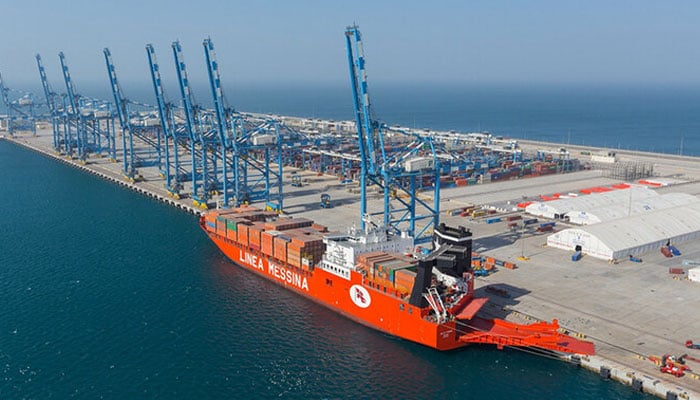
Pakistan’s ports -- Karachi Port, Port Qasim, and Gwadar -- located outside the direct conflict zone yet in close proximity to key shipping lanes, emerged as viable alternatives, placing the country at the center of a rapidly shifting maritime landscape.
The scale of this shift is significant. Karachi Port alone handled approximately 11,000 transshipment containers and recorded 133 vessel calls in March, surpassing its total transshipment activity for the entire previous year.
Port Qasim absorbed nearly 25 percent of redirected cargo and processed over 4,000 TEUs in a single day, registering an extraordinary 2,302 percent increase in transshipment activity. Gwadar Port, though still developing, marked its entry into the regional transshipment network by berthing its first vessel, signaling strong long-term potential as a deep-sea hub at the mouth of the Persian Gulf.