For years, a certain Pakistani dream had an address. It was neither Karachi nor even Lahore or Islamabad. It was across the water – a skyline of reassurance where money could sleep more peacefully than it could at home.
Families built their businesses in Pakistan, but bought their emotional insurance in the wider Gulf region. For the wealthy, it was an easy escape; for the poor and working class, a necessary refuge when opportunities at home fell short. Pakistan was where wealth was made; the region across the sea was where the future was parked.
That arrangement now looks less certain. Since the widening of the Iran war, the broader Gulf’s image of seamless calm has been visibly shaken. It is not that these regional hubs are vanishing. But the aura has cracked. The old promise was not just luxury but certainty – an absolute assurance of resilience against any odds. That is why so many Pakistanis, especially among the ruling and moneyed classes, treated these places not simply as markets but as refuges. The real question now is what happens when the refuge trembles.
One might think this would be the moment for a strategic return of imagination. One might expect the country’s elite to look at the present vacuum in recreation, cargo, transport and business confidence across parts of the Gulf region and say: this is our opening.
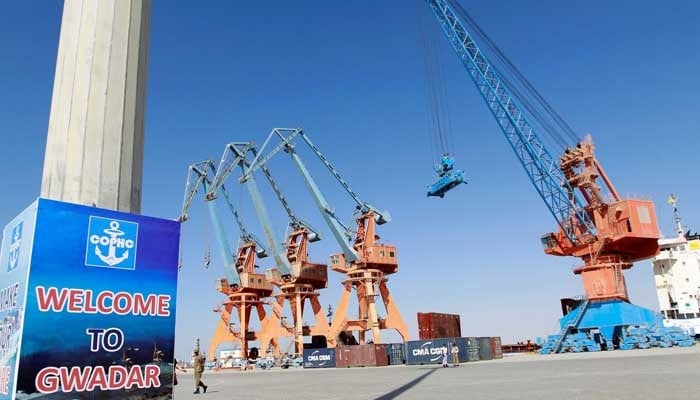
Karachi and Gwadar already exist. With over 1,000 km of coastline and a recorded international maritime history, Pakistan is still a gateway to Asia. Ormara, Pasni and Jiwani in Balochistan, and Ketibander, Phitti, Wari and Kajhar creeks in Sindh are additional sites Pakistan can capitalise on as modern trade and tourism hubs. Sindh and coastal Balochistan’s wind corridors are globally exceptional, in addition to Thar coal and other raw materials for manufacturing, power generation, and trade.
Now the question is whether the current crisis will restore the confidence of our upper classes back into their own country. Past patterns suggest they will wait. They will freeze fresh bets, hold what they can abroad and hope the old glamour returns. I would term that mentality ‘pause dependency’, the habit of attaching one’s sense of safety, continuity and inheritance to an external ‘pause zone’ rather than to one’s own country. We coin a term ‘borrowed oasis syndrome’ to explain this: a social condition in which individuals or families build their economic lives in one country but rely on a foreign enclave of perceived stability for emotional security, long-term planning and intergenerational continuity.
Pakistan has lived under this psychology for decades.
It surfaced clearly during the property crash in the region after 2008. When that market broke, Pakistanis were hit hard as workers and investors. But the shock did not produce a broad reimagining of Karachi as a serious maritime and commercial alternative. Instead, the instinct was to wait until the old refuge recovered. The emotional contract with the borrowed oasis survived the crisis.
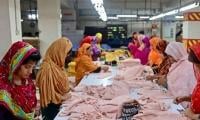
A similar pattern appeared in industry in 2011, when textile manufacturers shifted from Pakistan to other regional competitors offering cheaper labour, a more investor-friendly climate and better trade access, while Pakistan was weighed down by energy shortages and insecurity. Again, the first instinct was not to repair domestic friction but to relocate resilience. That is the deeper problem. Our elite often behaves less like a class that wants to build a durable national platform and more like a class always looking for a better-managed waiting room.
This is tragic because Pakistan actually possesses what these external hubs, for all their spectacle, do not possess in native form. It has indigenous labour, agriculture and a hinterland. It has a domestic market and, with a median age of 21, an overwhelming population of young workers. The Gulf region does not have that demographic advantage.
Unlike any synthetic oasis, Karachi is attached to a society. It has industry, labour, students, transport networks, wholesale markets, fisheries, warehouses, banks and the rough, difficult energy of a real national city. Yes, it is untidy and badly governed, but it is not floating in mid-air. It has roots. Gwadar, too, must become part of a wider maritime ecosystem, complementing Karachi and Port Qasim. The obstacle, then, is just the mentality.
A class that has moved its emotional centre of gravity abroad cannot easily rediscover home. Even now, many among our wealthy and ruling strata will read the region’s current stress not as an invitation to build Karachi, but as an interruption in offshore comfort. They will search for the next stable pause or wait for the old calm to return.
History occasionally offers a nation a second chance disguised as someone else’s crisis. The present Middle East turmoil may be one of those moments for Pakistan. But openings do not become opportunities on their own. Karachi and Gwadar will not rise because another region is wobbling. Ports flourish when a state reduces friction, enforces contracts, secures streets, improves municipal competence, links sea to hinterland and persuades capital that rootedness can be safer than escape.
The borrowed calm across the water is no longer unquestionable. That should force a question among Pakistan’s elite: how long will they keep waiting for the external pause to resume, rather than building a stronger, more sovereign refuge at home? Pakistan has waited long enough.
The writer is an expert on climate change and sustainable development and founder of the Clifton Urban Forest.
He tweets/posts @masoodlohar and can be reached at: [email protected]