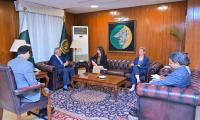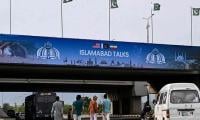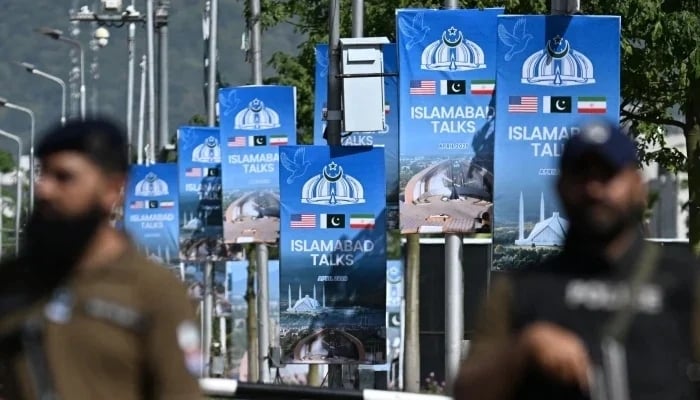
The global recognition to Pakistan for its ongoing attempt to secure peace between the US and Iran, marked a rare moment for a country often tagged before as a trouble-maker.
To Pakistan’s credit, working with both the US and Iran to end their conflict has cemented Pakistan’s credentials as an emerging middle power. And irrespective of how far Pakistan’s diplomacy ends up in bringing permanent peace between the warring parties, Pakistan has secured a prominent spot as a country well positioned on the chessboard of its surrounding region and beyond.
For the Muslim world, Pakistan’s emergence in 1998 as the first Islamic country armed with nuclear weapons, decisively raised its global credentials. The nuclear factor placed Pakistan in an exclusive list among nine countries around the world, known to be armed with nuclear weapons.
In conventional terms too, Pakistan’s defence forces – with a strength of more than half a million – have given a noticeable spot to the country among key powers around the world. Pakistan’s brief encounter with India last summer brought out some of the best aspects of Pakistan’s defence. That episode highlighted the precious value of Pakistan’s close ties with China, that have firmly lifted Pakistan’s ability to defend itself.
The Sino-Pakistan military relationship dates back to the 1960s when China immediately stepped ahead to supply Pakistan with its F-6 fighter planes – the Chinese equivalent of the Soviet produced Mig-19s. The Chinese support came immediately after the US sanctioned arms sales to Pakistan following the 1965 Indo-Pakistan war.
To Pakistan’s credit, a succession of rulers stayed the course with China, despite criticism of Chinese military technology lagging far behind western systems. Today, China has not only caught up with advanced defence systems of the world. In some areas, China has attained a visible edge over its global competitors.
In sharp contrast over time, periods of immense warmth between Pakistan and the US followed by eras of Washington’s sanctions, have proven the US to be an unreliable ally. Meanwhile, China’s uninterrupted supplies of weapons to Pakistan has only proven Beijing’s status as a true and time-tested friend.
As Pakistan celebrates its global rise, it must reconcile itself with the need to secure its success with gaps in its internal outlook. These notably consist of gaps surrounding Pakistan’s economy, internal governance and its ruling structure. The recent demand by the UAE of a return of $3.5 billion placed in Pakistan’s foreign currency reserves said much about a key area of vulnerability. Today, the State Bank’s reserves of over $15 billion are expected to be sustained, thanks to Saudi Arabia quickly stepping in to place $3billion in Pakistan to prop up the country’s foreign reserves.
This episode has coincided with recent reports of Pakistan’s rising food import bill, driven in large measure by higher expenditure on imported stocks of sugar and edible oil. During the present financial year [July 2025-June 2026], Pakistan’s export earnings have also suffered with a reported drop in exports of rice. Together, the gaps in Pakistan’s widening international trade bill, must now become the most pressing frontier to be tackled quickly and aggressively.
Already, the fast mounting incidence of climate change showed itself in early spring this year, when parts of Pakistan received higher than usual temperatures. This raised anxieties among wheat farmers who have already badly in recent years due to a government policy failure in 2024.
Earlier rise in temperatures raised the specter of early maturity of the wheat crop leading to lower yields. Subsequent rainfall in parts of Pakistan during the past few weeks, has helped to provide some reassurance. However, the final outcome of the wheat harvest representing a commodity consumed by more than 85 per cent Pakistanis, is yet to come.
Meanwhile, a chronic delay in widening a badly needed income tax across Pakistan came on Monday when the Punjab Assembly ruled that revised rates of agriculture income tax were “illegal” and “unconstitutional”. Although dominated by the PML-N that rules over Punjab and the federal government, the move defies the top leadership of the ruling structure. Instead, it has badly exposed vested interests that for long have refused to accept imposing an income tax on all incomes including farm incomes.
As Pakistan fails to widen its tax collection net by forcing the wealthy to pay up, it will be forced yet again to rely increasingly on indirect taxes. It is therefore hardly surprising that recent increases in domestic fuel prices have been received with more than a pinch of salt by Pakistani consumers.
Such episodes clearly point towards a key gap between Pakistan’s increasingly visible global profile and the country’s powerful internal realities. Going forward, Pakistan must translate its global success in relief for its people, long accustomed to being badly battered by a succession of ruling structures over time.
The writer is an Islamabad-based journalist who writes on political and economic affairs. He can be reached at: [email protected]