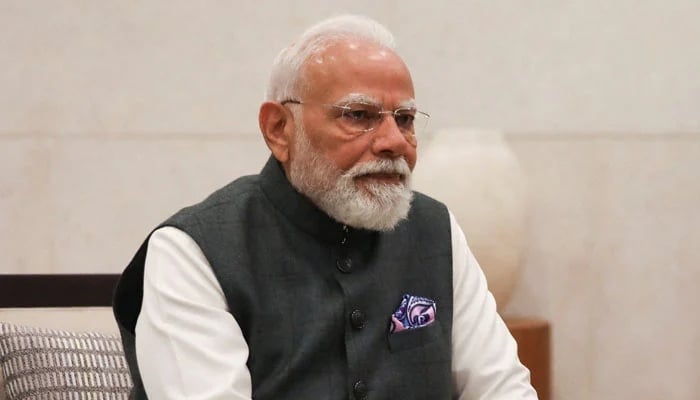
The Narendra Modi regime in India last week failed to pass a constitutional amendment bill that sought to expand the strength of the Lok Sabha (lower house of parliament in India) from 543 seats to 850 in a bid to allow delimitation of seats based on an ongoing census. The Constitution (131st Amendment) Bill, 2026, failed to secure a two-thirds majority as 298 members of parliament voted in favour of the bill while 230 voted against it with the House strength at the time of voting being 528. The required number was 352 votes for a two-thirds majority. The failure of the proposed amendment should be seen as more than a legislative setback. It is in fact a rare political rebuke to Modi and his government’s increasingly instrumental use of institutional processes. For a regime that has, for over a decade, demonstrated an almost unbroken ability to marshal parliamentary numbers, this defeat carries both symbolic and substantive weight. The issue was not merely the expansion of parliamentary seats, but the manner and timing of the proposed delimitation exercise. Tying such a consequential redrawing of constituencies to an outdated census, last conducted in 2011, raised legitimate concerns about fairness, transparency and intent. Delimitation, by its very nature, reshapes political representation; when done without updated demographic data, it risks becoming a tool of political engineering rather than democratic correction.
The Modi government’s attempt to package this move within the language of women’s empowerment has only ended up deepening the scepticism. The women’s reservation bill, passed unanimously in 2023, had already secured broad political consensus. Its delayed implementation, now seemingly tethered to a controversial delimitation exercise, appears less like policy sequencing and more like political opportunism. If the commitment to women’s representation were genuine and urgent, it could have been operationalised within the existing parliamentary framework. That it was not suggests competing priorities. Equally troubling is the regional dimension of the proposed changes. Southern states in India, which have historically invested in population control and socio-economic development, stand to lose representation under a population-based recalibration derived from outdated figures. This creates a perverse incentive structure – penalising governance success while rewarding demographic expansion. Such an approach will also risk deepening federal tensions in an already complex union. That the Indian opposition managed to unite and block the amendment is significant. In recent years, India’s fragmented opposition has often struggled to present a cohesive front against the ruling BJP. This vote suggests a recognition that institutional safeguards, however eroded, still require collective defence.
The broader political backdrop is also a factor: since returning to power for a third term in 2024 without a clear majority, the Modi government has had to navigate coalition dynamics. In such a scenario, efforts to recalibrate electoral boundaries ahead of the 2029 general elections inevitably invite scrutiny. Allegations by the opposition, most prominently by Rahul Gandhi, about institutional bias, including within the Election Commission of India, have also led to concerns that the playing field is being subtly tilted. The fact is that delimitation, census timing and representation quotas may seem administrative on the surface, but they determine who speaks, who counts and who governs. For Modi, here is a tough truth: legitimacy in a democracy cannot be manufactured through clever packaging or procedural shortcuts. It must be earned through transparency, fairness and respect for institutional integrity.