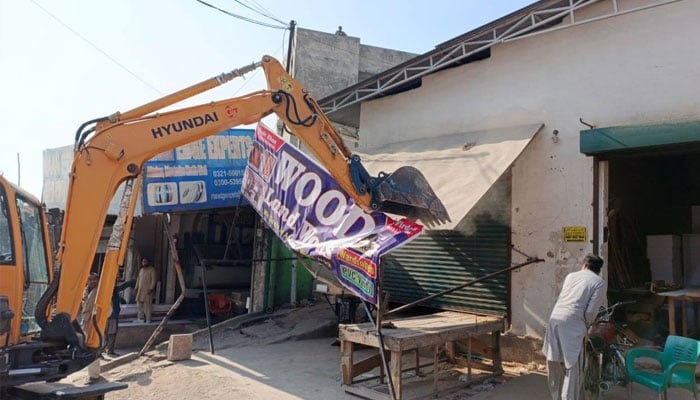
There is an unwritten rule in Pakistan when it comes to illegal or unregulated structures and/or developments in general: if they are made by or for the poor, they become encroachments, but if they are for the rich, they become malls or upscale housing societies. Unlike the latter, the former are usually under constant threat of demolition during the many anti-encroachment drives urban authorities across Pakistan have held in recent years. The latest prominent example of one of these drives comes from Islamabad, where massive evictions from informal settlements across the city have been reported in recent weeks, reportedly displacing thousands of families. The evictions have led to clashes and protests, with some residents reportedly claiming that even areas that have existed since before the 1947 partition are being targeted. The operation is reportedly part of a broad campaign by the CDA to remove illegal structures and reclaim state land following court orders that allowed the civic agency to proceed with enforcement actions. Meanwhile, the HRCP last week appealed to the judges of the superior courts to uphold a 2015 Supreme Court stay order against summary evictions of ‘katchi abadis’. While no one would dispute that informal settlements and encroachments are a major problem in Pakistan, it often seems as though the authorities are only attacking the symptoms rather than the main causes.
The people living in such settlements are not doing so because they really like the idea of living in often unsafe buildings of dubious legality that, aside from the threat of demolition, could fall apart when it rains heavily. They do so because they have no other choice. The cities of Pakistan would not function without the massive number of underpaid labourers they attract. But unlike in wealthier countries, there is little to no affordable housing for lower-income residents to access. Informal settlements are a logical consequence. The way these anti-encroachment drives are carried out is also quite problematic. The drive in Islamabad has generated accusations of people not being given proper notice or enough time to leave their homes and find alternate accommodation and those affected report loss of homes, livelihood and basic services.
However, it is not like the authorities have an easy job either. Complaints about encroachment and lax enforcement of urban planning laws have become a constant and some argue that the authorities need to take a strict approach to prevent more informal settlements. But failing to assure people of alternate accommodation or compensation only makes such operations harder and they also do not solve the question of where the evicted are supposed to go. In this context, the Federal Constitutional Court has directed the CDA to formalise regulations for informal settlements in the federal capital. While it remains to be seen what these regulations will do, no one should be thrown out of a home they have lived in for decades simply because they lack the right paperwork, especially in a country where the elite regularly get away with seizing public land through unscrupulous means. Urban planning must take into account that informal settlements have been the only option for the urban poor for decades. Only transitioning towards a more affordable and equitable housing paradigm will solve the problem in the long run.