KARACHI: The federal government has been urged to declare exports a “complete federal subject” and establish a single-window federal authority to streamline policy execution and support export-led economic growth.
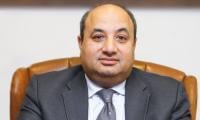
The proposal was put forward by Muhammad Jawed Bilwani, chairperson of the Pakistan Apparel Forum and chief coordinator of the All Pakistan Value-Added Textile Exporters Associations, during a meeting with Bilal Azhar Kayani, minister of state for finance, at the Karachi Chamber of Commerce and Industry (KCCI).
Bilwani said export-led growth requires a unified national strategy under centralised federal control to ensure consistency in trade policies, avoid regulatory overlaps among provinces, and enable Pakistan to meet its international trade commitments. He added that a single-window authority would reduce procedural complexities and improve the ease of doing business, making exports more competitive globally.
He noted that commerce, industry and trade via sea, land and air already fall under federal jurisdiction and should formally be declared a complete federal subject.Bilwani said he had consulted major value-added textile and export associations, which have collectively submitted proposals for the 2026-27 federal budget, focusing on tax relief and policy support to boost exports, industrialisation and employment.
He reiterated the need to reinstate the Fixed Tax Regime (FTR) for exporters, arguing that the shift to the Normal Tax Regime (NTR) has adversely affected liquidity and cash flow. Exporters are facing multiple layers of taxation, including income tax, surcharges, and super tax, resulting in a higher tax burden compared with regional competitors, he said.
“The export sector is already operating on thin margins of 2-3 per cent amid intense global competition,” Bilwani said, warning that continued pressure could lead to business closures, lower exports, and job losses.
He also called for the restoration of the Export Facilitation Scheme (EFS) in its original 2021 form, stating that recent changes, including the removal of zero-rating on local supplies and the imposition of duties on imports, have increased refund claims and worsened liquidity constraints.
Among other proposals, he urged the government to reintroduce the Duty Drawback of Taxes and Levies (DLTL) scheme with a 5.0 per cent base incentive and an additional 2.0 per cent performance-based incentive; abolish super tax on exports and suspend related surcharges; reduce the cost of doing business by restoring Regionally Competitive Energy Tariffs (RCET) and freezing utility prices; lower the policy discount rate in line with regional economies; and introduce a simplified social compliance contribution model similar to Bangladesh.
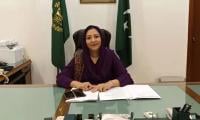
Responding to the proposals, Kayani said the government remains committed to economic stability and export-led growth through close coordination with the private sector.