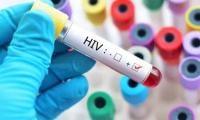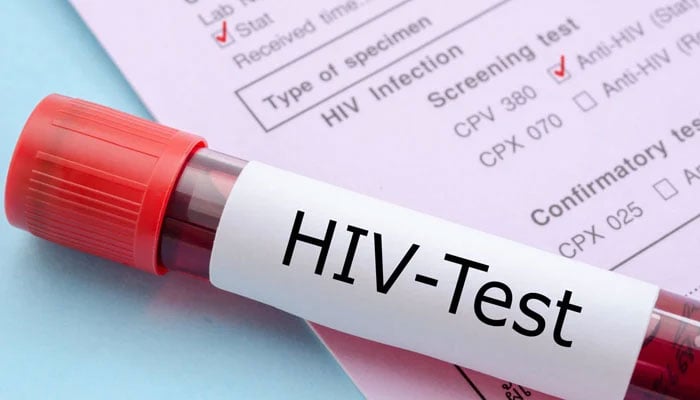
ISLAMABAD: Pakistan’s HIV crisis is worsening. Nearly 79 percent of people living with HIV do not know they are infected, and most of those who are diagnosed are not receiving treatment.
Health experts raised serious concerns on Saturday and called for accountability in healthcare system, along with an independent audit of more than $1.1 billion in international funding used to fight HIV, tuberculosis and malaria.
At a press conference at National Press Club, former federal health minister Dr Zafar Mirza, along with public health experts Dr Quaid Saeed and epidemiologist Dr Rana Jawad Asghar warned HIV is no longer limited to high-risk groups. It is now spreading to general population, including children, mainly due to unsafe medical practices.
Dr Zafar Mirza described the situation as a “collective failure” of healthcare system. He warned Pakistan could face an HIV crisis similar to some African countries if urgent action is not taken.
He said about 370,000 people in Pakistan are living with HIV, but only 21pc know their status. Among those who know, about 84pc are not receiving treatment, allowing virus to spread quietly.
Major causes of transmission include unsafe injections, reuse of contaminated syringes, and poorly screened blood transfusions. He noted around 70pc of blood transfusions in Pakistan may not be properly tested.
He criticised authorities for hiding data and lacking transparency, saying without accurate information, diseases cannot be controlled.
Recent data shows at least 618 new HIV cases in Islamabad over the past 15 months — an average of 41 cases per month — indicating virus is spreading even in the capital.
Experts demanded findings of recent outbreaks, such as Taunsa incident (where poor infection control led to infections, especially among children), be made public.
Dr Quaid Saeed said HIV outbreaks have been reported since early 2000s, but disease is now spreading beyond high-risk groups into the general population. Infection rates are also rising among key populations, reaching about 8pc among men who have sexual relations with men and 7pc among transgender individuals.
He warned children with HIV face poor survival chances without early diagnosis and treatment, and repeated outbreaks show serious negligence in infection control.
He also raised concerns about poor governance, saying Common Management Unit, which handles HIV, TB, and malaria programmes) has faced frequent leadership changes, weakening its effectiveness.
The experts questioned impact of international funding. Despite receiving over $1.1 billion since 2003, Pakistan still reports thousands of new HIV cases, around 200,000 tuberculosis cases and millions of malaria infections each year.
They referred to concerns raised by Global Fund’s Inspector General about poor management and use of funds, and called for a transparent audit.
Dr Rana Jawad Asghar highlighted repeated outbreaks, including 2019 Ratodero crisis that affected many children, show deep weaknesses in healthcare and regulation.
He added Pakistan’s high number of hepatitis C cases — around 10 million people — reflects poor infection control practices, which are also contributing to HIV spread.
He stressed the need for proper blood screening, safe injection practices and stronger disease monitoring systems.
Experts said Pakistan relies too much on foreign funding and does not invest enough domestically in HIV prevention and treatment.
They urged government to take immediate action by improving healthcare regulation, monitoring blood banks, ensuring accountability and increasing public awareness.
They warned without urgent reforms, transparency and strong political commitment, Pakistan could face a severe public health crisis with rising infections across the population.