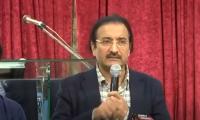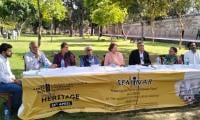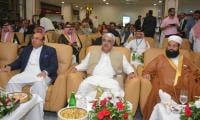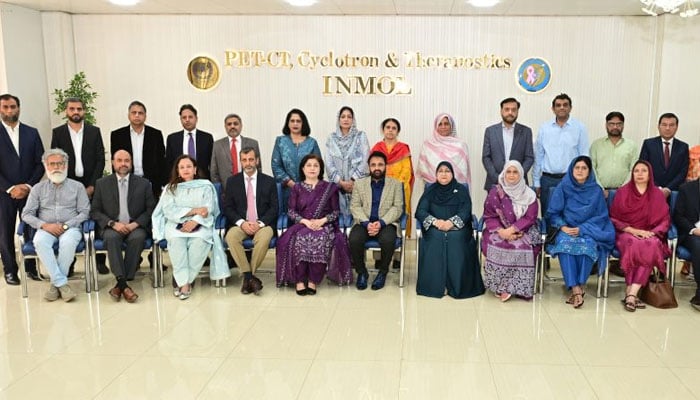
LAHORE : Marking a major milestone in Pakistan’s collaboration with the International Atomic Energy Agency (IAEA), the Pakistan Atomic Energy Commission (PAEC) formally presented the IAEA Collaborating Centre (CC) plaque to the Institute of Nuclear Medicine and Oncology (INMOL), Atomic Energy Cancer Hospital, Lahore, at a ceremony held on Saturday.
The designation of INMOL as an IAEA Collaborating Centre follows the signing of a formal agreement on February 16, 2026, in Vienna. The agreement was signed by Senator Ishaq Dar and IAEA DG Rafael Mariano Grossi, in the presence of PM Shehbaz Sharif, on the sidelines of a high-level event at the United Nations Office in Vienna.
The ceremony was held to commemorate this important recognition, reflecting Pakistan’s continued commitment to strengthening international cooperation in the peaceful applications of nuclear science and technology, particularly in cancer diagnosis and treatment. As an IAEA Collaborating Centre, INMOL will contribute to the Agency’s global network through research, capacity building, and technical cooperation initiatives.
Addressing the ceremony, Member (Science), PAEC Dr Shakeel Abbas Rofi appreciated the role of Atomic Energy Cancer Hospitals in delivering quality healthcare services across the country. He described these institutions as a true ‘Ray of Hope’ ensuring that no patient is denied treatment. He emphasised that the Collaborating Centre status brings both recognition and added responsibility and reflects the international confidence in Pakistan’s capabilities in cancer care. Dr Rofi further highlighted that Pakistan now has five institutions designated as IAEA Collaborating Centres, underscoring the country’s growing contribution to the cancer care landscape. He also noted that the Nuclear Medicine, Oncology and Radiotherapy Institute (NORI), Islamabad, has been designated as an Anchor Centre under the IAEA’s ‘Rays of Hope’ initiative.
Other Collaborating Centres include the Pakistan Institute of Engineering and Applied Sciences (PIEAS), National Institute of Safety and Security (NISAS), Nuclear Institute for Agriculture and Biology (NIAB), and Pakistan Institute of Nuclear Science and Technology (PINSTECH).
DG Nuclear Medicine and Oncology, Dr. Shazia Fatima emphasised the importance of this designation in enhancing Pakistan’s role in regional and international capacity building. She highlighted that with 92 Collaborating Centres across 45 countries, Pakistan’s strong representation in this global network is a matter of national pride.