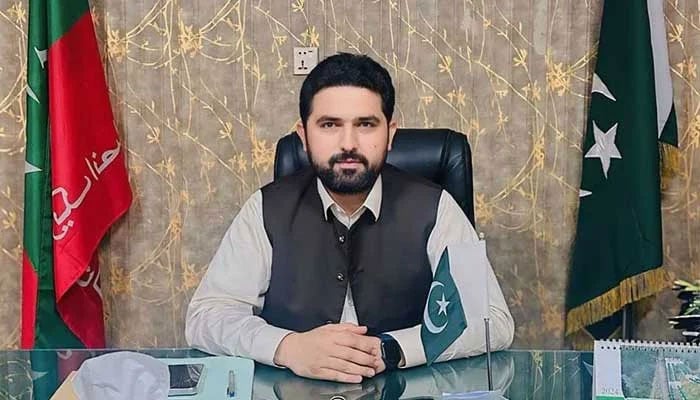
PESHAWAR: Chief Minister Muhammad Sohail Afridi on Friday called for lawful resistance to safeguard institutional integrity, while remaining within the bounds of constitutionalism and non-violence.
“Selective application of the law and targeting of a single political entity is setting a precedent with wider implications for the political system as a whole,” he said while addressing a Lawyers’ Jirga at the Nishtar Hall here.
Explaining his point, he said that he had sought a meeting with a judge of the Islamabad High Court (IHC); however, the meeting did not materialise despite a prolonged wait, which, he noted, is indicative of broader systemic challenges within the justice delivery framework.
Voicing serious concern over non-compliance with judicial directives, the chief minister said that despite authorization from three IHC judges to meet Pakistan Tehreek-e-Insaf (PTI) founder Imran Khan, the superintendent of Adiala Jail did not implement the court’s orders.
He termed this a matter of grave institutional concern, stating that disregard for judicial authority undermines both constitutional supremacy and the credibility of the rule of law.
The chief minister reiterated that his government and political party remain committed to the supremacy of the Constitution, equitable justice, and the protection of fundamental rights.
He observed that the prevailing circumstances reflect an erosion of due process, citing the treatment of Imran Khan and, in particular, his spouse Bushra Bibi, a non-political person, who, he said, has been subjected to prolonged isolation and restricted access to legal counsel and family members. The chief minister also expressed concern over reports of members of the lawyer community being subjected to military court proceedings, observing that such developments have heightened the responsibility of lawyers as custodians of constitutionalism.
Calling upon the legal community to play a proactive role, he assured them of the full support of both his government and the broader public.
He said that cases involving Imran Khan and Bushra Bibi were scheduled for hearing on April 22, and urged the legal fraternity to ensure that these proceedings strictly adhere to the principles of transparency and due process.
The chief minister informed that a Lawyers’ Jirga is scheduled to be held in Karachi on April 27 to deliberate on the future course of action. He said a nationwide pen-down strike would be observed on May 6 as a form of peaceful and lawful protest, in the absence of demonstrable progress toward ensuring free and fair trials by May 5.
Addressing the legal fraternity, the chief minister underscored that the lawyers possessed the resolve, capacity, and institutional standing to uphold constitutional order. He emphasised that the present moment demands principled action, warning that failure to assert the rule of law could have long-term implications for democratic freedoms and civil liberties.
PTI Secretary General Salman Akram Raja said that lawyers would once again have to take to the streets for the supremacy of the Constitution and the independence of the judiciary in the country.
“We do not want towers of gold and silver in a graveyard; we want an independent judiciary and supremacy of the Constitution,” he said, urging lawyers to stand up and warning that silence would harm the country.
Recalling the 2007 lawyers’ movement, he said he had actively participated and stayed away from court appearances for two years.
Salman Akram Raja alleged that Pakistan had become the only country where civilians were being tried by military officers, adding that over 80 party workers had been imprisoned after convictions by military courts without proper avenues for appeal.
Other speakers also addressed the gathering, reaffirming their commitment to upholding the Constitution, ending coercive practices, and ensuring access to justice.
The forum concluded with the adoption of joint resolutions calling for continued collective efforts to reinforce the rule of law and democratic norms across the country.