ISLAMABAD: Hours before the United States (US) and Iran announced the reopening of the Strait of Hormuz, Pakistan had underscored the urgency of the situation and the fundamental objective of restoring passage through the vital waterway and normalising conditions at the earliest.
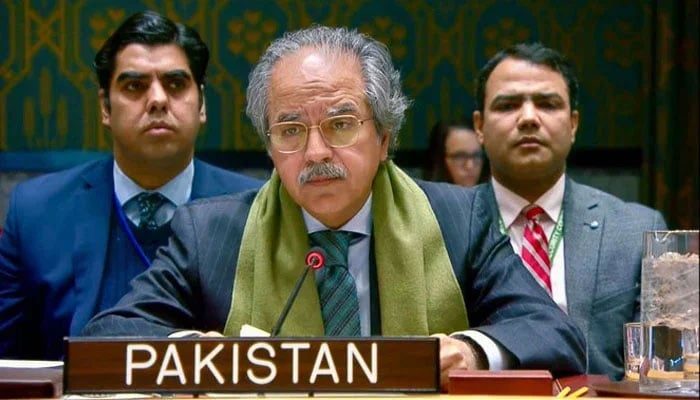
“This is an important issue not only for the GCC countries but also for all other states in the region and beyond, including Pakistan. It is also logical that any discussion or arrangement related to the Strait of Hormuz must take into account the legitimate interests of the GCC countries,” said Ambassador Asim Iftikhar, Pakistan’s Permanent Representative to the UN, while speaking at the General Assembly Veto Debate on the Strait of Hormuz.
He stressed that the Strait of Hormuz remains a critical international shipping route for goods and energy, and Pakistan called for ensuring the security of ships and crew, the swift and safe passage of civilian vessels, and the restoration of normal maritime traffic through the Strait.
“The situation in the Strait of Hormuz is adversely impacting countries around the world, including Pakistan. The consequences for the regional and global economy are evidently severe. Pakistanis are also suffering. The impact is felt not only in terms of energy flows but also fertilisers and other essential commodities, thereby affecting food security, raising the cost of living, and squeezing the livelihoods of the most vulnerable.” serious risks, raising alarm over rising public debt as countries across the world respond to the energy crisis.
“This was a headline on the front page of today’s New York Times. Interestingly, another headline on the same page referred to the stock market scaling a new peak, reflecting optimism that peace was near,” he said.
This reflects one perspective beyond these halls as the international community closely follows the crisis. The options are therefore clear: if military escalation and disruptions persist, suffering will deepen and extend far beyond the region, translating into widespread economic hardship.
“Return to peace, on the other hand, will benefit all,” he added.
Pakistan expressed gratitude that it has been recognised for its constructive diplomatic engagement in supporting de-escalation, ceasefire efforts, and the broader pursuit of stability between the United States and Iran.
“Through sustained interaction at the leadership level with both Washington and Tehran, as well as with other partners in the region and beyond, notably Saudi Arabia, Egypt, Türkiye, and China, Islamabad has sought to encourage dialogue, facilitate the exchange of messages, and help create conditions conducive to meaningful negotiations,” he explained.
This approach underscores Pakistan’s consistent commitment to regional stability and international peace, reflecting its preference for principled, dialogue-oriented diplomacy in addressing complex geopolitical challenges and disputes.
“From the outset, Pakistan prioritised de-escalation, cessation of hostilities, and a return to dialogue for a peaceful diplomatic resolution to the crisis. Pakistan successfully hosted the Islamabad Talks on April 11-12. These talks were made possible by Pakistan’s engagement with the parties, as well as outreach efforts aimed at promoting an immediate cessation of hostilities and achieving peace and stability in the region,” he said.
Through the “Islamabad Process”, Pakistan is pursuing the objective of ending the conflict and ensuring long-term peace. Pakistan supports the sovereignty, territorial integrity, political independence, and security of all brotherly countries in the region.
“Pakistan has also expressed continued, unwavering support and complete solidarity with the fraternal GCC countries during these challenging times,” the Ambassador said.