With time, what once passed for strategic calculation in Washington has hardened into something far more perilous. It is a mindset that no longer treats diplomacy as a compromise but as a prelude to submission. The rhetoric across policy circles and the media regarding Iran mirrors this bellicose doctrine.
Consider the tone. US President Donald Trump threatened Iran in a post saying, “a whole civilisation will die tonight, never to be brought back again.” Senator Lindsey Graham publicly likened Iranians to “religious Nazis”. This extreme language is not fringe. It emanates from Washington’s highest offices.
Even Pope Leo has not been spared for advocating peace. Trump dismissed him as “weak” and “terrible for foreign policy”. When calls for de-escalation by the Pontiff himself invite ridicule, the problem is ideological.
Elbridge Colby, a key figure in national security and defence policy, invoked the spectre of the Avignon Papacy in discussions with Vatican representatives. This was a period when the Church was effectively subordinated to politics. A stark expectation, even religious and moral authority is required to bow before force.
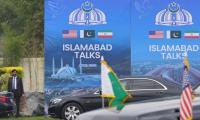
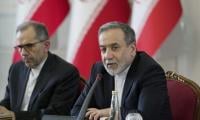
This same dominant paradigm was on display during the Islamabad Talks. Offering a rare opening, they exposed the enduring imbalance at the heart of US-Iran diplomacy. The Iranian delegation, led by Abbas Araghchi and Mohammad Bagher Ghalibaf, arrived signalling readiness for substantive engagement. The US, however, projected something else. Vice President JD Vance remained in contact with Netanyahu during the talks, reinforcing perceptions that Washington was not an independent negotiator but a partisan actor.
The irony was sharpened by a Washington Post opinion piece by Marc Thiessen, a George W Bush and Donald Rumsfeld speechwriter. Again, something not from the fringe but Washington’s policy circle. He asked the US to “carry out a final barrage of leadership strikes, eliminating the Iranian officials who had been spared for the purpose of negotiations. Iran’s leaders must be made to understand that their lives literally depend on reaching a negotiated settlement to Trump’s liking. If they refuse to do so, they will be killed”. Peace held hostage.
Yet, despite everything, both sides did sit down under the same roof. This single fact matters. The substance of the talks, however, reflected familiar patterns. US demands reportedly centred on dismantling Iran’s nuclear infrastructure without guaranteed relief. An ultimatum – when diplomacy requires reciprocity.
History explains why this matters. Since the Iranian Revolution, mistrust did not emerge in abstraction; it was built, reinforced and institutionalised. During the Iran-Iraq War, the US backed Iraq despite its invasion of Iran. Decades of sanctions followed. It scarred a generation.
The Joint Comprehensive Plan of Action briefly disrupted this trajectory. Painstakingly negotiated under Barack Obama, it imposed verifiable limits on Iran’s nuclear program while offering phased relief. Its unilateral abandonment by Trump, more to undo Obama’s legacy than any coherent alternative strategy, was not a policy shift. It was a repudiation of diplomacy itself.
Washington should also understand that the biggest hurdle to peace with Iran is this total collapse of US credibility. After decades of torn-up deals and shifting goalposts, why should any nation trust a handshake that morphs into a fist on the whims of an individual?
Diplomacy is impossible when one side uses the table as a triangulation point for the next strike. Loss of credibility exacerbated by the elimination of Iran’s civil and military leadership, gathered to view a US-provided draft agreement, now shadows every engagement. Each word is weighed not for what it offers but for the intent it conceals. In such conditions, caution is not obstinacy but rational statecraft.
Bizarrely, Washington continues to rely on pressure as its primary tool, though decades of experience evidence its failure. Its post-Islamabad Talks knee-jerk escalatory moves around the Strait of Hormuz demonstrate that this is not a contained rivalry; its spillover is global.
Any serious path forward has to include Lebanon. Facing persistent bombings from Israel, Washington’s enfant terrible, it cannot remain peripheral. Lebanon’s stability is inseparable from that of the broader Middle East. A peace framework that excludes it is not just incomplete; it is unsustainable.
What is often described as a failure of talks is, in reality, the predictable outcome of their design. Negotiations framed around compliance rather than compromise are not meant to succeed. This is the inherent flaw in Washington’s posture. It approaches peace as something to be imposed rather than negotiated.
The necessity of peace has never been more urgent. For Iran, it is a pathway out of isolation and perpetual pressure. For the US, despite its bravado, it is an escape from an endless cycle of confrontation that continuously mauls its credibility and resources. Given this, peace is not a handout. It is a convergence of interests.
The tragedy is that this pathway, though always visible, has been repeatedly ignored. Frameworks have existed and openings have emerged. Each time, they have faltered not by complexity but due to a bent of mind.
The choice now is immediate and consequential. If diplomacy continues to be treated as an extension of force, the outcome is preordained. It shall spawn deeper mistrust, far fewer options and a world defined by escalation. The alternate path is to recognise that durable agreements are not imposed but built step by step, through respect, restraint and reciprocity.
History will judge this moment by the opportunities that were seized or squandered away.
The writer explores the forces which shape power, belief and society. He can be reached at: [email protected]