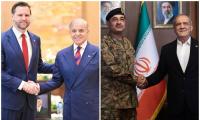
The Middle East has entered a phase of whiplash. In a single day, expectations swing from ceasefire to escalation and back to stalemate.
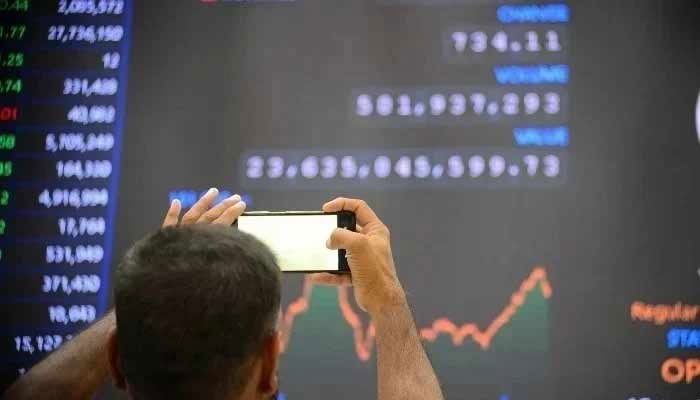
Markets react instantly. A single statement from the warring sides can push sentiment from risk-on to risk-off within hours. There is no global recession, at least for now. Yet the economic effects are already visible. Uncertainty has become more expensive. Energy markets are tighter, freight costs are rising, and inflation expectations have hardened. This is the backdrop to the ongoing spring meetings of the IMF. The good news is that no multilateral financial institution is predicting an all-out economic collapse. The worrisome news is that in their latest outlooks, all of them signal that the earlier sense of stability has faded.
The IMF categorically states that global growth will survive only if the conflict remains contained. Instead of offering a standard baseline, it offers a ‘reference forecast’ built on the assumption that the war remains limited and disruptions fade by mid-2026. The ADB does something similar for Asia with its ‘early stabilisation scenario’. These scenarios are conditional propositions rather than forecasts one was used to in the pre-war setting.
That conditional optimism still leaves the global picture weaker than it looked a few months ago. The IMF projects world growth at 3.1 per cent in 2026 and 3.2 per cent in 2027. It also says that without the war, 2026 growth would have been revised up to 3.4 per cent. In its adverse scenario, global growth drops to 2.5 per cent in 2026. In a more severe scenario, it falls to about 2.0 per cent, while inflation rises above 6.0 per cent by 2027.
The ADB still expects developing Asia and the Pacific to grow by 5.1 per cent in both 2026 and 2027. Whereas the World Bank foresees South Asia growing at 6.3 per cent. Yet once India is removed, the rest of South Asia (excluding Afghanistan and Pakistan) is projected to grow at only 4.1 per cent in 2026.
The IMF’s financial stability report (GFSR) sharpens the warning. It says the problem is not only higher oil prices. It is the way a geopolitical shock can travel through balance sheets and funding markets. Since late February, global equity prices have fallen and bond yields have risen sharply. Emerging-market assets have been hit especially hard, particularly in commodity-importing and more vulnerable economies. The report warns of currency pressure, capital outflows, forced selling by leveraged nonbank institutions and a tighter link between sovereign stress and banks. Countries do not need a banking panic to get into trouble. A tougher price of money can do the damage on its own.
The World Bank adds a structural point that is very relevant for Pakistan. South Asia’s problem is not only the energy shock itself. It is the economic machinery’s weakness that must absorb it. The Bank says the region is particularly exposed due to its reliance on imported energy. It also says job creation remains poor, services exports face possible pressure from AI and industrial policy has been used twice as often as in the average emerging economy, with mixed results. Import restrictions cut imports. Export-promoting measures, on the Bank’s evidence, did not produce significant export gains. That is a useful corrective to the growing romance with industrial policy.
Pakistan sits awkwardly across these institutional maps. In the World Bank’s April 2026 architecture, it is no longer counted inside South Asia. It has been moved into MENAAP (Middle East, North Africa, Afghanistan and Pakistan). That bureaucratic change captures a real economic fact. Pakistan’s immediate exposure in this crisis runs west as much as east. The World Bank’s MENAAP update says Pakistan is among the economies increasingly exposed to the broader economic and social effects of the Gulf conflict. That feels right. Pakistan may be a South Asian state by geography and history, but its fuel bills, remittance flows and external financing conditions are closely tied to the Gulf.
The direct forecasts for Pakistan are modest enough to dispel any fantasy of escape. The IMF’s April 2026 data mapper puts Pakistan’s real GDP growth at 3.6 per cent and average inflation at 7.2 per cent for 2026 on its calendar year basis. The ADB projects 3.5 per cent growth in FY2026 and 4.5 per cent in FY2027, with inflation at 6.4 per cent and 6.5 per cent. Its country note links the inflationary pressure to surging oil prices and disrupted trade routes stemming from the Middle East conflict. The precise numbers differ because of reporting conventions, but the story does not. Economic recovery in Pakistan remains fragile.
Pakistan is exposed through three channels. The first is the energy import bill, which quickly feeds into inflation, the current account and politics. The second is external finance. The GFSR explicitly states that more vulnerable emerging markets may face currency and capital outflow pressures if financial conditions tighten further. The third is the Gulf link itself. Pakistan earns stability from workers abroad and from a region now carrying the burden of war. Any prolonged disruption that arrives in Pakistan with a lag will stay longer than expected.
That is why its policy response should not be another round of improvisation. Pakistan needs to treat this moment as a test of its energy strategy. The country cannot remain this exposed to imported fuel and then pretend that every oil shock is bad luck. The spread of rooftop solar and other private energy solutions is often discussed in Pakistan as a revenue problem for the grid. It should be seen as a solution and discussed as macro insurance.
Electricity tariffs, transmission and storage should be redesigned so that cheaper private generation reduces the national fuel bill without deepening circular debt. The World Bank’s regional diagnosis of imported energy dependence points in that direction and the ADB’s Pakistan note shows how quickly higher fuel costs pass into inflation.
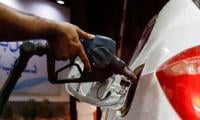
Fiscal policy also needs a cleaner hierarchy. Broad energy subsidies (such as a reduction in diesel prices by Rs135 per litre) are politically tempting but economically clumsy. They protect heavy users as much as poor households, and they hollow out the budget just when external financing is least forgiving. The WEO warns that public debt and eroded buffers leave vulnerable economies with less room to absorb shocks. In Pakistan’s case, that means targeted income support for vulnerable households, credible energy pricing and a refusal to reopen the cycle in which every global shock becomes a fiscal amnesty at home.
The same logic applies to trade and industry. The World Bank’s South Asia update is blunt that industrial policy in the region has produced mixed results, and that export-promoting measures have not yielded much. Pakistan should draw the obvious conclusion. Industrial policy on its own, without broader macroeconomic reforms, will not lead to economic growth.
Taken together, the four Spring Meeting reports point to a tougher external environment than the one Pakistan has been used to. Shocks are arriving more often and lasting longer. That shifts the burden inward. Managing each episode as it comes will not be enough.
As long as the economy remains tied to volatile imports and external support, each disturbance will play out in much the same way. Breaking that pattern rather than coping with it will shape Pakistan’s economic trajectory in the years ahead.
The writer heads SDPI, chairs the board of the National Disaster Risk Management Fund, and serves on the ADBI’s Advisory Board. He posts on LinkedIn @Abidsuleri