Pakistan has made a solemn constitutional promise. Under Article 25A, every child between the ages of five and sixteen has the right to free and compulsory education. Yet in practice, this promise remains unfulfilled, as millions of children continue to be out of school, and the gap between commitment and delivery continues to widen.
At the centre of this crisis lies a reality that is often acknowledged but rarely addressed with urgency: rapid population growth.
Pakistan is now home to over 241 million people, growing at an annual rate of 2.55 per cent. It is the fifth most populous country in the world. This level of growth could be manageable if public systems were expanding at the same pace. Unfortunately, they are not. Education is among the sectors most visibly strained by this imbalance.
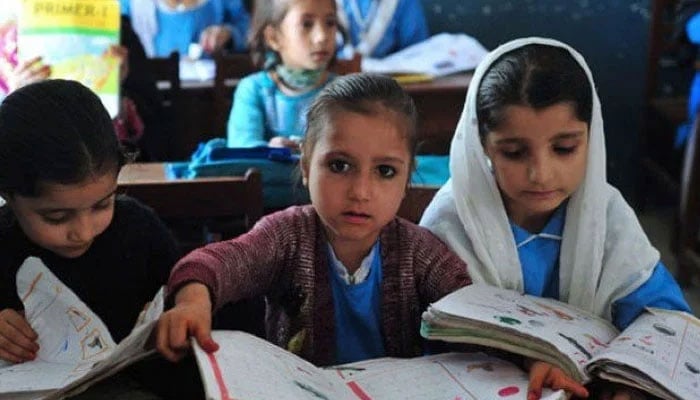
The scale of the challenge is stark. According to official estimates cited by the Pakistan Institute of Education (PIE), over 26 million children between the ages of 5 and 16 are out of school in Pakistan. This means nearly one in three children is deprived of their constitutional right to education. Behind these figures are real children, particularly girls, whose futures are increasingly uncertain.
This is not only a question of enrolment. It is a question of system capacity and scale. According to Population Council estimates, Pakistan will need approximately 57,000 additional primary schools by 2040 at a 2.0 per cent population growth rate. However, with the current population growth rate exceeding this level, the actual demand for schools, teachers and education infrastructure is likely to be significantly higher, further widening the gap between need and available capacity.
Each year, millions of new children reach school-going age, placing immense pressure on already overstretched infrastructure. Classrooms become overcrowded, teacher-to-student ratios worsen and learning outcomes decline. In many rural and peri-urban areas, schools are either inaccessible or non-existent. Where schools do exist, basic facilities are often missing, including safe drinking water, boundary walls and sanitation facilities. For girls in particular, the absence of such facilities often determines whether they remain in school or drop out.
The gender dimension of this crisis is especially concerning. While primary enrolment has improved over time, retention remains low, particularly for girls. Many leave school after primary education due to the absence of nearby middle and secondary schools, safety concerns, poverty and prevailing social norms. In resource-constrained households, educating daughters is often deprioritised when difficult choices must be made.
Rapid population growth intensifies these pressures. Larger family sizes mean limited household resources are divided among more children. As a result, the ability of families to invest in each child’s education is reduced, especially beyond the primary level. This is where population dynamics become directly linked to educational outcomes.
At the same time, this relationship also offers a path forward. Education, particularly of girls, is one of the strongest determinants of lower fertility and better family planning outcomes. Evidence consistently shows that as female education levels rise, women are more likely to make informed choices about family size and birth spacing. This makes education not only a sectoral priority but also a critical driver of long-term demographic balance.
The conversation on population must therefore move beyond statistics and into lived realities. In this context, the Waqfa campaign, led by the Mir Khalil-ur-Rehman Foundation (MKRF) in collaboration with the Population Council, highlights the critical link between family planning decisions and children’s education outcomes besides other wellbeing indicators. The campaign is anchored in the idea that a ‘pause for progress’ between births is not only important for maternal and child health, but also essential for ensuring that every child receives adequate attention, care, and educational opportunity within the household.
Family planning plays a central role in achieving this concept of Waqfa or spacing between births. It allows parents to better plan for the future of their children. Education must be complemented with proper upbringing, and spacing enables parents to devote the necessary time, attention, and care to each child, ensuring not just schooling but holistic development.
This perspective aligns closely with the broader national need for balance. Sustainable development requires alignment between population growth and the capacity of systems to absorb and serve that population. At present, that balance remains uneven. The education system is attempting to serve a population that is growing faster than classrooms, teachers and public investment can accommodate.
The consequences of inaction are long term. An undereducated population limits economic productivity, deepens inequality, and constrains future opportunity. It also places growing strain on already stretched public systems.
To change this trajectory, Pakistan needs a sustained and focused response. This includes increased investment in education infrastructure, construction of new schools, improved facilities and stronger retention strategies, particularly for girls. At the same time, greater attention must be given to population dynamics, ensuring that families are equipped with the knowledge and services needed to make informed choices.
The link between population and education is neither abstract nor distant. It is visible in overcrowded classrooms, in children who never enroll, in girls who drop out early, and in teachers struggling to manage overwhelming numbers.
Pakistan’s future will ultimately be shaped by how effectively it educates its children. But the effectiveness of education itself is tied to whether the country can bring population growth into a sustainable balance. Without addressing both together, progress in either will remain limited.
The writer is the communication manager at the Population Council.