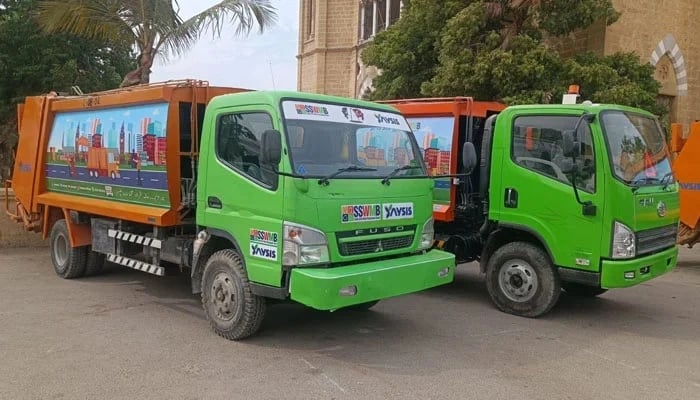
The Jamaat-e-Islami on Thursday submitted a resolution in the City Council against the “incompetence” and “worst-ever performance” of the Sindh Solid Waste Management Board (SSWMB), urging that the SSWMB be dissolved and Karachi’s sanitation system be handed over to the town municipal corporations (TMCs).
Submitted by Fazal Ahad, the JI’s deputy parliamentary party leader in the City Council, the resolution expressed concern that despite the provincial government’s hefty annual allocation of Rs43 billion, the SSWMB has “failed to ensure an effective system for garbage collection and citywide cleanliness”.
It said that due to the “faulty sanitation arrangements, garbage is neither being collected from households nor are the streets, lanes and neighbourhoods being cleaned regularly”.
It added that “grossly inadequate and unprofessional manpower, along with insufficient machinery, have resulted in heaps of garbage accumulating across the city, while drains clogged with waste are causing foul smells and contributing to the spread of diseases”.
Terming the situation “serious”, the resolution demanded that the government take emergency steps and, in line with the Constitution and the Supreme Court’s rulings, transfer all municipal affairs to the TMCs. It specifically called for the SSWMB’s immediate dissolution and transferring waste collection responsibilities to the town administrations.
It proposed that until the SSWMB’s is dissolved, all new contracts be signed with towns instead of districts, while payments to existing contractors be linked to verification by town and union committee chairmen.
It also called for a forensic audit of the SSWMB’s 12-year performance, strict enforcement of contractual obligations on existing contractors, and the establishment of an effective monitoring mechanism with the support of towns.