_akhbar.jpg)
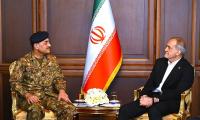
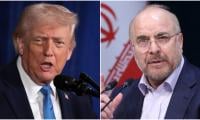
“Why should we go to some country that has nothing to do with it?” The president of the US said this on Tuesday, dismissing Geneva and Vienna and Oslo in a single sentence, before announcing he was more inclined to return to Islamabad because “the Field Marshal is doing a great job, he's fantastic”.
In the space of a single news cycle, the site of the most consequential negotiation in a generation had been settled by one man's personal regard for another. The institutions that were supposed to do this work had, some time ago, ceased to be relevant.
It is worth lingering on that absence, since the absence is the story. The post-1945 order existed, at least nominally, to prevent exactly this kind of war. The Security Council was built so that great powers could not bomb smaller ones without the theatre of collective authorisation; it has been frozen by American vetoes since October 2023. The JCPOA was cobbled together over a decade of negotiation so that Iran's nuclear capacity could be constrained without a shot being fired; Mr Trump killed it in 2018, the E3 buried it with their snapback in September 2025, and it can now be found in the same museum as the League of Nations.
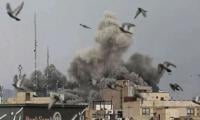
But then again, red had already seeped through empire's white-gloved hands when they crafted this system. Antony Anghie wrote two decades ago that the colonial encounter was not an aberration in the history of international law but its animating logic: sovereignty for the civilised, tutelage for the rest. The bunker-busters that struck Fordow and then the Ayatollah's compound carried that logic's fingerprint.
The gap between what the system promised and what it delivered has been there since Bandung. What is new, perhaps, is that the gap is now wide enough for other actors to step into.
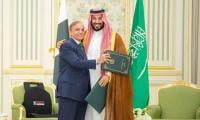
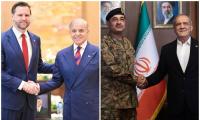
Into that gap strode Pakistan. To its credit, Islamabad did so with genuine skill. The prime minister and the field marshal managed, in the space of three weeks, what the entire OIC could not manage in nine months. One, a ceasefire, secured 90 minutes before Mr Trump's deadline to kill “a whole civilisation”. Two, a venue, accepted by both sides as honest ground. Three, 21 hours of face-to-face negotiations between governments that had not spoken across a table since the revolution in 1979.
The talks collapsed on April 12 over the same rock that will obstruct every subsequent conversation. For Washington, a deal means zero enrichment, full dismantlement and a reopened strait. For Tehran, it means the regime survives: sanctions lifted, assets unfrozen, enough of the programme preserved so the Supreme Leader can face his Majlis.
The three questions on the field marshal's desk are each more workable than the men around Mr Vance are prepared to admit. On the enriched uranium, Mr Witkoff himself conceded what the Pentagon will not: that Iran remains “probably a week away” from weapons-grade material, nine months and several thousand bombs after the programme was supposedly obliterated. Washington can now choose between enrichment under inspection or enrichment in the dark. A cap at five per cent, verified by the IAEA, that Tehran expelled in July and will not invite back cheaply, sequenced against unfrozen assets in Korean and Japanese banks, is no harder than what was agreed in Vienna. It is also only a deal-killer if someone insists on making it one.
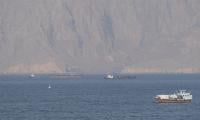
On Hormuz, the pre-war legal order held that Iran could not close the Strait, could not charge for passage and could not discriminate between vessels. Iran has done all three.
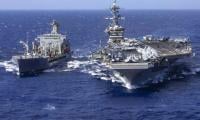
UNCLOS says transit passage “shall not be suspended”, but the freedom of the seas has always belonged to whoever had the navy to enforce it. Grotius wrote The Freedom of the Seas in 1609 to supplant the Portuguese at the Dutch East India Company’s behest; the British flipped it against the Dutch and carried the doctrine forward on their frigates; and the Americans midwifed it in UNCLOS, becoming its primary enforcer when no littoral state could hold a chokepoint shut against a carrier group at bearable cost.
That time is over. A hundred-thousand-dollar mine now threatens a five-hundred-million-dollar tanker. The US Fifth Fleet is in the Gulf as we speak, and the strait is still closed. Neither Iran nor the US has ratified UNCLOS. Two non-parties to a treaty are citing it at each other across a waterway the treaty says cannot be shut but which is, observably, shut.
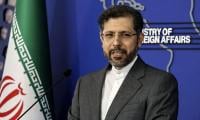
On Friday, Mr Araghchi announced the strait was open for commercial vessels for the “remaining period of ceasefire”, tying the opening to the Lebanon truce. The linkage tells you everything: Hormuz is now a lever, and it will remain one as long as the surrounding context remains. The Montreux Convention understood in 1936 what the rest of international law has spent ninety years pretending away: that when a country sits on a strait it can close, the wise arrangement gives it a stake in keeping it open. Some multilateral body of the littoral states, with a structured Iranian share, built on that logic, is likely where this ends.
On the proxies, the American demand that Iran “end all funding” is chasing a ghost. Hezbollah is already wreckage. Nasrallah is dead. The forward deterrent Iran spent 40 years building now lies in pieces across southern Lebanon. There is nothing left to surrender. Whether Tehran rebuilds depends on what it is offered instead. Revolutionary fervour cannot be killed, but it can be made irrelevant. Deng, for instance, simply made everyone too prosperous to care about Mao. Iran's people tasting the proceeds of normalcy would accomplish the same.
Behind both parties looms a third. A noxious blend of Bibi Netanyahu’s hope in Trump’s unqualified assistance and fear of plummeting support for Israel in the West has brought us here. The danger now is that Bibi, whose history with obeying ceasefires is questionable at best and whose coalition survives only as long as there are things left to bomb, will keep striking the south and hand Tehran exactly the grievance it needs to shut Hormuz again.
Eighty years ago, 51 countries signed a Charter in San Francisco to ensure that wars of aggression would be met by the collective will of nations. That charter now lives in a glass case on the East River, and the collective will of nations lives, of all places, in a hotel in Islamabad.
We’ve earned the world we’re living in. God willing, we’ll survive it.
The writer is a student of law at King’s College London. He can be reached at: [email protected]