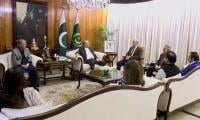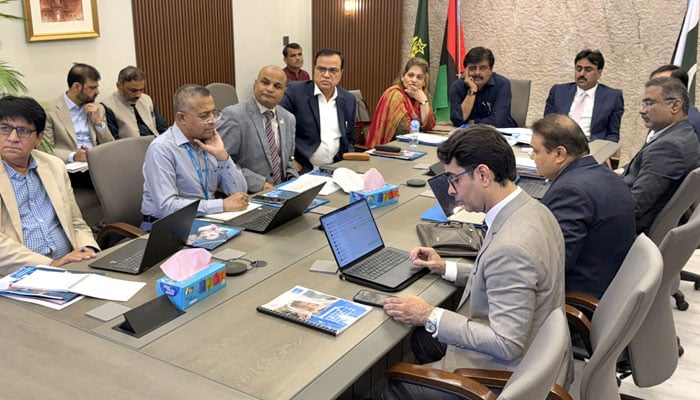
A high-level meeting co-chaired by Sindh Minister for Education Syed Sardar Ali Shah and the minister for irrigation, planning & development agreed to develop a five-year multi-sectoral roadmap to bring out-of-school children into the education system.
Officials said the meeting was attended by Chairman Planning & Development Najam Shah, Secretary School Education Zahid Ali Abbasi, Parliamentary Secretary for Planning & Development Saadia Javed, along with other officials. UNICEF Chief Prem Bahadur Chand and Education Specialist Asif Abrar also participated.
The participants emphasized that the high number of out-of-school children is a major barrier to Sindh’s socio-economic development and requires a comprehensive and strategic response. Under the five-year roadmap, a target has been set to bring 50% of out-of-school children back into the school system by 2030.
Minister for Education Shah said that addressing illiteracy, poverty, child labour, and a weak economy is only possible by ensuring access to education for children. He highlighted that there are multiple reasons why children remain out of school, and these must be addressed through a holistic approach. He further stressed that improving girls’ education and reducing gender disparities will be a key priority of the roadmap.
Provincial minister Jam Khan Shoro said that an effective mechanism can only be developed through a comprehensive and coordinated strategy, adding that collaboration among the departments of education, health, social protection, local government, and finance is essential to achieve the desired goals.
It was agreed that the roadmap will be implemented through coordinated efforts across departments, with the Planning & Development Department playing a central coordination role. A dedicated delivery unit and a digital dashboard will be established to ensure monitoring and data-driven decision-making.
Additionally, partnerships with international donors, development partners, and the private sector will be strengthened to mobilize resources. Financial incentives such as scholarships, cash transfers, and attendance-linked benefits for low-income families will also be introduced. Special focus will be given to improving infrastructure, facilities, and safe transportation for girls.
The roadmap also includes non-formal education, second-chance programmes, vocational training, and targeted interventions for flood-affected and climate-vulnerable areas. The meeting reaffirmed the Government of Sindh’s commitment to ensuring that every child is enrolled, retained, and provided with quality education. The initiative is expected to increase literacy, reduce poverty, develop a skilled workforce, and contribute to overall economic and social stability in the province. It was further decided that the finalized proposals and progress on the roadmap will be submitted to the chief minister for final approval.