KARACHI: The Pakistan stock market will enter the new week with cautious optimism as investors watch closely for the outcome of talks in Islamabad and the start of corporate result announcements. Any progress on geopolitical stability could sustain the rally, while earnings may guide sector direction.
The benchmark KSE-100 Index closed at 167,191 points after a sharp weekly gain of 16,795 points, or 11.2 per cent. Analysts expect momentum to continue if sentiment remains positive, supported by easing oil prices and stable macro indicators. However, uncertainty around external payments and global developments may keep volatility high.
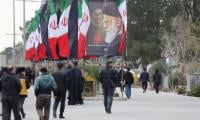
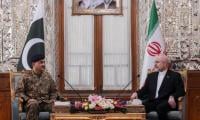
According to AKD Research, negotiations in Islamabad will remain a key trigger for investors, with positive developments likely to support further recovery. The brokerage noted that the market still trades at attractive valuations, with a forward price-to-earnings ratio of 7.1 times. The week saw strong bullish momentum driven by a Pakistan-mediated two-week ceasefire between the US and Iran. This development improved sentiment and triggered broad-based buying across sectors.
Average daily traded volumes rose by 52 per cent week-on-week (WoW) to 918 million shares, reflecting renewed investor interest.
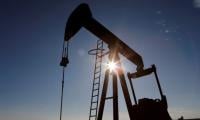
The rally also tracked a sharp fall in global oil prices. Arab Light crude declined by 13 per cent WoW to around $97.6 per barrel, easing inflation concerns. This led to a decline of up to 48 basis points (bps) in secondary market yields. At the same time, Pakistan-Afghanistan talks mediated by China added to positive sentiment.
On the macro front, remittances for March 2026 stood at $3.8 billion, down 6.0 per cent year-on-year (YoY) but up 17 per cent month-on-month (MoM). Total remittances for the first nine months reached 30.3 billion dollars, up 8.0 per cent YoY. Foreign exchange reserves held by the State Bank of Pakistan (SBP) increased slightly to $16.4 billion.
Syed Danyal Hussain of JS Research said the market staged a strong recovery due to improving geopolitical sentiment and falling oil prices. He noted that easing energy costs helped reduce inflation risks and brought down interbank offered rates across tenors. He added that Pakistan successfully repaid a $1.43 billion Eurobond, strengthening investor confidence. However, he flagged upcoming external repayments, including deposits from the UAE, as a factor to watch.
Arif Habib Limited Research highlighted that the index posted its strongest weekly return in months after a midweek surge driven by ceasefire news. The firm noted that oil prices dropped sharply across benchmarks, with Brent and WTI both falling over 12 per cent week-on-week. It also pointed out that the rupee remained stable against the dollar, while inflation, measured by the Sensitive Price Index, rose 12.15 per cent YoY.
Sector performance remained strong. Cement, engineering and textile stocks led gains, rising 17.3 per cent, 16.9 per cent and 13.8 per cent respectively. Leasing and real estate investment trusts lagged, declining 4.2 per cent and 0.6 per cent. Mutual funds emerged as major buyers, with net purchases of 53.8 million dollars, while banks and insurance companies were net sellers. Top performers included several cement and textile names, while a few defensive stocks ended in the red.
Nabeel Haroon of Topline Securities credited the rally to ceasefire developments and improving investor sentiment. He said strong remittance inflows and institutional buying supported the market. He added that average daily trading volumes remained robust, reflecting sustained activity.
Looking ahead, the market direction will depend on geopolitical outcomes and earnings announcements. Investors are likely to stay selective, focusing on sectors with strong fundamentals and earnings visibility.