The latest increase in petrol and diesel prices triggered predictable public anger. But to understand why such shocks recur, and why policy responses often look reactive, one has to begin with a structural reality: Pakistan is deeply dependent on imported energy.
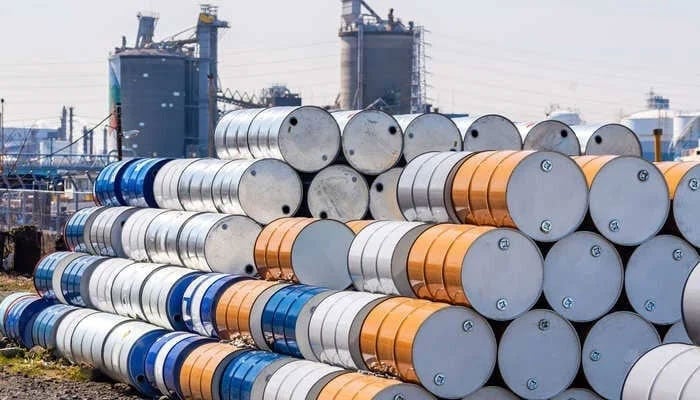
Local refineries meet only about 30 per cent of petrol demand, while roughly 70 per cent is imported as refined products. In aggregate, the country imports close to 80 per cent of its total oil requirements, including both crude and refined fuels. This dependence is the defining feature of Pakistan’s energy economy.
The implications are straightforward but far-reaching. Even domestically refined fuel is priced on import parity. In effect, whether a litre of petrol is produced locally or shipped in from abroad, its price is anchored to international benchmarks and the exchange rate. The Pakistani consumer, therefore, pays a price determined less by domestic policy choices and more by global oil markets and the rupee’s value against the dollar.
This exposure is amplified by consumption patterns. Pakistan uses roughly 50-75 million litres of fuel daily, depending on how one measures it. Petrol is a major component, but diesel is equally critical, powering goods transport, agriculture and much of the logistics chain that keeps the economy moving. When prices rise, the impact quickly feeds into food prices, transport fares and the broader cost of living.
It is in this context that the recent price adjustment must be understood. Petrol prices were initially increased by Rs137 per litre, a move that would have represented a sharp pass-through of international prices. Within 24 hours, however, the government stepped back. Following PM Shehbaz Sharif’s intervention, the increase was cut by Rs80, bringing the final price to Rs378 per litre.
While the reversal does not eliminate the burden on consumers, it does suggest a degree of responsiveness at the highest level. In a policy environment often constrained by fiscal realities and external pressures, the willingness to recalibrate reflects an attempt to strike a balance between economic necessity and public hardship.
This tension is at the heart of the government’s broader response. The relief measures announced in the wake of the price hike are extensive and, on paper, ambitious. Provincial governments in Punjab and Islamabad made public transport free, an immediate attempt to cushion urban commuters. Sindh proposed a monthly payment of Rs2,000 for registered motorcycle owners, effectively subsidising a basic level of fuel consumption.
At the federal level, the focus has been on both households and the supply chain. Motorcycle users are to receive a subsidy of Rs100 per litre, capped at 20 litres per month for an initial period. Small farmers will get a one-time payment of Rs1,500 per acre, recognising the centrality of diesel to agricultural activity.
Perhaps most significantly, the government moved to support the transport and logistics sector, where fuel costs have the greatest second-round effects. Goods transport vehicles are to receive Rs70,000 per month, with similar support for trucks carrying essential items. Larger transport vehicles will receive Rs80,000 per month, while inter-city and public service vehicles will receive up to Rs100,000 per month to prevent fare hikes. There is also a commitment to subsidise rail travel for low-income passengers.
Taken together, these measures are designed to blunt the transmission mechanism through which fuel prices feed into inflation, especially food inflation. Overall, in recent weeks, according to Prime Minister Shehbaz Sharif, the federal government has helped low-income segments by providing targeted subsidies worth Rs129 billion.
Yet there are limits to what such interventions can achieve. First, they are fiscally costly. Subsidies, even when targeted, add to an already strained budget. Second, they are administratively complex. Ensuring that benefits reach intended recipients, whether small farmers or transport operators, requires a level of targeting and enforcement that has historically been difficult to sustain.
Most importantly, these measures do not alter the underlying vulnerability. As long as Pakistan imports the bulk of its fuel, it will remain exposed to external shocks – be they price spikes, currency depreciation or supply disruptions linked to geopolitical tensions in the Gulf. In that sense, the current episode is less a crisis than a reminder.
What, then, is the way forward? In the short term, the government’s approach of combining partial price adjustments with targeted relief is understandable, even necessary. But over the medium to long term, the focus has to shift from managing symptoms to addressing causes.
This means expanding domestic refining capacity and improving its efficiency, so that a greater share of demand can at least be met locally. It means diversifying the energy mix, reducing reliance on oil in favour of alternatives where feasible. And it means strengthening the rupee through broader macroeconomic stability, thereby reducing the exchange rate component of fuel prices.
None of these is a quick fix. But without them, Pakistan will remain caught in a cycle where global oil movements translate almost immediately into domestic economic stress, followed by hurried policy responses and temporary relief.
The price increase – and the subsequent effort to soften its impact – should therefore be seen not as an isolated episode, but as part of a larger structural story. Until that story changes, fuel prices will continue to hit the economy hard and governments will continue to find themselves balancing between economic necessity and political reality.
The writer is a research economist.