WASHINGTON/BUDAPEST/TEHRAN: US President Donald Trump is dispatching his Iran negotiating team, led by Vice President JD Vance, to Pakistan for talks, the White House told reporters on Wednesday, adding that the first round of negotiations would take place on Saturday.
With several of Iran’s veteran political leaders killed in the war, Iran’s delegation is expected to be led by parliament speaker and former Revolutionary Guards commander Mohammad Baqer Qalibaf, with Foreign Minister Abbas Araqchi.
The confirmation of the talks came after relief over a truce between the United States and Iran gave way to alarm that fighting was still raging across the region, as Israel launched its biggest attacks yet on Lebanon, and Iran struck Gulf neighbours’ oil facilities.
Separately, Trump said in a social media post on Wednesday said talks on the Iran crisis would be held behind closed doors, and that “only one group of meaningful ‘POINTS’” were acceptable to the US, but gave no other details about the negotiations.
“These are the POINTS that are the basis on which we agreed to a CEASEFIRE. It is something that is reasonable, and can easily be dispensed with,” he said.
JD Vance on Wednesday said Tehran’s negotiators thought the U.S.-Iran ceasefire agreed to on Tuesday included Lebanon, but the U.S. had in fact not agreed to that.
“I think this comes from a legitimate misunderstanding. I think the Iranians thought that the ceasefire included Lebanon, and it just didn’t,” Vance told reporters in Budapest.
The U.S. position was that the ceasefire would focus on Iran and U.S. allies, including Israel and the Gulf Arab states, he added. That position contradicts comments by Pakistani Prime Minister Shehbaz Sharif, a key intermediary in the U.S.-Iran ceasefire talks, who had said the truce would include Lebanon.
JD Vance restated that if Iran does not follow through on promises to reopen the Strait of Hormuz, the ceasefire will end.
“The president is very, very clear the deal is a ceasefire, a negotiation. That’s what we give, and what they give is that straits are going to be reopened. If we don’t see that happening, the president is not going to abide by our terms, if the Iranians are not abiding by their terms,” Vance told reporters outside of Air Force Two as he left Hungary.
Vance added that the agreement is in a “good spot,” but vowed the Iranian regime will face “serious consequences” if they break their terms of the agreement.
“Fundamentally, we’re in a good spot. They’re reopening the straits. We have a ceasefire. And frankly, if they break their end of the bargain, then they’re going to see some serious consequences,” Vance said
US Vice President JD Vance, speaking during a visit to Budapest, urged Iran to come to the table in “good faith” but warned Trump was “not one to mess around”.
“If they’re going to lie, if they’re going to cheat, if they’re trying to prevent even the fragile truce that we’ve set up from taking place, then they’re not going to be happy,” he said.
Trump told AFP the ceasefire was a “total and complete victory” for the US. Iran also hailed it as a win but warned it “does not mean the end of the war” unless its terms were met.
He said there have been three different 10-point proposals, which has contributed to confusion about what’s forming the basis of negotiations.
“The first 10-point proposal was something that was submitted, and we think, frankly, was probably written by ChatGPT, that was submitted to Steve Witkoff and Jared Kushner that immediately went in the garbage and was rejected,” Vance told reporters as he was leaving Hungary.
“There was a second 10-point proposal that was much more reasonable that was based on some back and forth between us, between the Pakistanis and between the Iranians. That is the 10-point proposal that the president was referencing in his Truth yesterday,” Vance added.
He criticized a third 10-point proposal that he said he’s seen on social media as “even more maximalist” than the first.
That initial proposal was put forward by “little more than a random yahoo in Iran,” Vance said, as he lashed out at the media for its coverage of it. But that statement — which said Iran achieved a great victory and forced the United States to accept its 10-point plan as a basis for negotiations — was obtained by CNN from Iranian officials and reported on by multiple Iranian state media outlets.
Separately, Iran has closed the strait of Hormuz in response to Israel’s attacks on Lebanon today despite the ceasefire, report Guardian citing Iranian state media, with Iran’s authorities said to be treating the strait as still closed.
Tehran said Wednesday that it would offer safe passage in coordination with its armed forces, though its coast guard said any ship trying to transit without permission would be “targeted and destroyed”.
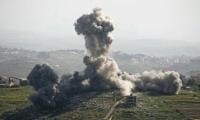
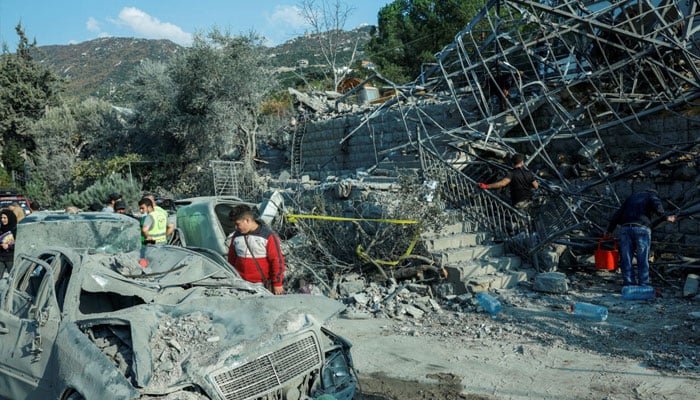
On Wednesday, Israel launched huge strikes across Lebanon, killing over 250 people, with Trump later clarifying that Lebanon wasn’t included in the ceasefire deal.
Israel’s Prime Minister Benjamin Netanyahu said Wednesday that Israel remains prepared to confront Iran if necessary, despite a truce reached between the United States and Iran.
“Let me be clear: We still have objectives to complete, and we will achieve them — either through agreement or through renewed fighting,” Netanyahu said in a televised statement.
“We are prepared to return to combat at any moment required. Our finger remains on the trigger. This is not the end of the campaign, but a step along the way to achieving all our objectives.”
“Iran enters this pause battered, weaker than ever.”
Iran’s powerful Revolutionary Guards, meanwhile, warned that their “finger is on the trigger” and Pentagon chief Pete Hegseth vowing US forces also remain at the ready.
Iranian state media reported that Foreign Minister Abbas Araghchi, in a call with COAS &CDF Field Marshal Asim Munir, accused Israel of “violations of the ceasefire in Iran and Lebanon”.
Araghchi “discussed the Zionist regime’s violations of the ceasefire in Iran and Lebanon,” referring to Israel, in a call with the powerful Pakistani military leader Field Marshal Asim Munir, an Iranian ministry statement said. The United States must choose between continued war via Israel or a ceasefire, Iran’s foreign minister, Abbas Araghchi, has said in a post on social media.
The conditions for a ceasefire between Iran and the United States are clear and explicit: America must choose either a ceasefire or the continuation of war through Israel; both cannot coexist.
The world is witnessing the killings in Lebanon. Now the ball is in America’s court, and global public opinion is watching to see whether this country will fulfill its commitments or not.
Israel carried out its heaviest strikes on Lebanon since the conflict with Hezbollah broke out last month, even as the Iran-aligned group paused attacks on northern Israel and Israeli troops in Lebanon under a two-week US-Iran ceasefire.
Iran is considering strikes against Israel “amid its violation of the temporary ceasefire in Lebanon,” Iran’s state-affiliated Fars news agency reported on Wednesday, citing an unnamed official.
Tasnim, another Iranian state-linked news agency, also reported, citing an “informed source,” that Iran will withdraw from the ceasefire agreement if attacks on Lebanon continue.
Further underscoring the precarity of the truce, Iranian state media announced fresh “missile and drone attacks” Wednesday on US-allied Gulf states the UAE and Kuwait in retaliation for airstrikes against its oil facilities.
Kuwait said its oil facilities and power and desalination plants were damaged in “an intense wave” of strikes that lasted hours.The UAE said it was targeted with 17 Iranian missiles and 35 drones since the ceasefire took effect, Saudi Arabia intercepted nine drones and Bahrain said its capital Manama came under attack.
On Wednesday, the leaders of several European nations, Canada and the UK said “a swift and lasting end to the war” must be negotiated as Pope Leo hailed a moment of “real hope”.
But Tehran’s demands over uranium enrichment, economic sanctions and future control over Hormuz — a narrow strait through which one-fifth of the world’s oil passes — are deeply at odds with the United States.
Israel had encouraged Trump to launch the war against Iran, its arch-foe, according to a report in The New York Times.
A peace agreement would leave in place the Islamic republic despite US and Israeli hopes of toppling it. The United States and Israel said they attacked Iran to degrade its military capacity.
The White House said Israel had agreed to the ceasefire. But even before Israel said the truce would not include Lebanon, a diplomat with knowledge of the talks had told AFP “there are real fears that Israel may derail the truce or any deal”.
Their announcement has confirmed these fears, they said, adding that Israel’s “objectives in the war are different to that of their US ally”.
In Tehran, streets were quieter than usual on Wednesday, with many shops closed after a long and anxious night for city inhabitants fearing a massive US attack.
Araghchi confirmed safe passage for two weeks for ships through the strait, which Tehran sealed off in retaliation for the war, sending global energy prices soaring.
A Greek-owned bulk carrier and a Liberia-flagged vessel were the first to sail through Wednesday since the ceasefire began, said the maritime monitor Marine Traffic. Trump posted Wednesday on social media that the US would “be helping with the traffic buildup in the Strait of Hormuz”.
Oil prices plunged by more than 17 percent after the ceasefire announcement, while European natural gas dropped 20 percent.
Trump said the United States was “very far along” in negotiating a long-term agreement with Iran, which had submitted a 10-point plan that he said was “workable”.
But Iran publicly released points that took maximalist positions, including lifting long-standing US sanctions, guaranteeing Iranian “dominion” over the strait and removing US forces from the region.
Crucially, it also said its plan would require Washington to accept its uranium enrichment programme.
On Wednesday, Trump said there would be no enrichment of uranium by Iran, while Hegseth said Tehran would either give it up or the US would “take it out”.
Defense Secretary Pete Hegseth said Wednesday the US war against Iran has “completely” destroyed the country’s ability to build missiles and other sophisticated weaponry,.
“We finished completely destroying Iran’s defense industrial base, a core pillar of our mission,” Hegseth told reporters.
“They can no longer build missiles, build rockets, build launchers or build (drones) — their factories have been razed to the ground, set back in historic fashion,” he said.
“Had Iran refused our terms, the next targets would have been their power plants, their bridges and oil and energy infrastructure,” Hegseth said, after President Donald Trump had threatened to wipe out civilization in the country if it did not agree to a deal.
General Dan Caine — the top US military officer, who spoke alongside Hegseth — provided details on the destruction of Iran’s defense industry, which was not as total as Hegseth described.
Caine said around 90 percent of Iran’s weapons factories, more than 80 percent of its missile facilities and nearly 80 percent of its nuclear industrial base had been hit.
“Every factory that produced Shahed one-way attack drones was struck,” he said, referring to weapons Iran has repeatedly employed during the course of the conflict, and which it has also provided to Russia for use in Ukraine.
US forces hit more than 13,000 targets during the war, destroying 80 percent of Iran’s air defenses as well as “more than 450 ballistic missile storage facilities” and “800 one-way attack drone storage facilities,” said Caine.
And while a temporary ceasefire has been reached, the US military is prepared if it collapses, he added.
“Let us be clear, a ceasefire is a pause, and the joint force remains ready, if ordered or called upon,” Caine said.
Hegseth warned that “we stand ready in the background to ensure that Iran upholds” the terms.
“We’re going to make sure Iran complies with this ceasefire and then ultimately comes to the table and makes a deal,” he said.
The Pentagon chief also said the United States is “watching” Iran’s enriched uranium — which Washington targeted in strikes last year — and will take action if Tehran does not give it up.
“We know exactly what they have, and they know that, and they will either give it to us” or “we’ll get it, we’ll take it, we’ll take it out,” he said, raising the possibility of further US strikes.