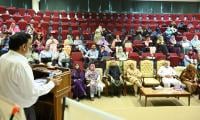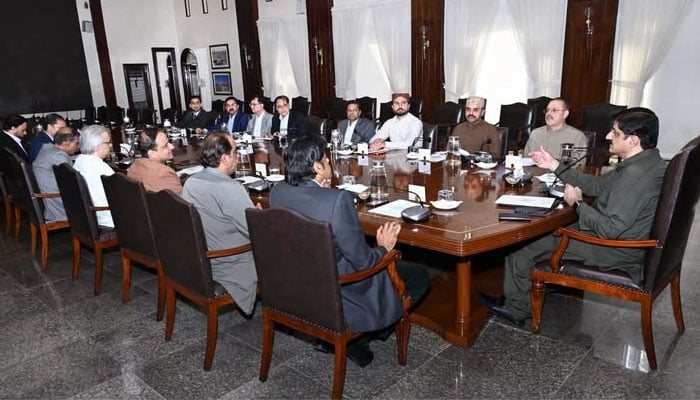
Sindh Chief Minister Syed Murad Ali Shah, presiding over a meeting on Wednesday, reviewed the implementation of a targeted public transport subsidy programme and approved additional financial support for small growers as part of a broader strategy to cushion the impact of rising global fuel prices on the citizens and key economic sectors.
The meeting, held at the CM House, was attended by provincial ministers Sharjeel Inam Memon, Nasir Hussain Shah, Mukesh Kumar Chawla and Muhammad Bux Khan Mahar, Karachi Mayor Murtaza Wahab, Chief Secretary Asif Hyder Shah, Principal Secretary to CM Agha Wasif, Karachi Commissioner Hassan Naqvi, Excise Secretary Saleem Rajput, Transport Secretary Asad Zamin, Agriculture Secretary Zaman Narejo and Sindh Bank Deputy CEO Asad Shah.
The CM reviewed the targeted public transport subsidy programme designed to maintain affordable fares and ensure the operational sustainability of the province’s transport network amid unprecedented fuel price increases.
It was said that petrol and diesel prices had surged sharply due to global geopolitical developments with diesel’s increasing by over Rs244 per litre and petrol’s by Rs120 per litre - posing a serious risk of fare hikes and reduced ridership, particularly affecting low-income groups.
Murad emphasised that the government’s priority was to protect commuters while ensuring that the transport sector remained functional. “We cannot allow the burden of rising fuel prices to fall on the common man. This targeted subsidy is aimed at maintaining fares and keeping public transport running efficiently across Sindh,” he remarked.
It was said that under the mechanism, both the federal and provincial governments were sharing the subsidy burden. The transport operators would receive financial support based on vehicle type and route length on condition that the fares were not increased.
The meeting was informed that the province’s transport network comprised over 10,800 vehicles operating on 224 routes, serving nearly 1.9 million passengers daily. The total monthly subsidy was estimated at approximately Rs2.15 billion, covering both intra-city and inter-city operations.
To ensure transparency and accountability, the subsidy would be disbursed through a digital app-based system, integrating route permits, vehicle fitness data and bank account verification. Payments would be made directly to operators with monitoring through inspections and commuter feedback.
The excise and transport departments highlighted built-in safeguards, including OTP verification, standardised fuel benchmarks and periodic reviews to manage fiscal impact. In a significant move to support the agriculture sector, the CM approved a Rs3 billion subsidy for 366,000 small growers aimed at offsetting increased diesel costs during the wheat harvesting season.
Murad directed that the subsidy programme be launched from Thursday, ensuring immediate relief to farmers. “Our small growers are the backbone of the rural economy. We are committed to supporting them so they can continue their work without additional financial stress,” he said.
The subsidy would be disbursed directly to eligible farmers, particularly those owning small landholdings (1 to 25 acres), to assist with diesel expenses for threshing and harvesting.
Reaffirming his government’s approach, the CM said Sindh was moving away from blanket subsidies towards targeted, efficient and transparent support mechanisms. “Whether it is transporters, farmers or daily commuters, our focus is to ensure that relief reaches those who need it most, without compromising fiscal discipline,” he maintained.
The meeting concluded with directions to all departments to expedite implementation, strengthen coordination and ensure that both transport and agriculture support measures were rolled out effectively and without delay