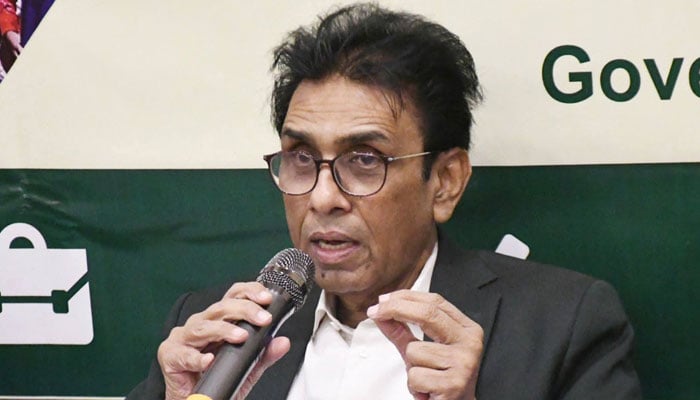
Islamabad: Federal Education Minister Dr Khalid Maqbool Siddiqui on Wednesday underscored the critical importance of investing in early childhood as a foundation for building human capital and ensuring Pakistan’s long-term prosperity.
Addressing development partners, policymakers, researchers and practitioners at the 5th International Conference on Early Childhood Development, the minister said that Early Childhood Development (ECD) was not merely a social sector priority but a strategic national investment.
"The early years, from birth to age eight, are crucial for shaping cognitive abilities, emotional well-being, health and lifelong learning outcomes," he said. The minister highlighted Pakistan’s demographic landscape, noting that a large proportion of the population consists of young children, while the country continues to face pressing challenges such as under-five mortality, stunting, learning poverty and a high number of out-of-school children.
He said those interconnected issues required a coordinated and multisectoral response. Acknowledging progress made since 2017, the minister credited collaborative efforts among national institutions and international partners for the development of the National Early Childhood Development Policy Framework.
"This framework provides a comprehensive roadmap to promote nurturing care across health, nutrition, early learning, child protection and social protection sectors." While recognising these achievements, the minister said policy frameworks must be effectively implemented to ensure that every child, regardless of geographic or socio-economic background, had access to quality early childhood services.
He reaffirmed the ministry’s commitment to strengthening Early Childhood Education by expanding access to pre-primary education, improving classroom quality, enhancing teacher training and aligning curricula with international standards while remaining responsive to local needs.
"Education alone cannot address the challenges of early childhood development," he said, calling for a whole-of-government and whole-of-society approach, integrating health, nutrition, sanitation, social protection and community engagement to create an environment where children can thrive.
Highlighting the economic dimension, the minister noted that human capital is central to sustainable growth, productivity and innovation. He underscored the importance of strong fiscal management in creating space for increased investment in priority sectors such as education and early childhood development.
The minister called for greater public investment in ECD, stronger coordination among ministries, better alignment between federal and provincial governments, enhanced engagement with development partners and the private sector and improved monitoring and accountability systems. He also emphasised the critical role of parents and caregivers as children’s first teachers and the need to empower families with knowledge and resources.
The minister urged all stakeholders to translate dialogue into action and ensure that commitments made at the conference lead to tangible improvements in the lives of children across Pakistan.