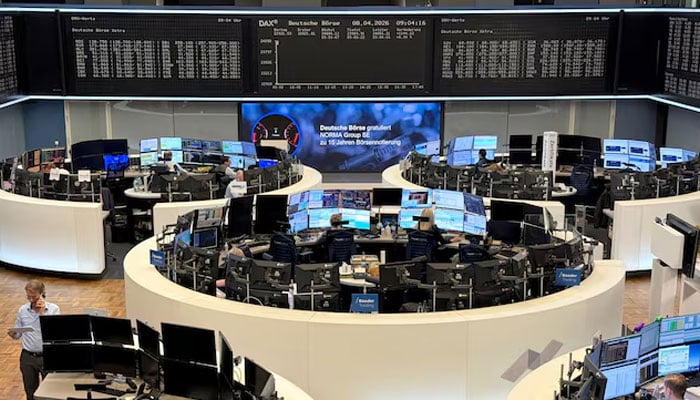
Assets across emerging markets jumped on Wednesday, swept up in a global relief rally after the United States and Iran agreed to a two-week ceasefire that would also reopen the strategic Strait of Hormuz.
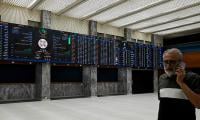
MSCI’s index tracking emerging market stocks shot up 5.1 per cent to touch a one-month high and was on track for its biggest daily jump since November 2022, when the US Federal Reserve hinted that it would slow the pace of interest rate hikes.
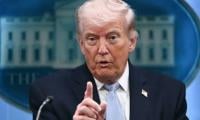
The MSCI benchmark was rebounding from a 13 per cent drop last month, with stocks in energy-deficient Asia and Europe particularly witnessing strong gains.US President Donald Trump announced the ceasefire on Tuesday, hours before his deadline for Tehran to reopen the waterway or face the wiping out of “a whole civilisation” expired.
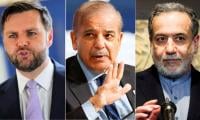
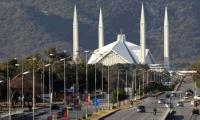
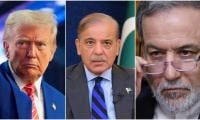
Pakistan is expected to host a meeting between Iranian and US delegations on Friday.“The two-week truce period has been broadly welcomed considering the alternative but, since the first truce historically tends to fail, the period ahead is quite critical,” said Achilleas Georgolopoulos, senior market analyst at brokerage XM.
ENERGY PRICES DROP 13pc, SPARKING BROAD EM RALLY
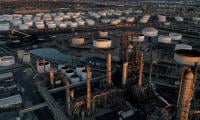
Prices of crude oil, a major resource for developing economies, tumbled some 14 per cent to around $93 a barrel.
Korean stocks shot up 6.9 per cent, rebounding from a near 20 per cent fall last month, while Turkish banks jumped 10 per cent. MSCI’s gauge for emerging European equities added 4.8 per cent and South Africa’s benchmark climbed 6.0 per cent.
On the currencies front, MSCI’s index gained 0.9 per cent against a weakening dollar. Safe-haven interest due to the month-long conflict had led investors to flock to the greenback, briefly halting a year-long selloff in the dollar.
The currencies of Thailand and the Philippines appreciated over 1.4 per cent each, while energy-dependent India’s rupee firmed 0.4 per cent, South Africa’s rand firmed 2.2 per cent and Turkey’s lira edged up 0.1 per cent.
An easing dollar and cooling energy prices would also ease the fiscal and trade pressures for developing economies.Against this backdrop, hard-currency bonds across the emerging markets landscape rallied, with those of Egypt, Sri Lanka and Pakistan up more than 4 cents on the dollar.
CAUTION LINGERS, POLICYMAKERS WEIGH WAR IMPACT
Despite the respite in hostilities, eyes will be on data, and commentary from policymakers, showing how the conflict and higher energy costs have affected the global economy and complicated rate-setting.
There is also nervousness that hostilities could resume; Israel has said the ceasefire does not apply to its operations in Lebanon.The Reserve Bank of India kept its policy rate unchanged on Wednesday and warned of lower growth and higher inflation due to the Middle East crisis.
Kenya’s central bank is also expected to leave borrowing costs steady later in the day and analysts anticipate a similar verdict by the National Bank of Poland on Thursday. The zloty firmed 0.4 per cent against the euro.
In Hungary, headline inflation rose to 1.8 per cent in March from a year earlier, but came in below forecasts, with government measures to rein in war-related fuel costs appearing to have worked.
Prime Minister Viktor Orban faces the biggest challenge to his rule in 16 years in an election on Sunday.The forint edged up 0.6 per cent. It and the Budapest stock index are among the best-performing assets in the region this year.
Meanwhile, index provider FTSE Russell confirmed it will upgrade Vietnam to ‘emerging market’ status from ‘frontier’ status in September, which the local stock market regulator expects could draw in about $6 billion of foreign capital.
Export-heavy Vietnam’s stock index is down 6.0 per cent so far this year due to the Middle East conflict. Vietnam is targeting an upgrade into the more widely tracked MSCI index by 2030.
Separately, FTSE Russell said Indonesia’s status as a secondary emerging market remains unchanged. Lack of transparency around stock ownership and trading have weighed on shares, which have fallen over 15 per cent this year.The index provider also retained Egypt on its watch list for a possible downgrade in its equity market classification, while reclassifying Nigeria as a frontier market.