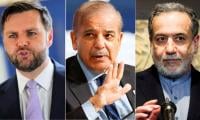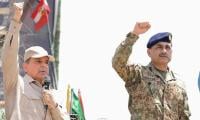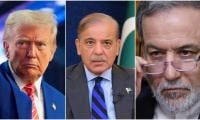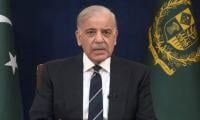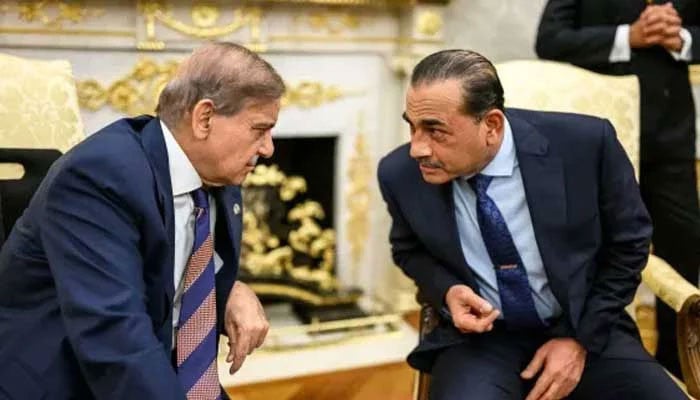
With less than 90 minutes remaining before a US military deadline that threatened catastrophic war across the Middle East, PM Shehbaz Sharif and CDF Field Marshal Asim Munir achieved the impossible: a simultaneous ceasefire accepted by both the US and Iran.
This is when the war was at the edge of escalation. This is when timelines shrink. This is when miscalculations multiply. This is when outcomes hinge on intervention. Not speeches. Not statements. Intervention. PM Sharif and Field Marshal Munir stepped in when the clock was closest to zero. A prime minister and a field marshal. Two actors, one objective. De-escalation. A ceasefire where none seemed possible.
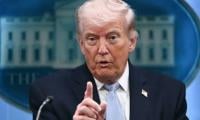
Remember, Trump had threatened “a whole civilisation will die tonight”. Translate that: millions dead, oil in chaos, the global economy in shock. PM Sharif and Field Marshal Munir understood that in the calculus of conflict, timing is power. The two understood that power, when exercised to prevent war, becomes peace. Yes, this was intervention. Yes, there’s an outcome. Now measure it against the only benchmark that matters: Alfred Nobel’s mandate.
Alfred Nobel’s first criteria: Fraternity between nations, the bridging of mortal enemies. No achievement in 2026 more directly embodies this than Pakistan bridging the US and Iran, two nations that had been in active armed conflict. The ceasefire explicitly names PM Sharif and Field Marshal Munir as the decisive actors. This is not background diplomacy, it is the credited, documented, public cause of the peace.
“Based on conversations with Prime Minister Shehbaz Sharif and Field Marshal Asim Munir, of Pakistan, and wherein they requested that I hold off the destructive force being sent tonight to Iran... I agree to suspend the bombing and attack of Iran for a period of two weeks.” —President Donald Trump, April 7, 2026.
And to close the deal, Trump personally called Field Marshal Munir — a sitting US president on the phone with a Pakistani army chief, negotiating the end of a war. “On behalf of the Islamic Republic of Iran, I express gratitude and appreciation for my dear brothers... Prime Minister Sharif and Field Marshal Munir for their tireless efforts to end the war in the region.” —Iranian FM Abbas Araghchi, April 7, 2026
For Iran to publicly name and thank its mediators is without modern diplomatic precedent.Alfred Nobel’s second criteria: Abolition or reduction of standing armies; active military operations halted across multiple fronts. The ceasefire brokered by Pakistan directly achieved the immediate cessation of US offensive military operations in Iran as well as the suspension of Israeli strikes. This constitutes the most direct, large-scale reduction of active military hostilities in the Middle East since 1973. The Islamabad talks of April 10, 2026 represent a framework for permanent demilitarisation of the conflict.
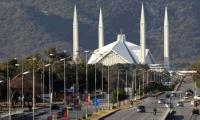
Alfred Nobel’s third criteria: Holding and promotion of peace congresses. Yes, Islamabad now becomes the venue for civilisational negotiation. PM Sharif and FM Munir did not merely broker a ceasefire, they immediately invited both parties to Islamabad on April 10 for formal negotiations “to settle all disputes”.
All three criteria met. Simultaneously. On a single day.
The Nobel Committee might ask: why Pakistan specifically? The UN, Qatar, Turkey and Oman were all involved in regional diplomacy. Here’s the answer: Pakistan, trusted by Iran through shared faith and geography. Pakistan, a longstanding US security partner. Pakistan, a neutral broker with no financial stake in Hormuz. And Field Marshal Munir brought military-to-military credibility that no diplomat could replicate.
This was not improvisation. Pakistan invested weeks in quiet, grinding diplomacy and back-channel military engagement, making the 90-minute miracle possible. The Nobel Committee rewards sustained effort, not a single dramatic gesture.
Pakistan has thus transformed itself from a messenger into the permanent host of what may be the most consequential peace congress of the 21st century. The ‘Islamabad talks’ are a direct institutional manifestation of Nobel’s exact vision: a neutral forum dedicated to conclusive termination of war. The evidence is unambiguous, the attribution is public, and the impact is civilisational: the Nobel Peace Prize belongs to PM Sharif and FM Munir.
The writer is an Islamabad-based columnist.