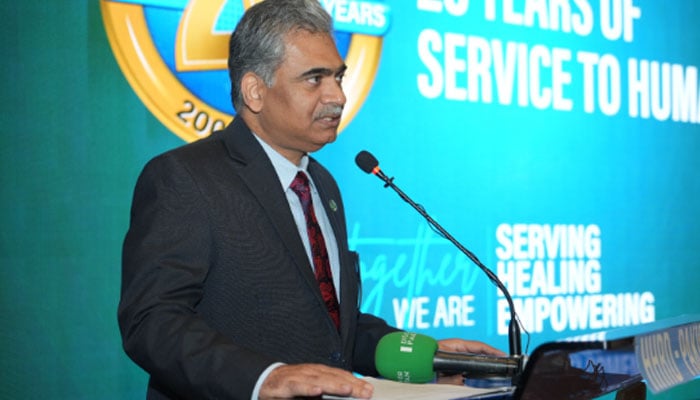
Islamabad:Pakistan is facing growing pandemic risks driven by climate change, environmental degradation and increasing human-animal interaction, and cannot prevent future outbreaks without urgently strengthening its One Health system, Federal Secretary Health Muhammad Aslam Ghauri warned on Tuesday.
Addressing the inaugural session of a national training on pandemic preparedness at the Health Services Academy, the federal secretary said recent global health emergencies had exposed serious gaps in preparedness, stressing that fragmented responses were no longer viable in an era where infectious threats are rapidly evolving.
“Pandemic preparedness is no longer a sectoral responsibility. It is a national priority that requires sustained coordination across human, animal and environmental health systems,” he said at the two-day training organised at the COMSTECH Secretariat.
Officials highlighted that nearly 75 per cent of emerging infectious diseases are zoonotic in origin, a statistic repeatedly cited by global health agencies, underscoring the urgency of integrating surveillance and response mechanisms across sectors.
Providing a strategic overview, Prof Dr Tariq Mahmood Ali, National Coordinator of the One Health Workforce Development and Coordination project, warned that Pakistan’s vulnerability is rising due to rapid urbanisation, climate variability and expanding human-animal interfaces, all of which are accelerating the emergence and spread of infectious diseases.
He said the initiative aims to build a skilled, multi-sectoral workforce capable of early detection and rapid response, noting that delayed identification of outbreaks continues to weaken containment efforts and increase economic and health costs.
Vice Chancellor of HSA Prof Dr Shahzad Ali Khan said strengthening institutional capacity and promoting evidence-based decision-making were critical to improving preparedness, particularly as Pakistan continues to face recurring outbreaks and public health emergencies.
Highlighting environmental drivers of disease, Director General Environment Dr Muhammad Asif Sahibzada said poor waste management, environmental degradation and climate change are increasingly shaping disease patterns in the country, calling for stronger integration of environmental monitoring into public health planning.
Dr S M Mursalin, Chief Executive Officer of the Pakistan One Health Alliance, said siloed approaches have historically delayed outbreak response in Pakistan, emphasising that coordinated systems and cross-sector competencies are essential for timely and effective interventions.
The training brings together professionals from health, livestock and environmental sectors and focuses on zoonotic diseases, vector ecology, surveillance systems, epidemic intelligence and risk communication.
Officials said the programme is designed to develop a cadre of trained professionals and trainers who can support nationwide scale-up of the One Health approach, a model increasingly being adopted globally to address complex public health threats.
The workshop will conclude on April 8 with the distribution of certificates, but officials stressed that sustained investment in integrated systems, surveillance and workforce development would be key to strengthening Pakistan’s preparedness for future pandemics.