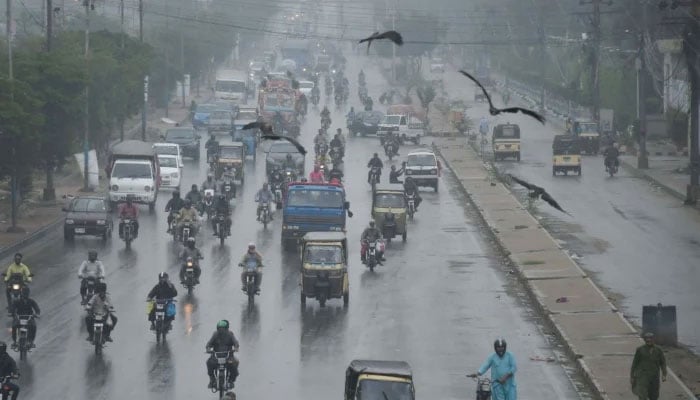
A few months back, the NDMA chairman warned that the 2026 monsoon season may be 22–26 per cent more intense compared to the 2025 season, which was itself catastrophic.
This means glaciers would melt earlier or in greater volume, increasing the risk of Glacial Lake Outburst Floods (GLOFs) in Gilgit-Baltistan. Seen from a disaster risk management perspective, the 2025 monsoon set a grim benchmark where total damages across all provinces were estimated at Rs822 billion ($2.9 billion), with the majority concentrated in Punjab, and sectoral damage to GDP estimated at 0.3-0.7 per cent, denting the already meager FY2026 economic growth outlook.
The Ministry of Climate Change, with the prime minister’s approval, finalised a detailed three-part strategy for the upcoming monsoon season, responding to the severe impact of the 2025 floods, which caused 1,037 deaths and destroyed over 229,000 houses. Compared to how things are on the ground, the plan’s headline commitment looks rather ambitious as the ministry claimed that whatever damage occurred will be fixed within 200 days, including repairing dams, embankments, floodgates and urban drainage systems.
Similarly, the NDMA launched an Infrastructure Audit Programme 2026, a nationally mandated initiative aimed at enhancing the safety and resilience of public infrastructure through a preventive, risk-informed approach. It has received formal endorsement from the PM Office for implementation across federal and provincial levels. The programme includes prioritising high-occupancy and high-risk buildings, standardised audit methodologies such as visual inspections and non-destructive testing, and digital reporting systems.
While it was launched with fanfare in January 2026, as of the end of March 2026, available evidence suggests it is, at best, in the early stages of implementation, with no publicly reported completion data, audit results or restorative outcomes.
Preps for the monsoon season at the provincial level are a tale of four very different situations. Punjab is interestingly both the most exposed and the most institutionally responsive province. For instance, flood-prevention plans for the Gujrat and Sialkot districts have reportedly been approved, outlining the reinforcement of embankments, desilting of drainage channels, deployment of rescue and relief teams and the establishment of early warning systems.
During 2025, Punjab demonstrated appreciable capacity, evacuating 150,000 to 210,000 people proactively in response to Indian flood alerts and domestic forecasting. However, the province still suffered its worst flooding in 4 decades, affecting around 4.7 million people. This tells how thin the margin of protection remains despite institutional activity.
In Khyber Pakhtunkhwa, the PDMA has reportedly held detailed meetings on monsoon planning with all districts, including with UN agencies and NGOs, to refine contingency planning and enhance stakeholder coordination. The province has also launched a Digital Compensation Platform to deliver post-disaster relief more quickly.
But structural problems continue to persist. In the northern highlands of the province, early warning systems and slope stabilisation work remained inadequate, leaving remote communities dependent on emergency military assistance, a pattern that has repeated itself every monsoon season. The 2025 floods in the province also exposed numerous governance lapses in this regard.
Sindh’s PDMA has been issuing regular weather advisories through March 2026 and has engaged the EU delegation to review disaster preparedness progress. However, Sindh’s coastal and deltaic regions continue to face compounded challenges from desilting delays, mangrove loss and overlapping jurisdictional authority between different government bodies, problems that no planning meeting has yet resolved.
Balochistan remains the most critically underprepared province by a wide margin. In Balochistan, the absence of hydro-met infrastructure and logistical capacity prolonged humanitarian isolation during the 2025 floods. Preparedness and response gaps were specifically documented along the Makran coast, Gwadar and other districts. While Pakistan secured $400 million from the World Bank and Asian Development Bank for flood reconstruction in Balochistan, progress on it is far from satisfactory as funds in the government bureaucracy take a long time to translate into standing infrastructure and capacity.
The weakest link in the government structure for disaster preparedness is at the district level. This is where Pakistan’s preparedness architecture most visibly fails. A policy analysis published in ‘Water Policy’ found that many District Disaster Management Authorities (DDMAs) remain inactive or under-resourced until emergencies strike, operating without assured and sustainable budgets, trained personnel or effective forecasting tools.
Unfortunately, the structural issue is well understood but not yet fixed: the institutional response to Pakistan’s major floods has been marked by delayed mobilisation, fragmented governance and weak coordination across federal, provincial, district and humanitarian actors, with relief efforts hampered by the inequitable allocation of resources and the poor integration of community voices.
A lesson all governments have been shying away from learning is that the road forward towards proactive disaster preparedness requires us to strengthen and decentralise the DDMAs, enforce climate zoning and land-use regulations, improve impact-based forecasting and early warning systems and enhance transparency over climate funds.
Pakistan may be only slightly better prepared in early 2026. But the gap between plan and practice, especially at the district level, in Balochistan, and in remote KP, remains dangerously wide. With a warning of a monsoon around 26 per cent more intense, that gap could cost thousands of lives and billions of rupees in damage unless the next 90 days of pre-monsoon preparations are urgently and effectively executed.
The writer is a sociologist with extensive work in social policy and development. He can be reached at: [email protected]