This newspaper carried a report on a high-level meeting that delivered good news for the nation: ‘No lockdown amid austerity drive, top govt huddle decides’. The focus of the meeting was to reduce government expenses. Instead, four days later, the government decided to increase the fuel price to more than Rs458 per litre. And within no time, the price was reduced to Rs378 per litre. What a comedown.
Austerity must begin from home. We have a much larger bureaucracy than the country needs. It must, therefore, have a large number of official vehicles allotted to the bureaucrats. Not to talk of expensive vehicles, the bureaucrats live in palatial houses with sprawling lawns. The size of the newly built white mansion, which serves as the Commissioner Lahore Division’s office on Mall Road, speaks for itself. It’s a classic example of how heartlessly the government exhausts public funds on unimportant pursuits. Many small schools and dispensaries in small towns could have been built with the amount.
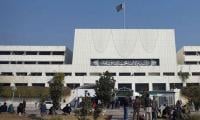
Taxpayers justifiably complain that the government spends huge sums of public money on the construction of official buildings. For instance, a nine-storey official government complex on Multan Road is nearing completion. Similarly, there is a line of multi-storey government buildings along Nazaria-e-Pakistan Road. A multi-storey EOBI office building, studded with air-conditioners, is also located along the line of other multi-storeyed official buildings on the same road. On the other hand, the country has to repay a $3.3 billion loan this month.
Political leaders often talk of austerity, but in reality, the situation is very different. Only recently, we saw the Punjab airplane fiasco. Should any government official buy such high-priced assets when belonging to a country whose 45 per cent population lives below the poverty line and whose millions of children don’t attend schools?
Although our country faces numerous problems, two main problems – an exploding population and a lack of education – are deeply interlinked. With a multiplying population, the country will remain poor and the nation uneducated, holding a begging bowl, if the government doesn’t take serious measures to improve the situation. Some countries in the region with much less natural resources than we have have performed much better than we have. For instance, Singapore was in a similar state of dilapidation as Pakistan in the seventies. Presently, even comparing the two would be no less than a joke.
In my modest opinion, our country is mismanaged and it lacks serious planning. We don’t need to invent new methods to progress. All we must do is follow the governing methods of the countries that have progressed. Why not follow Singapore?
On a lighter note, I had an American friend who lived in Lahore for some years. He was later posted to Singapore during his service. Once he returned to Lahore and met me. I commented that he was lucky to be in Singapore. He turned serious and said, “Singapore is too over-regulated and disciplined for us to live there”. No wonder it’s one of the most advanced countries in the world – and we are where we are.
The writer is a freelance columnist based in Lahore. He can be reached at: [email protected]