WASHINGTON: Iran said on Monday it wanted a lasting end to the war with the US and Israel, and pushed back against pressure to reopen the Strait of Hormuz while US President Donald Trump warned the country could be “taken out” if it did not meet his Tuesday night deadline to reach a deal and that a truce proposal from international mediators was not yet enough.
Both Trump and Iran said that a proposal touted by international mediators for a 45-day ceasefire is not yet ready, and in a Washington press conference, the US president dialled up his warlike rhetoric once again.
Trump had earlier accepted the ceasefire plan was a “significant proposal”, but went on to say it was not good enough. Iranian state media quotes officials stating that Tehran too “has rejected a ceasefire and insists on the need for a definitive end to the conflict”. Trump said intermediaries “are negotiating now” on improving the ceasefire proposal, which US media reported was being mediated by Pakistan, Egypt and Turkey.
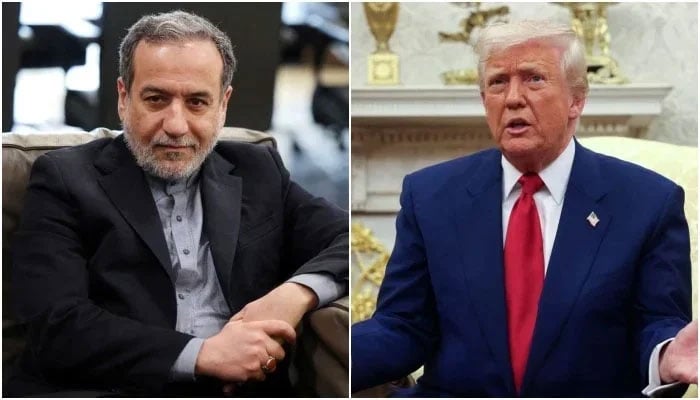
President Trump said the United States had an active and willing participant on the other side in talks with Iran, adding that Tehran would like to make a deal. He told reporters that Iran had to agree to a deal with the US that was acceptable to him by Tuesday deadline, and that free traffic of oil through the Strait of Hormuz must be part of it.
The US president said that the military had war plans to destroy all bridges and power plants in Iran over a four-hour period if his peace deal deadline is not met.“We have a plan -- because of the power of our military -- where every bridge in Iran will be decimated by 12 o’clock tomorrow night, where every power plant in Iran will be out of business, burning, exploding and never to be used again,” Trump said at a press conference. “I mean complete demolition by 12 o’clock (midnight), and it’ll happen over a period of four hours - if we wanted to.”
President Trump said that he thought the Iranian people should rise up against the government in the country if a ceasefire were declared, but understood that it was too dangerous for them to do so.
“Well they should do it but, again, the consequences are great,” Trump said during a White House news conference. “I mean, they were told, ‘If you protest, you will be shot immediately.’”
Trump, who has threatened to bomb Iran’s power plants and bridges, also said he believed Iranians “would be willing to suffer that in order to have freedom.”He criticised Nato, Australia, Japan and South Korea for not helping the US with its war with Iran. He made his remarks during a White House press conference.
Trump had earlier vowed to enforce a Tuesday night deadline for Iran to agree to a ceasefire deal or face broad attacks on power plants and other critical infrastructure. “The entire country can be taken out in one night, and that night might be tomorrow night,” he told a White House press conference.
Trump, joined by senior national security advisers, described in detail the operation to recover a downed American airman over the weekend from Iranian territory. He said the unidentified airman was hiding in Iranian mountains and kept climbing higher in order to improve the chances for a successful recovery. “It was like finding a needle in a haystack,” Trump said.
Hundreds of American forces were involved in the search and recovery mission and to prevent the Iranians from finding him first, he said.
US Defense Secretary Pete Hegseth told reporters that the largest volume of strikes since day one of the operation against Iran would take place on Monday and warned that Tuesday would have even more.
President Trump, who has threatened to rain “hell” on Tehran if it did not make a deal by 8 p.m. EDT Tuesday (midnight GMT) to open the vital route for global energy supplies, rejected the Iranian proposal and said his deadline was final.
“They made a proposal, and it’s a significant proposal. It’s a significant step. It’s not good enough,” Trump told reporters at an annual White House Easter event, referring to Iran.In a post laden with expletives on his Truth Social platform on Sunday, Trump threatened further strikes on Iranian energy and transport infrastructure if Iran failed to make a deal and reopen the Strait by Tuesday.
Anwar Gargash, an adviser to the president of the United Arab Emirates, said any settlement must guarantee access through Hormuz. He warned that a deal that failed to rein in Iran’s nuclear programme and its missiles and drones would pave the way for “a more dangerous, more volatile Middle East”.
Fresh aerial strikes were reported across the region on Monday, more than five weeks since the US and Israel began pounding Iran in a war that has killed thousands and damaged economies by sending oil prices surging.Iranian state media said the Revolutionary Guards’ intelligence chief, Majid Khademi, has died. Israel on Monday claimed responsibility for his death.
A US-Israeli attack hit the data centre at Sharif University of Technology in Tehran, damaging infrastructure underpinning the country’s national artificial intelligence platform and thousands of other services, Fars News Agency said on Sunday.
Israeli Defence Minister Israel Katz in a statement issued on Monday threatened to destroy Iran’s infrastructure and hunt down its leaders “one by one”. The Israeli military also said they had targeted Iran’s air force through a series of strikes on the Bahram, Mehrabad, and Azmayesh airports over the previous night.
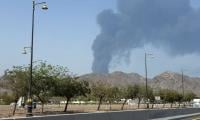
Iran said on Monday two of its petrochemical complexes were attacked.Emergency and firefighting teams brought a blaze under control at the South Pars complex in Asaluyeh, Iran’s National Petrochemical Company said. No casualties were reported.
Israeli Prime Minister Benjamin Netanyahu said that the strike on the petrochemical facility in southern Iran was part of dismantling Iran’s Revolutionary Guards “money machine”. The Geneva Conventions say that parties involved in military conflict must distinguish between “civilian objects and military objectives”, and that attacks on civilian objects are forbidden.
Iranian weekend strikes on petrochemical facilities and an Israeli-linked vessel in Kuwait, Bahrain and the UAE underscored the country’s ability to fight back despite Trump’s repeated claims to have knocked out its missile and drone capabilities.Israel saw a heavy day of rocket volleys on Monday, with the sounds of sirens and missile interception booms ringing out across the country throughout the day.
Israel’s military told Reuters there had been 20 missile launches from Lebanon and five from Iran during the day. Several of the attacks resulted in impacts, although it was unclear whether it was from falling missile debris or direct strikes. A missile hit Haifa overnight tearing a building apart and killing four under the rubble, taking the death toll in Israel to 23, according to Israel’s ambulance service.
Yemen’s Iran-aligned Houthis said on Monday that they also carried out missile and drones attack against Israel. About 3,540 people have been killed in Iran in the war, including at least 244 children, said US-based rights group HRANA.
Thirteen US service members have died and hundreds of others have been wounded.Iran’s Supreme Leader Mojtaba Khamenei in a post on Telegram said “assassinations and crimes” won’t disrupt Iranian armed forces.
Turkish President Recep Tayyip Erdogan accused Israel of undermining all efforts to halt the war in the Middle East, but said Ankara would continue to pursue any opportunity to advance a ceasefire. Erdogan said Turkiye has stepped up diplomatic contacts to achieve a ceasefire. Turkiye has attempted to mediate an end to the hostilities, notably through negotiations conducted with Pakistan and Egypt.
Turkish Foreign Minister Hakan Fidan on Monday met with the US ambassador to Turkiye, Tom Barrack, who called the meeting “productive”. Fidan also spoke on the phone with his Iranian counterpart to discuss “the course of war and other developments”, a Turkish diplomatic source said.
The chief of the UN nuclear watchdog warned attacks near Iran’s Bushehr atomic power plant “pose a very real danger to nuclear safety and must stop”.
Strikes near the operating plant “could cause a severe radiological accident with harmful consequences for people and the environment in Iran and beyond,” said Rafael Grossi, director of the International Atomic Energy Agency (IAEA), on X. Grossi said that one strike hit just 75 metres (246 feet) from the plant perimeter.
The head of the International Committee of the Red Cross condemned “deliberate threats” against civilian targets that have marked the widening Middle East war. Without naming any side, ICRC president Mirjana Spoljaric said there had already been widespread destruction of “essential” infrastructure and that “any war fought without limits is incompatible with the law” and “indefensible”.
Iran will continue the war with the United States and Israel for as long as its political leaders deem necessary, the army spokesman said Monday. “We can continue the war as long as the political authorities see fit,” Mohammad Akraminia told ISNA news agency, adding that “the enemy must definitely regret it because, after this war, we need to reach a point of security and not witness another war”.
Iran on Monday hanged another man convicted in connection with nationwide protests in January. Ali Fahim, 23, was hanged after being found guilty of involvement in an attack on a Tehran base of the Revolutionary Guards’ Basij militia during the protests, according to rights groups who have followed the case.
Striking civilian infrastructure installations during war is illegal, EU chief Antonio Costa said in a social media post on Monday. “Any targeting of civilian infrastructure, namely energy facilities, is illegal and unacceptable,” Costa, the president of the European Council, said.
Iran’s foreign ministry said that a US operation to rescue a downed airman may have been a cover to “steal enriched uranium” from the Islamic republic. Iran’s military has called it “a deception and escape mission”, insisting it was “completely foiled”.
On Monday, Iran’s foreign ministry spokesman Esmaeil Baqaei said there were “many questions and uncertainties” about the operation. “The area where the American pilot was claimed to be present in Kohgiluyeh and Boyer-Ahmad Province is a long way from the area where they attempted to land or wanted to land their forces in central Iran,” Baqaei said.
Israel’s defence ministry said it plans to accelerate production of Arrow missile interceptors, as it fights a war with Iran. The announcement came after questions emerged in the international media over how long Israel’s interceptor stocks would last, with some analysts pointing to shortages of Arrow interceptors in particular.
Gas supply was restored on Monday after being cut in parts of Tehran following an attack on gas infrastructure at a university in the city, state television reported. The strike, which occurred in the early hours of Monday, hit a gas pressure reduction station and metering facilities at Sharif University of Technology, causing a leak. The attack also hit the university’s data centre, which houses an artificial intelligence facility, according to the Fars news agency.
Taiwan will redirect ships to bring crude oil from Saudi Arabian Red Sea ports, the government said Monday, as it seeks to avoid the disruption in the Strait of Hormuz.
Southeast Asia’s largest low-cost carrier AirAsia X said it was raising ticket prices by up to 40 percent and cutting routes to cushion the impact of the war on Iran, but stressed demand for flights remained high.
Indonesia announced a 28-percentage point rise in the surcharge on jet fuel, and said it will allow airlines to raise the domestic ticket price, which the government caps, by up to 13 percent.
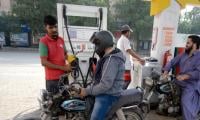
Sri Lanka on Monday raised prices of liquefied petroleum gas (LPG) by nearly a quarter, blaming higher global prices triggered by the Iran war.
A third Turkish-owned ship has crossed the war-torn Strait of Hormuz, Turkiye’s Transport Minister Abdulkadir Uraloglu said on Monday.
An Iranian attack on a residential area in northern Kuwait injured six people on Monday, the Gulf country’s health ministry said. “Falling projectiles and debris in a residential area in the north of the country after an Iranian aggression,” the ministry said. “The total number of injuries rose to six, with varying degrees of wounds.” Overnight from Sunday to Monday, Kuwait had also said it was responding to similar attacks.
Iran’s Revolutionary Guards said they are completing preparations to enforce new operating conditions in the Strait of Hormuz, which has been all but shut since the war with the United States and Israel began. “The IRGC naval force is completing operational preparations for the Iranian authorities’ #declared_plan for the new Persian Gulf order,” the Guards naval forces said in a post on X Sunday. They warned conditions in the strait “will never return to its former status, especially for the US and Israel.”
Falling debris from an intercepted attack injured one person in an industrial area of Abu Dhabi, authorities in the United Arab Emirates said Monday. “The incident resulted in moderate injuries to a Ghanaian national.”
In the northeastern emirate of Fujairah, authorities also reported that a telecommunications building was targeted by an Iranian drone, but there were no injuries.
Axios reporter: “Prime Minister Benjamin Netanyahu pressed President Trump in a phone call yesterday not to pursue a ceasefire at this stage and expressed concern over the risks involved in such a move, an Israeli source said”
US President Donald Trump on Monday said he would demand that the reporter who first leaked that an airman in Iran had been rescued reveal their source, and threatened them with jail if they refused.
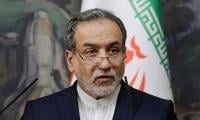
Qatar’s Foreign Minister Sheikh Mohammed bin Abdulrahman al-Thani told his Iranian counterpart Abbas Araghchi on Monday that a diplomatic solution is the only way to resolve the ongoing regional crisis. Sheikh Mohammed told Araghchi in a phone call that Qatar rejects the continued targeting by Iran of his country and other countries in the region, according to a statement by the Qatari foreign ministry.
Iran’s Revolutionary Guards stopped two Qatari liquefied natural gas tankers headed toward the Strait of Hormuz earlier on Monday before transit and ordered them to hold position without explanation, a source briefed on an Iran-US agreement to allow the tankers to transit told Reuters.
The source said the tankers had been listed as among those Iran would allow to transit under an Iran-US agreement reached last week via Pakistan.
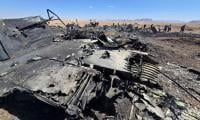
The US foreign intelligence service ran a deception effort to misdirect Iranian authorities looking for the crew of the fighter plane downed in the country, CIA director John Ratcliffe told reporters Monday. “The CIA executed a deception campaign to confuse the Iranians who were desperately hunting for our airmen,” Ratcliffe said, adding one airman hid in a mountain crevice until he was rescued.
Four officers of the Iranian Army ground forces were killed on Sunday in a military operation to counter US aircraft in Iran’s Isfahan, the semi-official Fars news agency said on Monday.