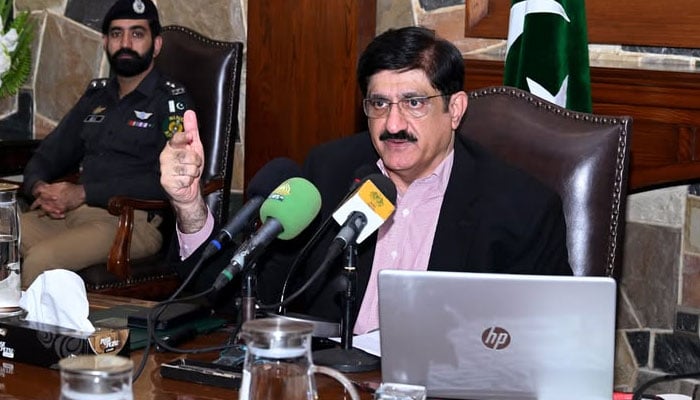
Sindh Chief Minister Syed Murad Ali Shah on Monday said that the government has launched a digital registration system for a targeted motorbike fuel subsidy programme, alongside a broader relief package aimed at shielding people from the impact of rising fuel prices and inflation.
“I have also consulted with traders’ associations regarding market timings, and traders have offered their suggestions,” said Shah during a media briefing at the CM House, adding that traders’ suggestions would be discussed with the federal government before making a decision.
He said that the initiative is part of a comprehensive, targeted subsidy framework designed to provide direct financial assistance to vulnerable segments while maintaining economic stability and transparency.
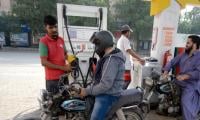
He explained that every registered bike owner would receive Rs2,000 a month, equivalent to subsidising approximately 20 litres of fuel. He stressed that only the bikes registered in the owner’s name would qualify.
The excise & taxation department has introduced an online verification and registration system, allowing people to confirm ownership and apply digitally. Applicants are required to enter their CNIC and bank account details, after which they will receive automated confirmation.
The government has also abolished the Rs500 transfer fee for bikes to encourage ownership correction. Excise offices across Sindh will remain open from 8am to midnight, including weekends, for 15 days to expedite registrations. Some 1,500 bikes have already been transferred to the rightful owners. A dedicated helpline (021-111-374-634) has also been established to assist applicants.
Shah said the government has taken transporters into confidence, and they have agreed not to increase fares despite rising fuel costs. The government is providing substantial subsidies to public transport operators to ensure that fares remain at February 28 levels, benefiting millions of daily commuters.
Sindh has around 11,000 private buses in addition to 470 public buses. Instead of limiting relief to public sector transport, the government opted to freeze fares across the entire network, with a subsidy estimated at Rs3-4 billion. Shah warned of strict action against any violation of the agreed fare structure.
He also announced a farmer subsidy programme worth Rs3 billion to begin this week, providing financial assistance to small growers. The targeted subsidy framework includes the bike subsidy of Rs13.4 billion, the transport subsidy (in coordination with the federal government) of Rs14.3 billion a month, the fare stabilisation support of Rs3-4 billion and the farmer support package of Rs3 billion.
Shah said the government is also working on mechanisms to extend direct relief to consumers, particularly for essential commodities such as flour and food items.
He said that the initiative promotes financial inclusion, encouraging people to open bank accounts to receive direct transfers, building on systems developed during post-flood rehabilitation efforts. He reiterated that the entire subsidy programme is being implemented through a transparent, digital system to ensure that only genuine beneficiaries receive assistance.
He noted that consultations have been held with transporters and 25 traders’ associations, most of whom have supported the government’s relief measures and agreed to cooperate.
Replying to a query, he said that 25 traders’ associations, except two, have agreed to call off protests against the increase in petrol prices. He hoped that the remaining associations would also voluntarily end their protests, keeping in view the prevailing regional situation.
On Shah’s instructions, Directorate of Inspection & Registration of Private Institutions Sindh (Dirpis) Additional Director Rafia Javed issued an order to all private educational institutions not to increase transport charges for student pick-up and drop-off.
The letter reads that the Sindh government has issued strict directives stating that transportation charges (freight) for school vans and other hired transport services used for students’ pick-up and drop-off, whether arranged by schools or privately by parents, must not be increased due to the recent rise in fuel prices.
“The government has decided to provide facilities to transport operators, where necessary and required, in order to prevent any additional financial burden on parents as well as van owners.”
The schools are also required to compile and submit complete data regarding all vans and transport services providing pick-and-drop facilities to students to facilitate the government in processing and providing the required facilities.