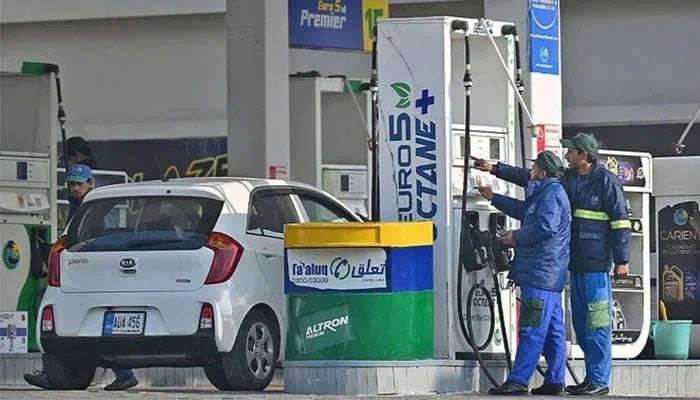
Pakistan’s ongoing economic and fuel crisis is undeniably painful for consumers. Yet, crises often carry within them the seeds of transformation.
If approached with foresight, the current period of austerity can become an opportunity to reshape consumer behaviour, urban living and energy use in ways that are cleaner, more sustainable, affordable and consumer-friendly.
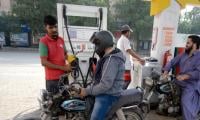
The government raised petrol prices a few days ago and also introduced several relief measures, most of which are supply-side, aimed at supporting transport, farmers and the distribution of essential goods through targeted subsidies.
However, these interventions are largely short-term and reactive, with little focus on long-term solutions such as shifting from fossil fuels to renewable energy. Targeted subsidies – while well-intentioned – are also difficult to implement effectively, as they require complex administrative systems to prevent leakages and ensure proper targeting.
On the demand side, action remains limited. Early market closures expected to save around 1,200MW of electricity are the only notable step towards energy conservation. But can provincial governments protect the retail sector?
The federal government has been less vocal about accelerating long-term structural reforms. Pakistan’s Alternative and Renewable Energy (ARE) Policy 2019 provides a clear roadmap: achieving 20 per cent renewable energy generation by 2025 and 30 per cent by 2030, alongside a broader ambition of 60% clean energy when large hydropower is included.
Similarly, the national electric vehicle (EV) policy envisions 30 per cent EV penetration in new vehicle sales by 2030, along with the installation of over 3,000 charging stations.
At the same time, the Federal Ministry of Energy’s Fast Track Solar PV Initiatives 2022 aims to reduce reliance on imported fossil fuels through expanded solar deployment, ranging from public building solarisation to feeder-level generation. Such initiatives signal intent, but the urgency of the current crisis demands faster and more coordinated early implementation. The 2030 target can be repositioned to 2027.
Beyond supply-side reforms, there is an equally important opportunity to influence demand, particularly how citizens consume energy and move within cities. Rather than treating austerity as deprivation, policymakers should frame it as a catalyst for efficiency and behavioural change.
Simple interventions can yield significant gains. Reintroducing daylight-saving time (DST), for instance, has previously saved an estimated 250MW of electricity daily. According to officials from the Ministry of Water and Power, quoted by the media, each megawatt conserved translates into nearly one million dollars in avoided costs. Pakistan experimented with DST in 2002, 2008, and 2009 to ease peak electricity demand. Revisiting this measure with improved stakeholder engagement could again provide relief.
Urban mobility presents another area ripe for reform. Pakistan has more than 30 million motorised two-wheelers on its roads. While motorcycles provide affordable family transport, they also increase fuel consumption, air pollution and congestion. In contrast, bicycle use has steadily declined despite being one of the cheapest and cleanest modes of transport.
This moment offers an opportunity to rethink mobility by incentivising local industry to produce solar panels and electric bikes domestically, reducing both import dependence and fuel use. At the same time, promoting energy flexibility, encouraging consumers to save electricity when it is cheaper and use it when it is expensive, can improve overall efficiency.
Electric vehicles can play a dual role in this transition. Beyond transport, the energy stored in EV batteries can be used to power homes during peak hours or outages, helping households manage costs while easing pressure on the grid.
This imbalance reflects a policy gap. Investing in non-motorised transport infrastructure, safe footpaths, protected cycling lanes, and low-traffic urban zones could significantly reduce fuel demand while improving public health. Pakistan already faces rising rates of diabetes and obesity; encouraging walking and cycling would deliver both economic and health dividends.
Such a transition, however, requires more than individual goodwill. It calls for coordinated public policy: reclaiming pedestrian spaces from encroachments, enforcing road safety for vulnerable users, integrating active mobility into urban master plans, and launching fiscal incentives alongside public awareness campaigns.
Last year, Prime Minister Shehbaz Sharif constituted a 12-member committee, chaired by Deputy Prime Minister Ishaq Dar, to evaluate the feasibility of daylight-saving time during the winter months. The committee was tasked with assessing energy savings, environmental benefits and potential disruptions. However, its findings, expected by November 2025, have yet to be made public, highlighting the need for urgency and transparency.
Recent research shows how quickly change can occur when conditions align. A joint report by Renewables First and the Centre for Research on Energy and Clean Air highlights that Pakistan’s rapid adoption of solar energy has already delivered significant economic benefits. By February 2026, the country had avoided more than $12 billion in oil and gas imports. With current market trends, a further $6.3 billion in savings is projected by year’s end.
The report notes that solar energy, particularly distributed rooftop installations, has quietly transformed Pakistan’s energy landscape. As households, farms and businesses generate their own electricity, demand for imported LNG has declined. Some contracted LNG shipments have even been diverted to international markets, while the government renegotiates supply terms amid reduced demand.
Perhaps most striking is that this solar transition was not centrally planned. It emerged organically, driven by consumers responding to rising energy costs. Yet, as geopolitical tensions such as those around the Strait of Hormuz threaten global energy supplies, these decentralised solar systems are proving to be a powerful shield for Pakistan’s energy security.
The distributed solar revolution in Pakistan represents both a remarkable success story and a cautionary tale about an equitable energy transition. While the country has witnessed explosive growth in solar adoption with net-metering exports increasing by 148 per cent in 2024 and 194 per cent in 2025, this transformation has primarily benefited those with access to capital, leaving large segments of the population unable to participate despite strong willingness and sound economic rationale. The missing link is not technology or demand, but the absence of appropriate financial intermediation to democratise access to solar energy.
The scale of the opportunity is substantial. The distributed solar market in Pakistan’s three major cities – Karachi, Lahore, and Islamabad – represents approximately Rs800 billion ($2.8 billion) in near-term lending potential under base-case scenarios. This only scratches the surface of the nationwide opportunity, particularly when considering secondary cities, rural areas and the rapidly evolving battery storage market.
The government should resist policies such as Nepra’s Prosumer Regulations 2026, which shift new prosumers from a 1:1 net-metering regime to a net billing mechanism. Under this framework, the buy-back rate for exported electricity would drop to roughly Rs10–11 per unit, while imported electricity would continue to be charged at significantly higher rates (Rs37-55 per unit). Such measures risk slowing solar adoption and undermining consumer incentives.
The economic crisis can instead mark a redefinition of progress. Every kilometre walked or cycled, every rooftop solar panel installed and every unit of energy conserved reduces import dependence, strengthens resilience and improves quality of life.
The challenge now is for policymakers to recognise this moment for what it is: not merely a crisis to manage, but an opportunity to build a more sustainable and self-reliant future before the next emergency forces the same choices upon us.
The writer is the CEO of The Network for Consumer Protection and a member of the 19-member Advisory Council of Consumers International. He can be reached at:[email protected]