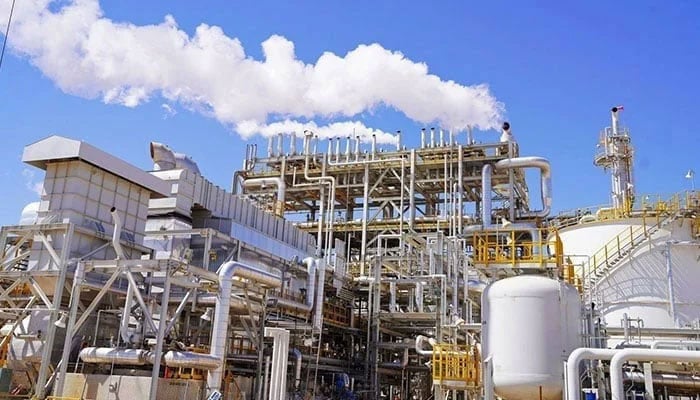
ISLAMABAD: The oil refining sector is coming under increasing pressure from rising global costs and policy uncertainty, prompting concerns among industry stakeholders that misaligned decisions could disrupt the country’s fuel supply chain.
At the centre of the debate is a widening gap between public perceptions of refinery profitability and the sector’s underlying financial realities, particularly as geopolitical tensions push up the cost of crude procurement and logistics.
While international oil prices remain the primary benchmark in public discourse, industry officials say the actual cost of crude has risen far beyond headline figures.The landed price of crude oil now includes sharply higher premiums, freight charges, insurance costs, and financing expenses. According to market participants, crude premiums have recently exceeded $30 per barrel for forward cargoes, compared to $10-25 earlier this year.
Insurance costs have also spiked significantly, with war risk coverage and freight charges rising multiple times over amid ongoing global uncertainties. Shipping a single cargo, which previously cost under $1 million, can now exceed $6 million in some cases.
“These increases have had a cascading effect on financing requirements. A typical 600,000-barrel cargo now requires close to $100 million in financing — more than double previous levels — placing strain on refinery balance sheets and banking limits.”“Looking at crude prices alone does not capture the full picture,” said one industry official. “The cost structure has fundamentally changed.”
Refinery economics are further complicated by the composition of output. Local refineries produce diesel yields of roughly 40-45 per cent, while a substantial portion of output consists of furnace oil, gasoline, and bitumen. In recent months, several of these products have traded below crude parity, with estimated losses ranging between $25 and $50 per barrel.
Industrial experts say this imbalance has significantly eroded overall margins, despite relatively stable demand for higher-value fuels such as diesel.“Focusing only on diesel margins can be misleading,” said an energy analyst. “Refineries operate on aggregate margins, and losses on other products weigh heavily.”
The sector’s financial pressures are not new. Listed refineries have collectively posted losses exceeding Rs100 billion in recent years, reflecting a combination of outdated configurations, product imbalances, and market volatility.
At the same time, the industry faces a substantial investment requirement, estimated at $5-6 billion, to upgrade facilities, improve fuel quality, and reduce the production of low-value furnace oil.
Without these upgrades, Pakistan risks increasing reliance on imported refined products, adding pressure on foreign exchange reserves.Amid these challenges, calls to reintroduce a guaranteed return framework for refineries have gained traction in some policy circles.
Supporters argue that such a mechanism could provide stability, ensure continued domestic refining capacity, and reduce supply risks in times of global disruption.However, a growing number of economists and policy experts caution that the move could reverse years of market reforms.
They point out that Pakistan’s downstream petroleum sector is now largely deregulated, with multiple refineries and over 40 oil marketing companies operating under an import-parity pricing regime.
Reinstating guaranteed returns, they argue, would effectively shift commercial risk to the government and consumers, potentially resulting in significant fiscal costs.“It amounts to a subsidy mechanism,” said a policy analyst. “In the current fiscal environment, that raises serious concerns.”
Critics also warn that guaranteed returns could distort price signals and weaken incentives for efficiency and modernisation.By insulating refineries from market pressures, such a policy may delay critical upgrades needed to align production with demand and environmental standards.
There are also concerns about governance, as implementing a guaranteed return system would require extensive regulatory oversight, cost verification, and dispute resolution mechanisms.
Industry stakeholders and analysts increasingly emphasize the need for targeted, performance-based support instead of blanket guarantees.Proposals under discussion include incentives linked to refinery upgrades, improved product yields, and compliance with cleaner fuel specifications.
As global energy markets remain volatile, experts say the challenge for policymakers is to strike a balance between ensuring sector viability and maintaining fiscal discipline.“The refining sector is critical for energy security,” said an industry executive. “But policy responses need to be forward-looking and aligned with market realities.”